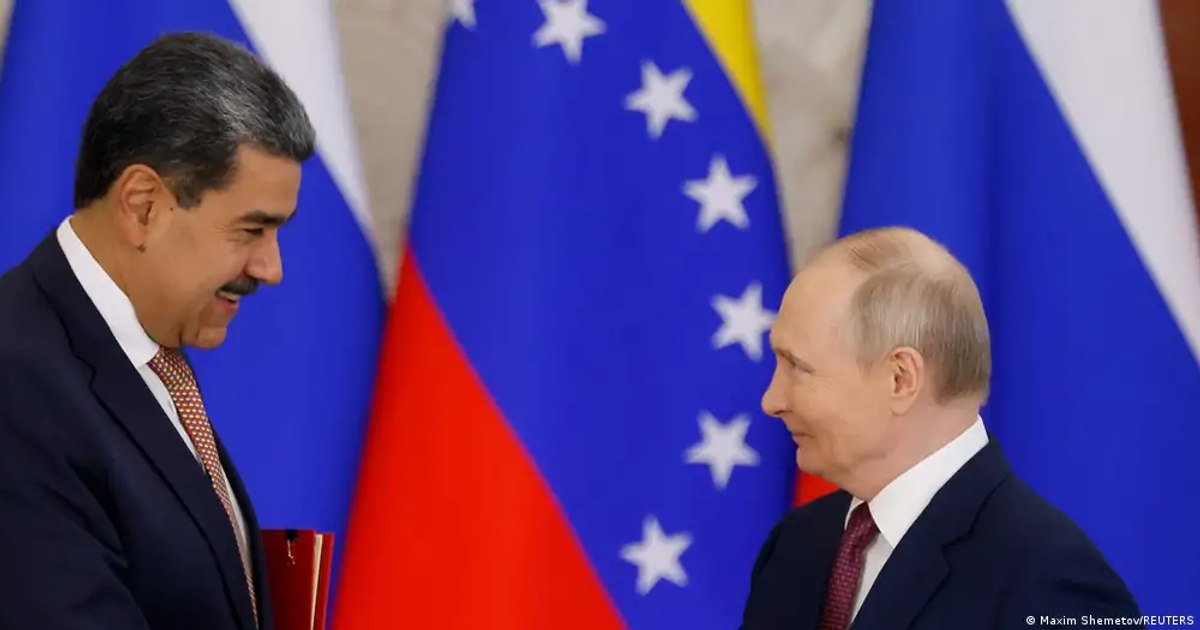
Not long ago Russia sent bombers to Venezuela to support Maduro. Now Moscow has passively witnessed its removal from power by the US. What does this mean especially for the war against Ukraine?
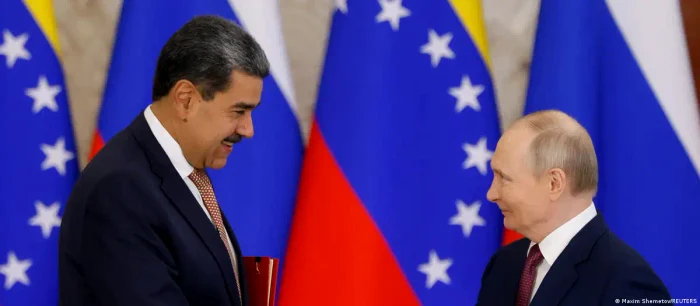
Vladimir Putin and Nicolas Maduro at the Kremlin in May 2025
Nicolas Maduro praised Vladimir Putin on the occasion of his visit to Moscow, on Victory Day, in May 2025. The Venezuelan president qualified Russia as “a key power of humanity”. The two heads of state then signed a “strategic partnership and cooperation” agreement. But on January 3, Russia was just a spectator when the US forcibly took Maduro and his wife to New York, where a trial for drug trafficking is being prepared.
Russian air defenses were unable to protect Maduro
Three days after the ouster of the Venezuelan president, Putin is still silent. Previously, the Russian Foreign Ministry expressed its concern, demanding the release of Maduro and negotiations between the US and Venezuela. After a telephone conversation at the beginning of December, according to official reports, Maduro received a New Year's greeting as his last message from the Russian president.
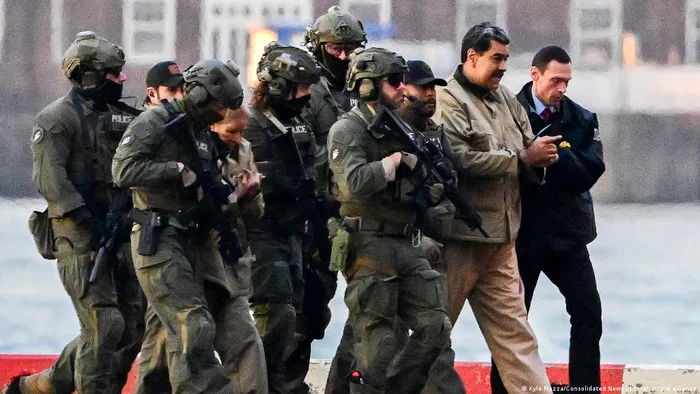
Nicolas Maduro is being taken to a New York court for hearings
Maduro was one of the few heads of state to support Russia in February 2022, when Moscow recognized the self-proclaimed separatist republics of Donetsk and Lugansk before the start of a full-scale invasion of Ukraine. In December 2018, Russia sent two Tu-160 strategic bombers to Venezuela for military exercises, which experts interpreted as support for Maduro. The planes landed at the Caracas airport, the same airport from which the US boarded the Venezuelan leader bound for New York. Russian air defenses could not protect him, as US Defense Secretary Pete Hegseth has now mocked. How could something like this happen?
Why doesn't Putin criticize Trump?
“Russia's support for Venezuela was symbolic rather than practical,” Neil Melvin, an expert at the Royal United Services Institute (RUSI), told DW. In his opinion, Russia is not in a position to question the missions of the US army in the neighboring region. The German political scientist and author of a book dedicated to Russia's foreign policy, Felix Riefer, is not surprised. After Donald Trump's return to the White House led to a rapprochement between Moscow and Washington, Russia reacted to “American allusions to Venezuela with relative restraint,” Riefer said. “In fact, Russia already let go of Maduro.”
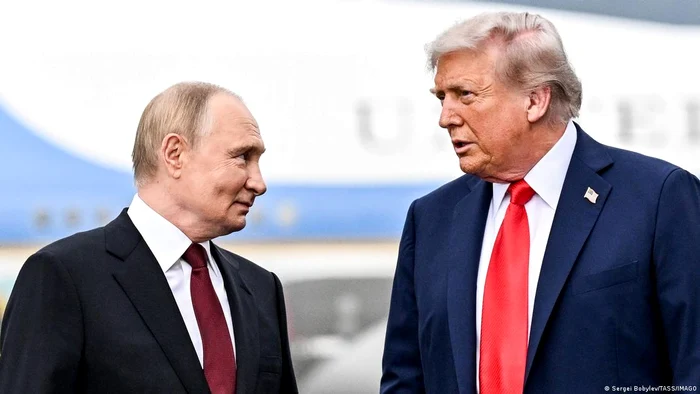
Vladimir Putin and Donald Trump met in 2025 in Alaska
One of the reasons is Russia's war against Ukraine and the transformation of the USA from Kiev's western partner into a mediator, both experts believe. Russia avoids vehement criticism of Washington because it “doesn't want to upset the US”, explained Melvin. In his opinion, Moscow's rhetoric regarding the events in Venezuela would have been much tougher if there was no war against Ukraine, but nothing more. The British expert sees no immediate consequences for the war in Ukraine. But that could change if Trump does not limit himself to Venezuela and wants to go further, for example to “include” Greenland, which belongs to Denmark, as the American president recently expressed.
The NATO alliance would not survive such an evolution, Melvin believes. And the head of the Danish government, Mette Frederiksen, expressed himself in similar terms. What do people in Ukraine think?
Cautious optimism in Ukraine
Officials in Kyiv comment on the events in Venezuela with restraint. President Volodymyr Zelensky said: “If dictators can be treated in this way, then the United States knows what to do.” The Ukrainian Ministry of Foreign Affairs reminded that it does not recognize Maduro as president.
Experts from Kiev show cautious optimism. Markets expect in the foreseeable future a normalization of relations between the US and Venezuela, which will allow Venezuela to massively increase oil production, with massive effects on the global economy and the price of oil, says political scientist Petro Oleschiuk, professor at the Kyiv National University. “Everything that causes the drop in the price of oil is advantageous for Ukraine and could have positive effects on the negotiations. The cheaper the oil, the less money Russia has at its disposal, and thus the theory that Russia is ready to wage an endless war becomes less and less credible,” explained Oleschiuk.
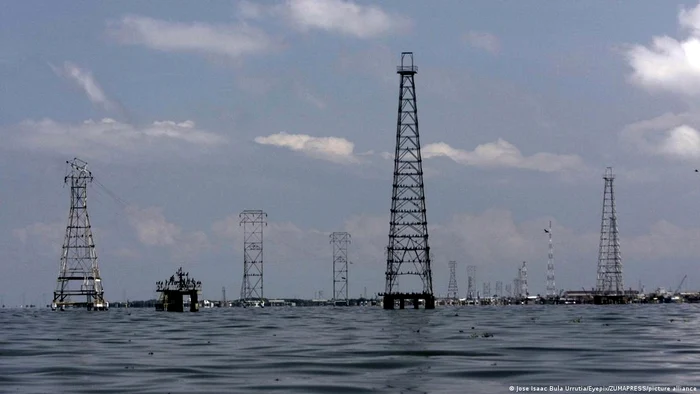
Venezuela could massively increase its oil sales, which would cause the price to fall
Another aspect that led the mass media to draw parallels with Ukraine is the thesis that the US, by arresting Maduro, could “weaken” its role as a democratic negotiating partner. However, experts DW spoke to are skeptical. These actions match the US doctrine of the Western Hemisphere as a sphere of interests, Oleşciuk explained. The expert points out that it is impossible to draw parallels between Maduro's arrest and Russian aggression against Ukraine. “In the case of Venezuela, the US has not annexed any territory and does not claim that Venezuela is a fictitious state.”
Expert: Russia's position is eroding
German political scientist Felix Riefer argues in similar terms. Russia could try to use the Venezuela case to justify its aggression against Ukraine once more. It would be possible, but “a lame direct comparison”. Riefer is convinced that Moscow's prestige in the world is weakened. “Those who bet on Russia are not allowed to hope that they are protected,” he emphasized. Neil Melvin points out that there are precedents: “Russia has lost Armenia, Syria and now Venezuela”. Russia's international position “is weakening considerably because it is escalating its war against Ukraine and no longer has the necessary resources to maintain such relations”.
Even in the case of Cuba, Russia's most important partner in Latin America and one of Venezuela's main allies, Moscow's protests could become more vocal, but Russia's options are “very limited”, according to Melvin. Cuba is among the countries against which President Trump has increased verbal pressure lately.
Roman Goncharenko – DW