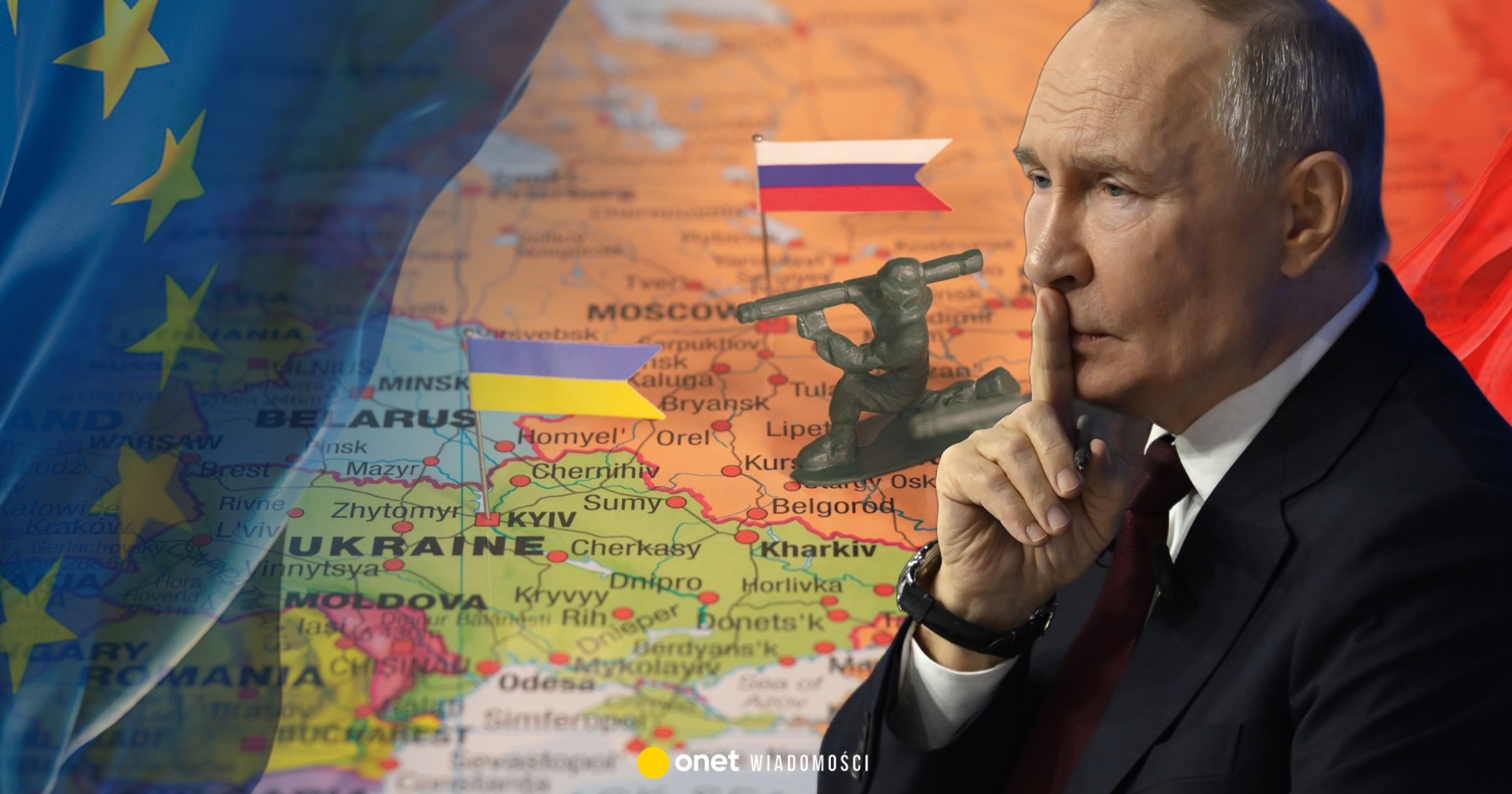
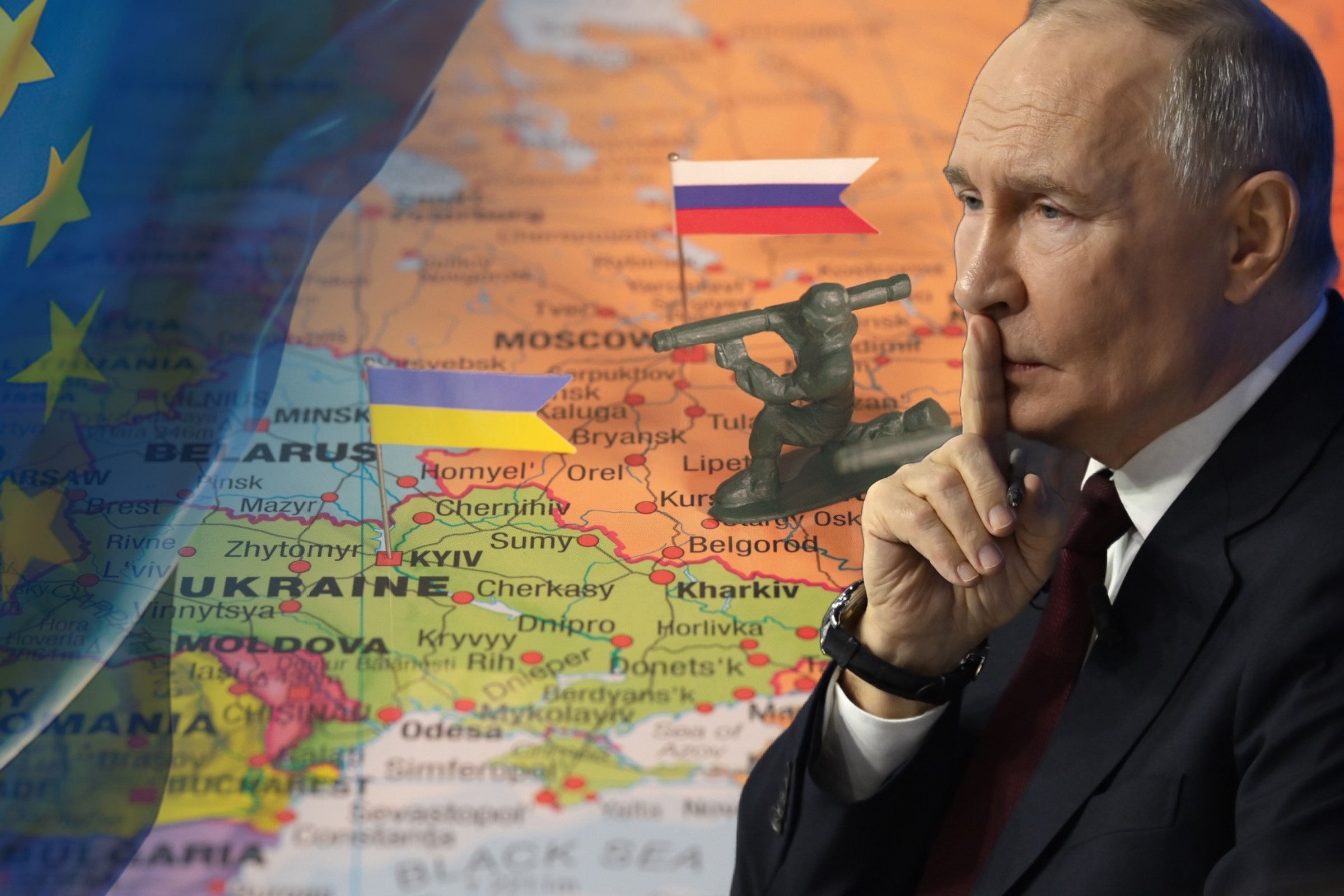
The specter of failure hangs over Europe. Putin is just waiting for it. “Moscow will test us”

The meeting, convened under the slogan of the so-called Coalition of the Willing, comes as Russian missiles continue to hit Ukrainian cities and analysts warn that any deal without enforcement mechanisms is unlikely to deter the Kremlin.
The main question hanging over Paris is: can Western unity translate into the consequences that Russia actually fears?
And then there's Donald Trump and the question of whether the White House is ready to enforce a lasting agreement. — Peace is not blocked by a lack of ideas – it is blocked by a lack of consistency. We will soon find out whether the West is ready to change this, says one senior Western official.
Ukrainian officials claim that the framework in question is “90 percent” ready. However, the last 10 percent — security guarantees, US support and clear penalties for Russian violations — may ultimately determine whether the plan will survive contact with reality.
“We will work with our European and American partners this week to provide Ukraine with the assistance it needs,” President Volodymyr Zelensky said on Monday.
His comments came as advisers from 15 countries – including France, Germany and Britain, as well as representatives from NATO and the EU – continued preparatory talks that began in Kiev over the weekend.
The article continues below the video
For European diplomats, the most closely watched variable is the renewed — if unconventional — presence of the United States.
The meeting in Paris is attended by US special envoy Steve Witkoff and President Donald Trump's son-in-law, Jared Kushner. Secretary of State Marco Rubio will not attend the meeting; U.S. officials cited “obvious reasons” related to the crisis in Venezuela.
French officials present the situation as a diplomatic operation that finally brought results.
We have never come to terms with the United States abandoning Ukraine. We managed to bring about renewed rapprochement between Ukraine, Europe and America
– a senior official of the Élysée Palace told reporters on Monday
However, in private conversations, Western officials are more cautious. “It's about whether Trump's envoys are ready to turn political signals into binding commitments,” one senior diplomat tells the Kyiv Post in Paris. — Everyone understands that credibility matters in this situation.
This skepticism runs particularly deep among those responsible for developing the security architecture.
“The Americans are talking about an agreement, but we are talking about deterrents,” a senior Western official stresses before the summit.
Five pillars, high stakes
According to French officials, leaders will focus on a clearly defined program aimed at translating the political agreement into operational commitments.
At the top of the list are maintaining military aid to Ukraine and establishing credible mechanisms to monitor a possible ceasefire — a tacit admission that previous agreements collapsed due to weak oversight and minimal enforcement.
The talks also go beyond the initial ceasefire. Everything points to the leaders will address the issue of the possible deployment of a post-war multinational peacekeeping forcepreviously agreed automatic responses to Russian violations, and long-term defense cooperation aimed at anchoring Ukraine more firmly in the Western security architecture.
The meeting is attended by approximately 27 leaders, as well as NATO Secretary General Mark Rutte and Supreme Commander of NATO forces in Europe, General Alexus Grynkewich. European Commission President Ursula von der Leyen is also present, and Brussels emphasizes that EU membership itself remains “one of the very clear security guarantees” — regardless of the coalition's final decision.
Adding urgency to the matter, Polish Defense Minister Władysław Kosiniak-Kamysz confirmed that it would take place a separate closed meeting of army chiefsto discuss the military basis for any guarantees discussed in Paris.
Experts: unity is not enough
Outside the negotiating rooms, analysts warn that even a unified Western position may not be enough to change Moscow's calculations.
Doug Klain of Razom, an American organization supporting Ukraine, tells the Kyiv Post that the summit risks settling procedural issues while ignoring the key issue of enforcement.
— If Europe and the United States fully agree on a common framework for peace — what will happen next? Klain asks.
— The Russians show no interest in stopping their activities. Will we finally see real sanctions and new military aid? Or maybe another attempt to politely ask Russians to stop killing people? he asked.
A senior NATO official says anonymously that “a framework without automatic consequences is not a peace plan.” — Moscow will test them on the first day.
Missiles overshadow diplomacy
Any signs of diplomatic momentum are being undermined by events on the ground.
Overnight, Russian attacks killed at least two people near Kiev, including one at a private medical facility that burst into flames, forcing doctors to evacuate patients during the attack.
Prime Minister Yulia Svyrydenko said doctors were forced to move the wounded “under fire” and regional officials reported additional civilian casualties and evacuations in freezing conditions.
“These are terrorist bombings planned for diplomatic moments,” explains Yuri Bojeczko, general director of Hope For Ukraine, an American humanitarian organization.
“Putin uses perceived opportunities to divert attention, using the suffering of civilians as a means of pressure,” he argues in an interview with the Kyiv Post.
Western private officials agree with this thesis. — The message from Moscow is that delays cost lives, says one senior EU official. — This message is very present in Paris.
Shorter deadline
For Paris, the summit is an attempt to confirm Europe's leadership and bind Washington more closely to a common strategy in the face of growing pressure to achieve concrete results. For Kiev, it's about turning sympathy into enforceable guarantees.
For Washington, this is an early test of whether President Trump's envoys are ready to go beyond rhetoric and make concrete commitments.
Regardless of whether the talks bring a breakthrough or only a temporary agreement, officials admit that the window of opportunity is closing.
— Peace is not blocked by a lack of ideas – it is blocked by a lack of consistency. We will soon find out whether the West is ready to change this, says one senior Western official.
For now, the French capital remains a city of high hopes and low expectations, where the details of a peace agreement are being worked out in the shadow of a war that never ends