The end of the ePUAP era. From now on, e-Delivery is the only reliable way to contact the office

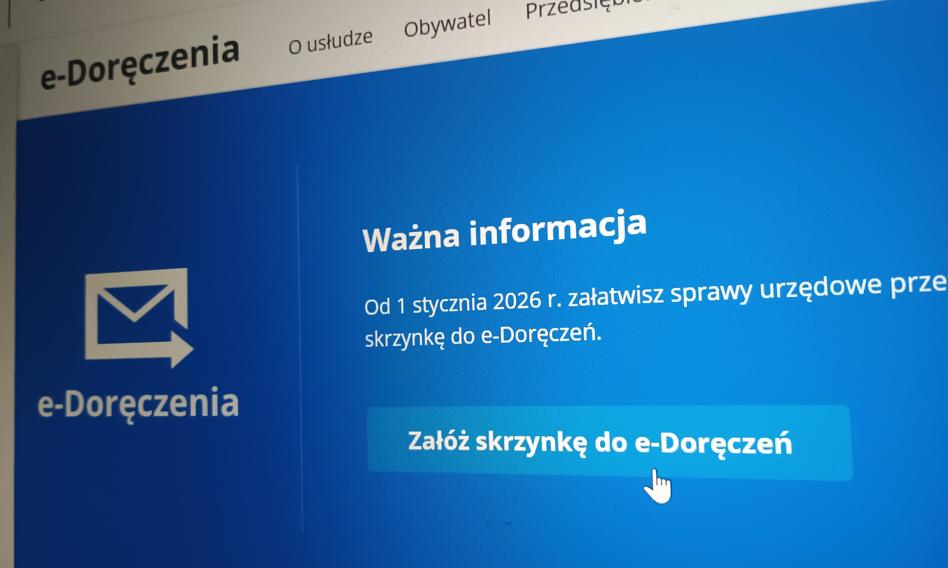
On January 1, the e-Delivery system became the basic method of delivering letters, which means that many matters can no longer be handled via ePUAP. On December 31, 2025, the transitional period in the implementation of e-Delivery ended for most public entities, including offices.
Pursuant to the amended Act on Electronic Deliveries, there was a transitional period in the implementation of e-Delivery until December 31, 2025, i.e. time to adapt to the changes.
End of ePUAP, e-Delivery starts
From January 1 this year most public entities are obliged to use e-Delivery as the basic method of delivering documents. This means that they must have an e-Delivery address (ADE) and can no longer justify possible problems with the system due to lack of organizational readiness. For individuals, the use of e-Delivery remains voluntary.
Advertisement
Until the end of 2025, correspondence with public entities via ePUAP was equivalent to e-Delivery. From January 1, ePUAP is still available to users, but to a very limited extent – only where the regulations clearly provide for it, e.g. when an entity dissatisfied with an administrative decision wants to file a complaint against it in administrative proceedings.
“The lack of ADE in public entities will result in the risk of invalid deliveries, and attempts to use ePUAP or registered letters instead of e-Delivery without a clear legal basis may be considered ineffective,” Aleksy Zięba, a legal advisor at Olesiński i Wspólnicy, told PAP.
As stated by the Ministry of Digitization (MC) in a position published on Tuesday, the Minister of Digitization is obliged to ensure the functioning and access to user accounts and mailboxes in ePUAP until September 30, 2029. However, the Ministry emphasized that from January 1, it is no longer possible for people and companies to effectively deliver letters via ePUAP in most cases. This means that you can send a letter via ePUAP, but in most cases it will probably not be delivered effectively. The situation is similar if the authority wants to send a letter via ePUAP to a natural person or company.
However, public entities can send each other documents to ePUAP mailboxes until September 30, 2029.
How to set up an e-Delivery box?
ADE and an e-Delivery box can be set up via the website https://www.gov.pl/web/gov/uzyskaj-adres-do-e-doreczen-u-publicznego-dostawcy-uslugi-e-doreczen or mObywatel.gov.pl. First you need to authenticate. This can be done via a QR code generated in mObywatel, a trusted profile, electronic banking, eID or e-ID.
Then, complete the application and sign it electronically (with a trusted profile, e-ID or qualified signature). The citizen will receive confirmation of submitting the application to the e-mail address provided in the application.
Next, you need to activate the e-Delivery service. You can do this after logging in to the mObywatel.gov.pl website. Then select “Your inboxes” and then “Activate”. Information will be sent to the provided e-mail address that the mailbox is active and can be used.
When the user activates the mailbox, he will receive correspondence from entities that already use e-Delivery. For this reason, it should be checked regularly.
ADE can be set up with the designated operator, i.e. Poczta Polska – then e-Delivery will be free of charge or with commercial suppliers for a fee. If a mistake is made, the Ministry of Digital Affairs recommends that citizens wait for the application to be rejected and submit a new one only when this happens.
To check whether the office to which you want to send correspondence already uses e-Delivery, you can visit the website: https://www.gov.pl/web/e-doreczenia/sprawdz-czy-twoj-urzad-zyska-ze-doreczen.
For whom are e-Delivery mandatory? Deadlines
E-Delivery is the electronic equivalent of traditional letter items with acknowledgment of receiptwhich is intended to facilitate the exchange of correspondence between public institutions, entrepreneurs and citizens.
From January 1, 2025, e-Delivery has become mandatory for most public institutions throughout Poland, for people performing public trust professions and for companies registering in the National Court Register.
From April 1 last year companies registered in the National Court Register before January 1, 2025 joined the system.
From July 1, e-Delivery became mandatory for entrepreneurs registered in CEIDG before January 1, 2025, making any change to their entry. Pursuant to the amended Act on electronic deliveries, these entities were subject to a transitional period until December 31 last year.
From October 1, 2026, e-Delivery will become mandatory for all companies registered in CEIDG until December 31, 2024. Local government units, courts, tribunals, bailiffs, prosecutor's offices, law enforcement agencies and the Prison Service have until October 2029 to implement e-Delivery. This will be the last stage of system implementation.
E-Delivery was introduced in 2020 by the Act on Electronic Delivery. The latest amendment to the Act, introducing, among others, transitional period, took place in December 2024. In August last year, the Ministry of Digital Affairs published a draft of another amendment, which is intended, among others, clarify some definitions and introduce provisions regarding classified correspondence. (PAP)
mbl/mmu/
The publication contains affiliate links.