“Putinization” of US policy and the law of the jungle. The world reacts to the US attack on Venezuela

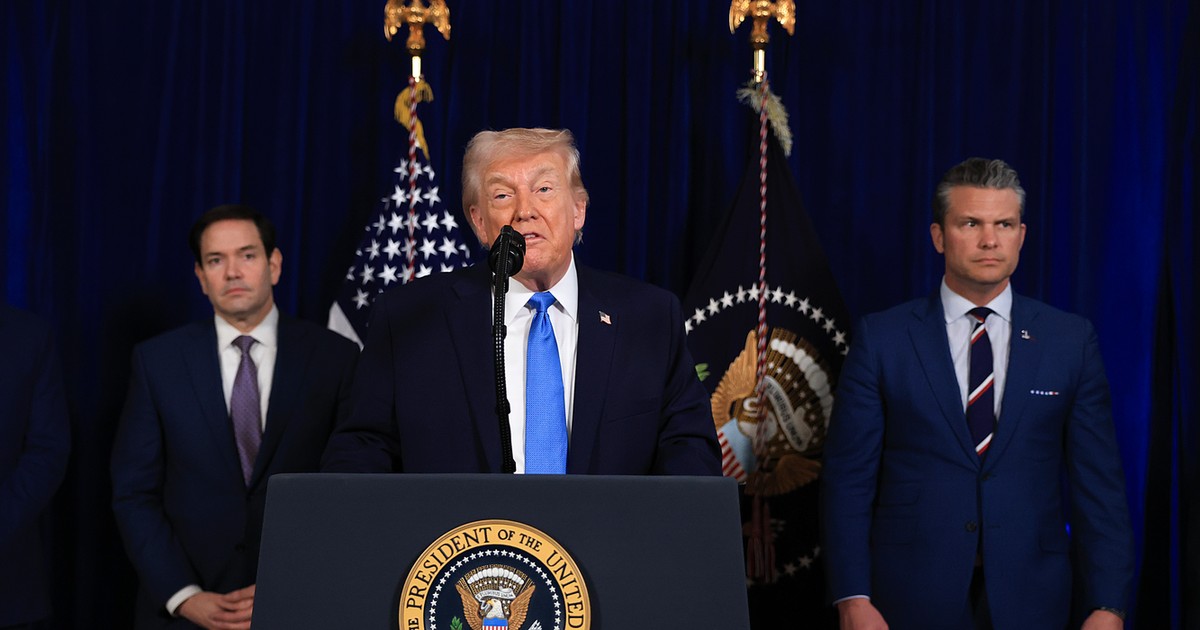
“The president who campaigned against 'forever wars,' who sharply criticized past US attempts at regime change and who promised to pursue an 'America First' foreign policy, now puts his presidency on the line to rebuild a South American country whose economy is in ruins and whose political stability has been undermined by decades of dictatorship,” the British broadcaster noted.
As he recalled, although when he took office a year ago, Trump “promised that he would be a mediator, but at that time he showed that he was more and more willing to use military force around the world.”
Nobody can sleep soundly
The Financial Times also noted that during his second term, Trump is “increasingly willing to use imperial-style military operations.” Saturday's raid on Caracas came just a week after U.S. airstrikes in northwestern Nigeria, which Trump claimed were intended to protect Christians in the country, and after last year's U.S. attacks on Iran's underground nuclear facilities, the daily calculated. He also recalled that the US president also talked about her “plans for Canada, Panama, Greenland and the Gaza Strip.”
See also: Venezuelan leader captured by the US. There is the first photo
“Leaders (of countries located – ed.) in the Western Hemisphere and beyond will not sleep soundly from now on. Trump is becoming more and more familiar with the impressive firepower at his disposal. The consequences of his disregard for both international law and American constitutional law will become apparent only after some time. As will the nature of his plans to govern Venezuela,” the newspaper predicts.
According to the editorial team, “regardless of the development of events, Trump's new world order is already a reality.” The new order “has no obvious rules, disrespects allies, glorifies the law of the jungle and is almost always about money,” the FT specifies, noting that “there is a lot of wealth hidden underground in Venezuela, and Trump is determined to extract it.”
See also: Will Venezuela breathe a sigh of relief after the US attack? Twice as rich as Poles 35 years ago, now they are living in poverty
According to the Guardian, the US attack on Venezuela “violated international law and global norms.” “Trump not only breaks the rules, he destroys them, and the consequences go beyond Caracas,” predicts the British daily. He recalls the words of American commentator David Rothkopf, who described these actions as the “Putinization of American foreign policy.”
The attractiveness of foreign lands is more important than the Nobel Prize
“Russian commentators have often suggested that Latin America lies in the US sphere of influence, just as Ukraine was in Russia's shadow. (Russian leader) Vladimir Putin shares this view with regard to most of Eastern Europe. (Chinese leader) Xi Jinping will draw his own conclusions (in connection with Taiwan – PAP),” we read in the newspaper.
See also: What does Putin envy Trump today? Gen. Polko on the action in Venezuela
According to the editorial team, the US president “is becoming more and more irritable, hot-tempered and inconsistent every day”, and his decision to use military force may be related “to his declining popularity and an attempt to divert attention from the Epstein scandal (Jeffrey Epstein, a financier convicted of pedophilia, who had contacts, among others, with Trump – ed.)”.
“The attack on Venezuela shows that the attractiveness of foreign lands, oil and minerals is now more important (for Trump – ed.) than receiving the Nobel Peace Prize,” noted the Guardian. Trump “looks at the world through the eyes of a 19th-century imperialist, with a 21st-century weapon in his hand,” the daily concluded.
According to Sky News, American military interference in Venezuela will make “geopolitics (…) potentially even more dangerous.” It was recalled that the US President announced in his speech that “American dominance in the Western Hemisphere will never be questioned again.” Meanwhile – as the editorial team pointed out – “there are plenty of Trump-hostile neighbors in America's backyard that he could deal with: cartels in Mexico, a corrupt, failing regime in Cuba, cocaine laboratories in Colombia.”