In a context where the negotiations regarding a possible peace agreement in Ukraine are becoming more and more complex, the big question remains: what security guarantees can Kiev receive in order not to be the victim of a new Russian aggression? General (r) Virgil Bălăceanu warns, in an analysis for “Adevărul”, that no international protocol will have value if it is not supported by a colossal military force and its own defense industry.
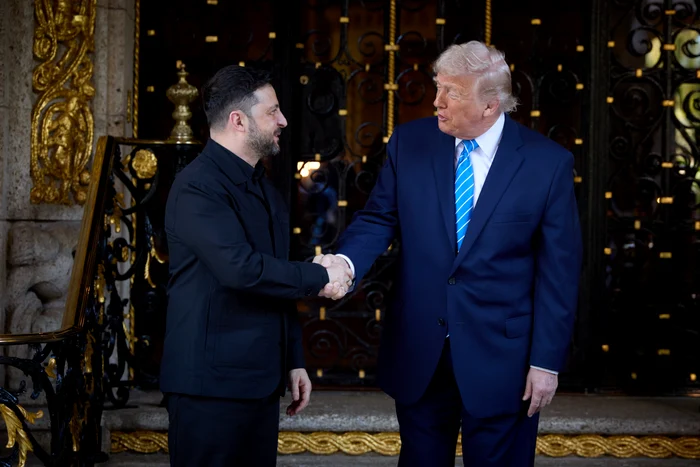
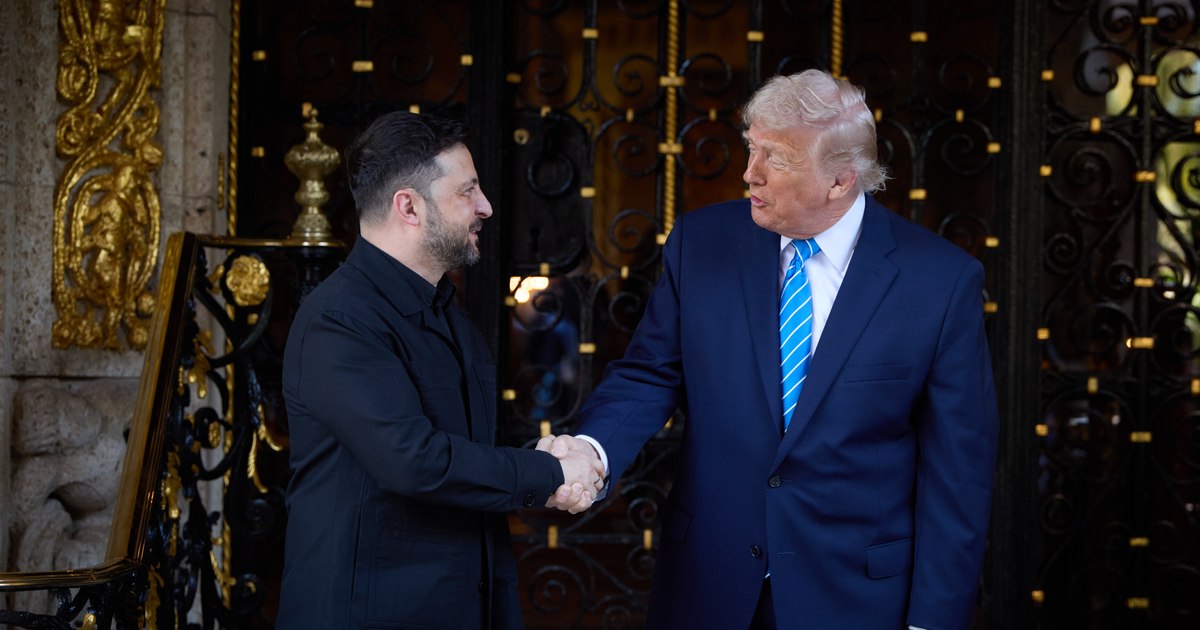
Volodymyr Zelensky and Donald Trump. PHOTO: Presidency of Ukraine
Ukraine is at a historical crossroads. Even if a cease-fire agreement is reached, “Article 5” security guarantees (NATO's collective defense clause) remain an abstract concept in the absence of Alliance membership. General Virgil Bălăceanu is of the opinion that Ukraine must rely on its own recipe for survival: a combination of a tripartite support mechanism and an unprecedented militarization of society.
Recent history has shown that memorandums and treaties can become irrelevant in the face of armed aggression. For this reason, the military expert believes that Ukraine cannot rely exclusively on the “protocol”.
“I think that the substance elements of Ukraine's reaction capacity must be prepared, beyond all protocol elements, agreements and so on. Because the new international practice, unfortunately, shows us that not every time these protocols, agreements, international commitments are respected. And if we refer to Ukraine's security guarantees, the center of gravity must certainly be a very strong army”,
explains General Bălăceanu.
Critical deterrence figure: 1.5 million troops
An eventual peace deal could provide for a Ukrainian army of 800,000 active servicemen. But, in the opinion of General Virgil Bălăceanu, the real strength lies in the ability to mobilize. He draws a parallel with the model of the Romanian army before 1989, which relied on a ratio of 1 to 3 between active and reservists.
“We have the example of Ukraine: at the beginning of the invasion, the army meant 220,000 – 240,000 people. Now there is talk of defense forces that reach almost a million. Or a Ukrainian army of 800,000 people means an army that, in crisis situations, through partial mobilization, reaches at least one and a half million. It is a critical point. The Russian side will not admit a Ukrainian army strong, which can reach the forces that the Russians want to have in perspective: one and a half million soldiers.”, explained Virgil Bălăceanu.
The tripartite mechanism
Given that Ukraine's prospect of joining NATO is getting further and further away, General Bălăceanu sees the need to create a mechanism to ensure security between the US, Ukraine and Europe. However, this scenario raises a major problem for Brussels.
“How does the European Union react to such an attack? Things are very complex. It is that mention of reaction in a tripartite framework, which we understand in the manner of Article 5. But the international troops on the demarcation line, which Zelenski mentioned, would only be monitoring troops of a truce, they do not have combat power. What needs to be created is a real defense and deterrence capability.”, warns Virgil Bălăceanu.
The Korean scenario
General Bălăceanu does not believe in a lasting peace in the near future, but rather in a “frozen, open and extended conflict”, similar to the model in the Korean Peninsula. In this context, Ukraine has already prepared a “deep line” consisting of the fortress cities of Donbas.
“The Maginot Line must be prepared by Ukraine through the fortification system in the Donbas area. I mean the fortress belt: Konstantînivka, Drujba, Kramatorsk and Sloviansk. We will probably witness a demilitarized zone, like in Korea, where beyond the few kilometers of neutrality, both sides have most of the elements related to the militarization of the area.”, shows the specialist.
Marshall Plan vs. The Maginot Plan
The big challenge for Kyiv will be the management of funds. Unlike post-1945 Europe, which was able to sacrifice defense in favor of reconstruction under the US umbrella, Ukraine will have to do both at the same time.
“Ukraine will not have the chance of Europe, which, after the Second World War, allocated very little for defense. Such a scenario is not valid. If we will have a Marshall Plan related to reconstruction and economic development, we will have to have in parallel a 'Maginot Plan' related to the strengthening of defense. The military internship will remain mandatory, and the defense industry must develop simultaneously with the reconstruction.” concludes General Virgil Bălăceanu.