New Year's concert in Vienna. When is the traditional concert from the Austrian capital broadcast and on which TV station


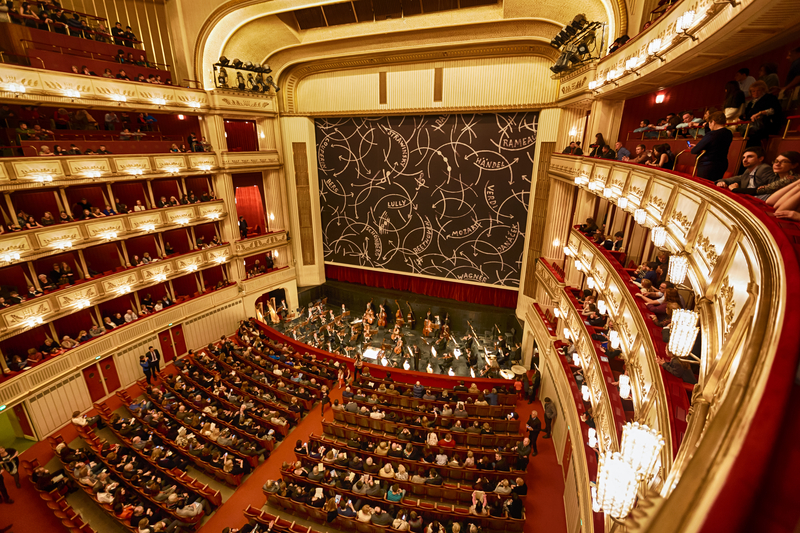
Photo: Castenoid | Dreamstime.com
Romanian television broadcasts live, exclusively, the Vienna Philharmonic's New Year's Concert. Viewers can enjoy the music of the Strauss dynasty and its contemporaries live on TVR 1, on January 1, from 12:15 p.m. The concert will be rebroadcast the same evening on TVR Cultural, from 7:00 p.m. and on January 4, from 9:30 a.m., on TVR 1, writes Agerpres.
On the first day of the year, Vienna has a gift for us all. The most mediatized concert of all time is also this year on Romanian Television. A true musical ritual, the New Year's Concert in Vienna presents a special program of over two hours, with the elegance and refinement of the music of the Strauss dynasty, but also some absolute premieres, broadcast live from the imposing Golden Hall of the Musikverein Vienna. From 12.15, on TVR 1.
And in 2026, the New Year's Concert transforms the Vienna Philharmonic Orchestra into the most important musical ambassador of Europe, with everything that is most representative of the old continent in terms of grace and harmony. The message to the world of the concert in the European capital of music is, more than ever, one of hope and peace. January 1, 2026 marks the 68th anniversary of this “concert of concerts” being broadcast by television cameras around the world. This year, the New Year's Concert is televised in more than 150 countries around the world and will be watched by more than 50 million viewers.
New Year's concert in Vienna. What the program contains
Canadian conductor Yannick Nezet-Seguin will take the stage for the first time at the Vienna Philharmonic's New Year's Concert. The internationally renowned conductor has been Music Director of the Metropolitan Opera in New York since 2018, Music Director of the Philadelphia Orchestra since 2012 and has been conducting the Montreal Metropolitan Orchestra for 25 years. He is also honorary conductor of the Rotterdam Philharmonic Orchestra, where he was principal conductor from 2008 to 2018. Nezet-Seguin has a close relationship of more than fifteen years with the Vienna Philharmonic, which he conducted for the first time in 2010. In addition to the masterpieces of the Strauss dynasty, Yannick Nezet-Seguin introduced five works to the Viennese orchestra's program on January 1, which will be performed for first time at a New Year's concert. Between them, two scores written by the composers Josephine Weinlich and Florence Price: polka mazur Sirenen Lieder, written in the summer of 1868 for the debut of her own female orchestra that the Austrian composer founded at the age of 20 and which she conducted from the lectern of the first violin, just like Johann Strauss. Instead, Florence Price's The Rainbow Waltz was originally composed for piano and rediscovered only in 2009, along with numerous other manuscripts by this black composer, who despite segregation and racism managed to establish herself at the beginning of the 20th century as the first recognized African-American composer. The energetic and multifaceted program of the 2026 New Year's Concert mainly includes works by members of the Strauss dynasty, but also compositions by Carl Michael Ziehrer, Joseph Lanner, Franz von Suppe and Hans-Christian Lumbye.
The choreography for the two interludes of the Vienna State Ballet was created by John Neumeier, who takes on this role for the third time, after the 1999 and 2006 editions. Neumeier has led the Hamburg Ballet for over fifty years and is one of the most important choreographers of our time. The ballet costumes were created by the Swiss designer Albert Kriemler, the creative director of a famous European fashion house. The collaboration between John Neumeier and Albert Kriemler began exactly twenty years ago, with the ballets for the 2006 New Year's Concert, and since then has turned into numerous joint projects and stage productions. This year, their cover can be seen in Rosen aus dem Suden, a waltz by the most beloved composer of the Strauss dynasty, an emotional tribute to the “Viennese Rose”, danced in the halls of the MAK, Vienna's Museum of Applied Arts. Diplomatenpolka, also composed by Johann Strauss son II, is staged at the Hofburg Palace, in a choreography that offers a humorous vision of diplomacy, civil service and the Viennese bureaucracy.
And the flowers will still be Viennese at the Musikverein, with the interruption of the 1980 tradition that established the Italian city of San Remo to deliver them every year. The sea of flowers in the hall is now cared for by the gardeners and floral designers from Vienna City Garden, who start decorating the Golden Hall as early as December 27, in parallel with the orchestra's rehearsals.