What were the four American presidents who won the Nobel Prize for coveted peace and Donald Trump? About one he wrote that he made Alfred Nobel to “twist in the grave”


US President Donald Trump will find out on Friday afternoon if he won the Nobel Peace Prize he wants so much.
Trump has repeatedly stated that he deserves the Nobel for Peace, saying at the end of September even that it would be a “big insult” for the United States if he was not this year's laureate.
The US President argued, in the speech held at the UN General Assembly, that he concluded no less than seven wars. He mentioned the conflicts between “Cambodia and Thailand, Kosovo and Serbia, Congo and Rwanda (…), Pakistan and India, Israel and Iran, Egypt and Ethiopia and Armenia and Azerbaijan.”
The White House leader also highlighted his efforts to mediate an armistice between Israel and Hamas, but also the Abraham agreements that his administration has mediated at the end of his first term, through which Israel has normalized his diplomatic relations with the United Arab Emirates, Bahrain, Morocco and Sudan.
Experts, however, believe that the pressures put on the Nobel committee are generally counterproductive, which reduces the chances of the US President. “If the committee was now awarding Trump's prize, he would obviously be accused of giving in front of him,” undermining precisely the independence with which he prides himself, said Halvard Leira, research director at the Norwegian Institute for International Business (NUPI).
All Nobel prizes are awarded in Stockholm, Sweden, except for the Nobel Peace Prize, which is awarded at Oslo. The Swedish inventor Alfred Nobel, whose inheritance was the basis for the establishment of the awards, established this in his will.
Biography.com recalls that, over the years, several presidents of the United States have been nominated for the Nobel Peace Prize, including George W. Bush, Joe Biden and Donald Trump. This prestigious distinction recognizes people and organizations that have made significant contributions for promoting peace, either by supporting democracy, human rights or nuclear disarmament, or by mediating peace negotiations.
However, it is quite rare for an American president to win the prize itself. Only four received this distinction, the most recent being Barack Obama in 2009, and one of them was honored for years after leaving the White House.
Theodore Roosevelt
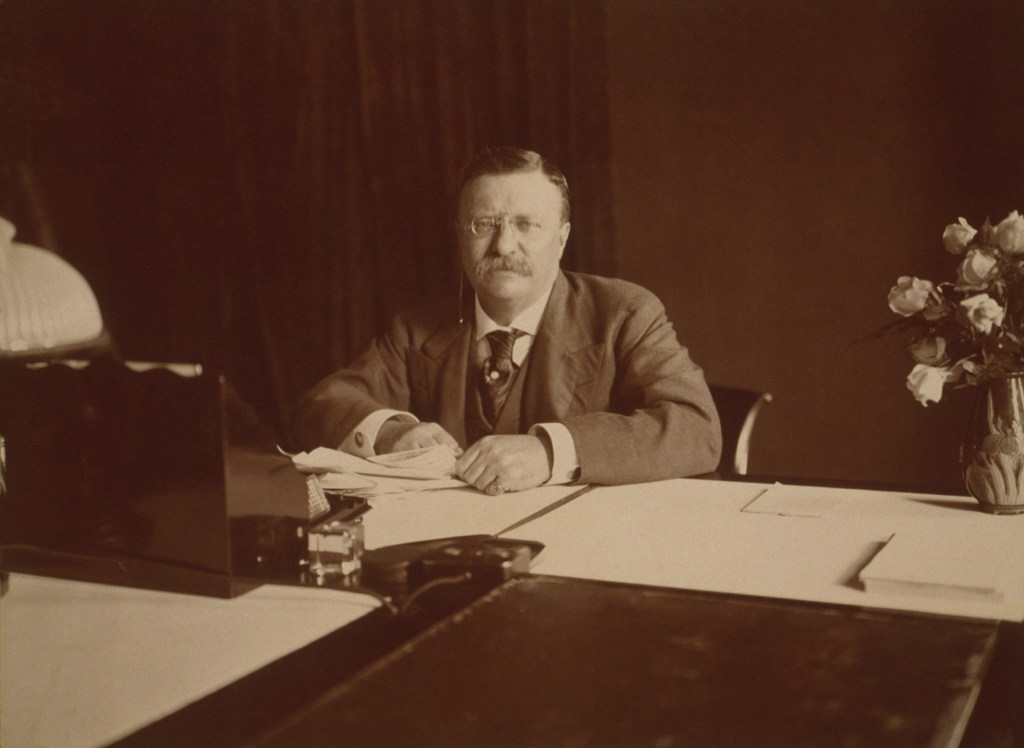
Theodore Roosevelt, the 26th president of the United States, became in 1906 the first head of state to win the Nobel Peace Prize, as recognizing his efforts to negotiate a peaceful end of the Russian-Japanese war of 1904-1905.
Like many things in Roosevelt's life, the decision was controversial. The prize was criticized by the political left, who described the president as an imperialist “crazy as a militarist”, responsible for taking the Philippines by the United States. The Swedish newspapers at that time wrote that Alfred Nobel, “was twisted in the grave” because of the decision, as the Nobel Foundation even remembers.
On his side, Roosevelt used the speech to accept the Nobel to plead for the creation of an international body for world peace. “It would be a bus movement if those great powers really dedicated to peace would form a league of peace, not only to maintain peace between them, but to prevent, if necessary by force, for others from violating it,” he said.
Woodrow Wilson
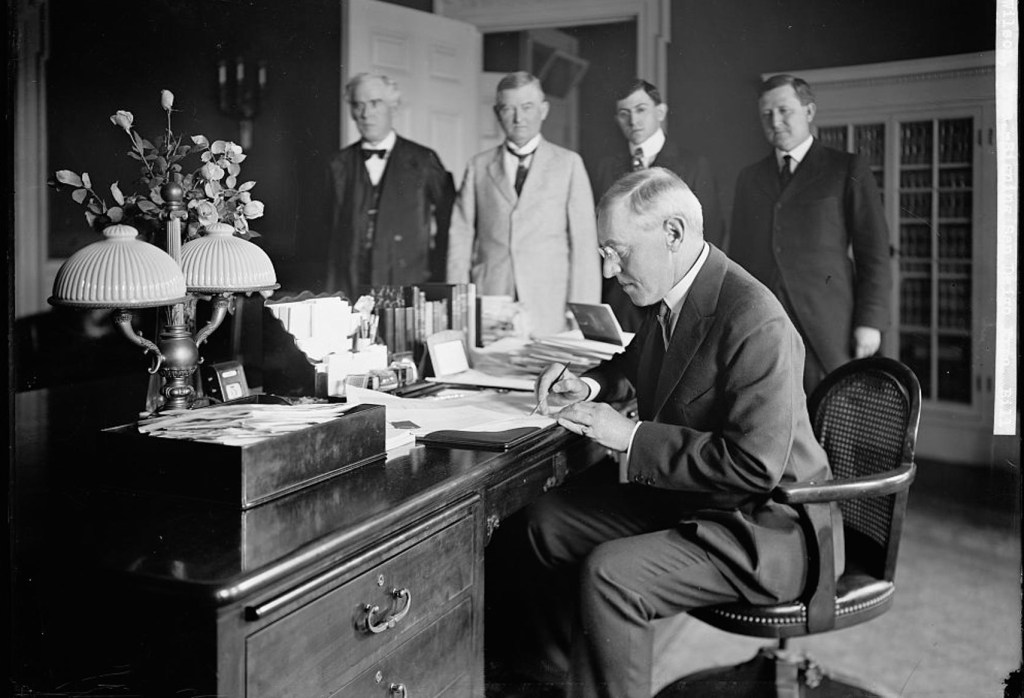
The type of organization that Roosevelt and imagined would later become reality by setting up the League of Nations. Woodrow Wilson, the 38th president of the United States, was one of the main architects of this international organization, which is why he was awarded with the Nobel for Peace in 1919.
Wilson also received recognition for his role in the end of the First World War, a conflict in which he initially tried not to involve the United States. His statement about “fourteen points” regarding the principles of peace – which approaches territorial problems, reducing armament and conditions of trade, among others – has contributed to the outline of peace negotiations.
Like Roosevelt's case, Wilson's Nobel was considered controversial. The peace negotiations after the First World War were difficult and tense, and the League of Nations was significantly weakened when the United States refused to join them. For this reason, some members of the Nobel committee did not agree with the decision to award Wilson's prize.
Jimmy Carter
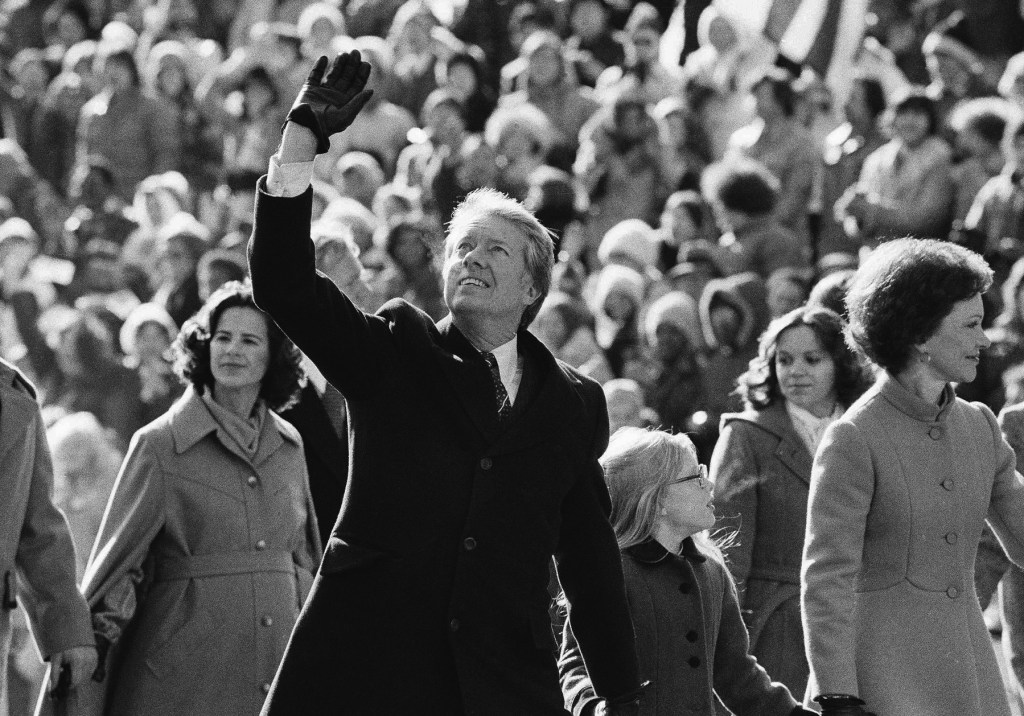
Historians generally believe that Jimmy Carter, US president between 1977 and 1981, had one of the most remarkable post-presidents in the history of the United States. Therefore, when he won the Nobel Peace Prize in 2002 for his entire activity in promoting human rights and efforts for world peace, it was a great honor, but not a surprise.
Actually Carter had been nominated for Nobel at least five times before winning, as per the book The Unfinied Presidency of American historian Douglas Brinkley. He was considered a favorite in 1978 for his role in mediating Camp David agreements between Egypt and Israel, and many were expecting to win in 1994 for diplomatic efforts related to Haiti.
21 years old after leaving the White House, Carter received the Nobel Peace Prize “for decades of tireless efforts to find peaceful solutions to international conflicts, to promote human democracy and to support economic and social development,” according to the Nobel Foundation.
Nobel officials then showed that Carter's honor is also an implicit criticism of the US President George W. Bush, due to his administration statements to Iraq.
“In a situation currently marked by threats regarding the use of force,” the Nobel Committee was shown, “Carter remained faithful to the principles that conflicts must, as far as possible, solved by international mediation and cooperation, based on international law, respect for human rights and economic development.”
Gunnar Berge, the then president of the Nobel committee, was even more direct. The distinction “should be interpreted as a criticism of the direction followed by the current administration” in Washington, he said at the time, quoted by The New York Times. The US triggered the invasion in Iraq a few months later in March 2003.
Barack Obama
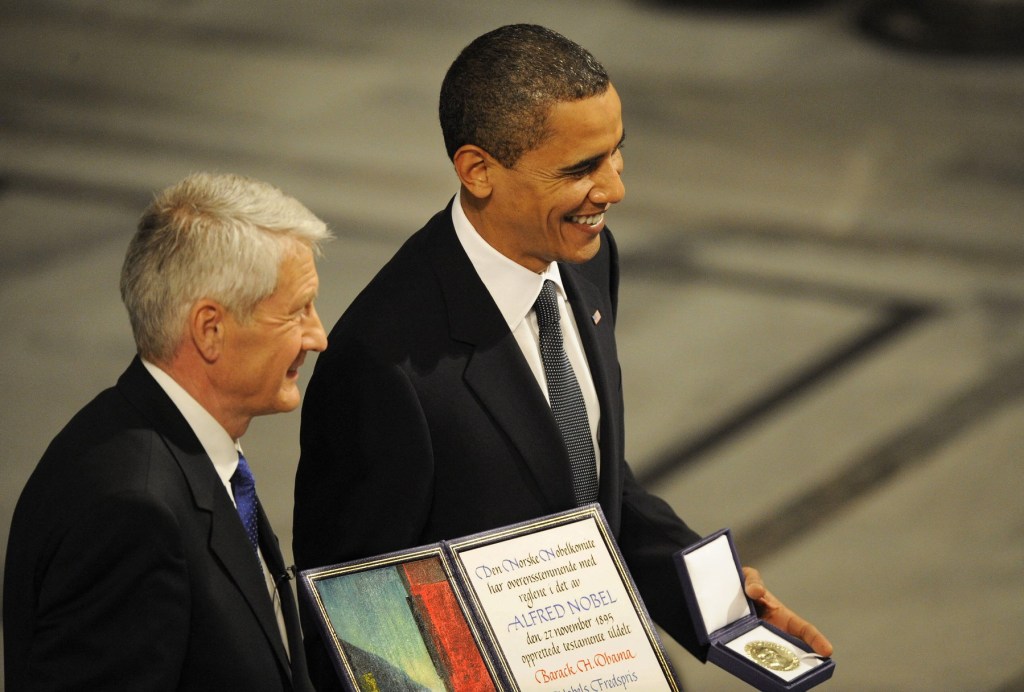
Barack Obama had taken over the first term of president for only nine months when the Nobel Committee announced in October 2009 that it had won the Nobel Peace Prize. The decision has aroused criticisms and mixed reactions on both sides of the political spectrum, including Obama, seeming reluctantly when he approached in his acceptance speech “considerable controversy generated by your generous decision”.
“Perhaps the deepest problem related to receiving this award is the fact that I am the chief commander of the armed forces of a nation in the middle of two wars” in Iraq and Afghanistan, he said. “I come here with an acute sense of the costs of armed conflicts, full of difficult questions about the relationship between war and peace and our effort to replace each other.”
The committee granted the Nobel to promote nuclear non-proliferation and for the support given to multilateral diplomacy and “a new atmosphere in international politics.” The chairman of the Nobel committee, Thorbjoern Jagland, defended the decision: “The question we have to ask ourselves is who did the most in the previous year to increase peace in the world. And who did more than Barack Obama?”.
But the criticisms of the decision only multiplied in the years that followed, after the President Democrat approved American bombings in Yeme and other countries.