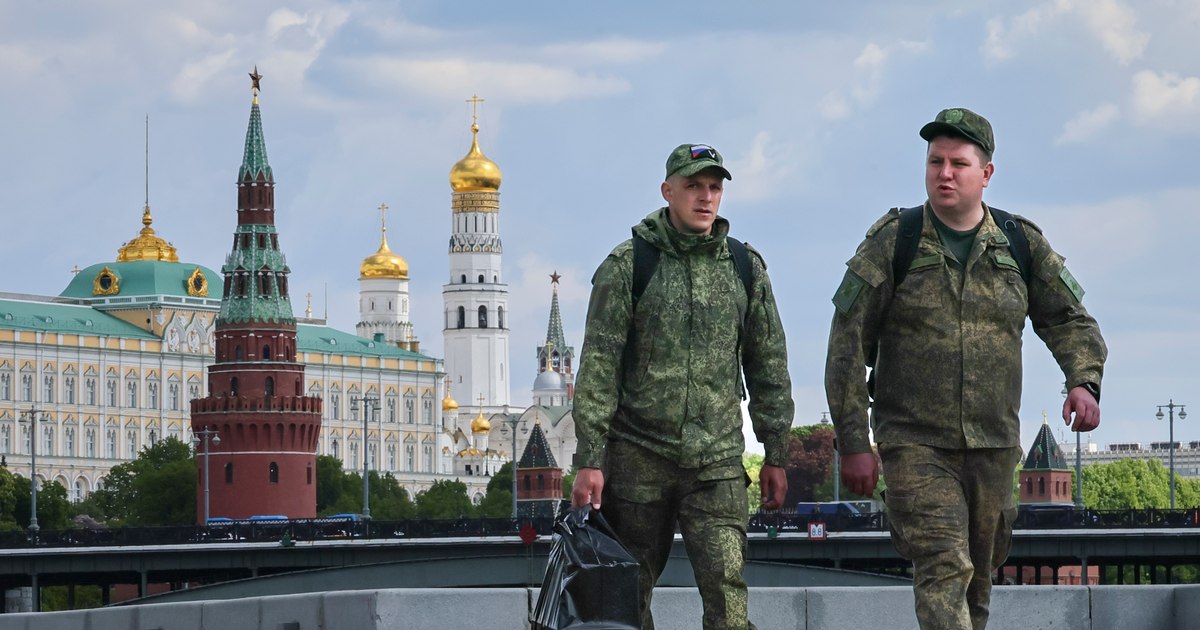
The bus coming from the front line suddenly stopped near a kitchen on the side of the road. The soldiers trudged down, sinking into the frozen winter mud. Many of them were missing a leg. Some had lost their hands.
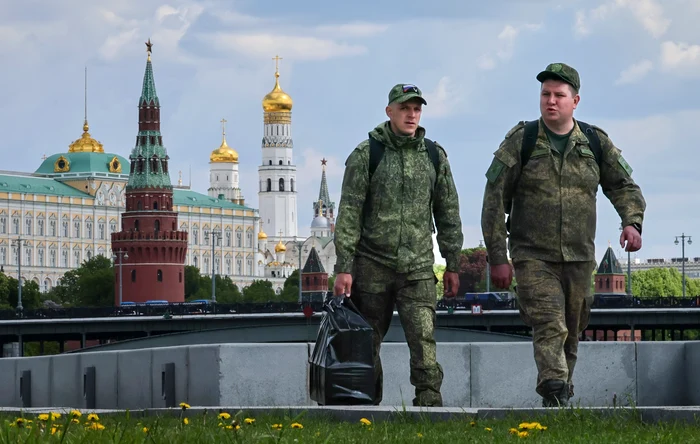
The Kremlin has invested heavily in programs dedicated to soldiers and veterans/PHOTO: Profimedia
A makeshift container filled with blood hung from a plastic tube connected to a soldier's abdomen as he was propped up against a bench. Another gazed absently at the bandaged stump where, until recently, his right hand had been.
“If I had known what it was like there, I would never have signed the contract. Our television is lying to us”says Fyodor, a young soldier from Siberia. His full name is not being published to protect him from possible reprisals.
Just two days before, Fyodor had lost the lower part of his leg in a landmine explosion during an advance on Lîman, Ukraine. Of the 110-man unit he was assigned to two years ago, he says only ten remain.
Don't talk about regret. “This means I can finally go home—alive.”
“We fight for fields we can't even conquer” interjects Kirill, another twenty-something soldier, with a bitter smile. “This war will never end. In fact, it looks like it's just begun.”
Such scenes remain, for most Russians, completely invisible — erased by state propaganda and counterbalanced by official projects that glorify the return of “heroes” from the front. But inside the country, weariness and resentment build beneath the surface of an imposed silence.
After nearly four years of conflict, there are no real channels through which public frustration can be expressed, and national exhaustion appears to be grinding society from within, analysts and interviewees say. The economy, which experienced rapid growth in the early years of the war, stagnated. Digital isolation is deepening, with more and more online platforms being banned. Western intelligence estimates that more than a million Russian soldiers have been killed or wounded. At the same time, the repressive apparatus is increasingly turning its attention to its own citizens, writes The Washington Post.
At a recent Human Rights Council meeting, filmmaker Aleksandr Sokurov spoke about censorship, restrictive “foreign agent” laws, the rising cost of living and the lack of prospects for young people. “If Russia does not change the way it relates to young people, it is heading for a stalemate,” he warned. Vladimir Putin said he would respond later.
A former senior Kremlin official describes the situation as “very worrying”. “We can't turn back time without political will. And that will simply doesn't exist,” he says, speaking on condition of anonymity.
Regions paying the price
In Belgorod, a Russian border town less than 75 kilometers from Kharkiv, the cost of war is felt daily. Drone attacks have become routine. Ambulances covered in mud cross the town and anti-aircraft defense units are visible in the center of the town.
Volunteer networks—which have often filled in for state shortfalls—are working non-stop. Pensioners make anti-drone nets, others print plastic components for ammunition.
Despite the destruction in Ukraine, Belgorod sees itself as a direct victim of the conflict. The city reflects the growing rift between the relatively indifferent urban majority and what pro-Kremlin sociologists call “Russia at war.”
On a cold November afternoon, volunteers who distribute supplies to the army gather around a table of hot soup. They feel abandoned by Moscow.
“They have no idea what's going on here,” says 52-year-old Edik. “In Moscow there are parties, holidays. Blood flows here. How can I live with this?”
Some note that donations have declined amid hopes that the war will soon end. Others speak of a desire to continue the fight — but “under the right conditions.”
According to sociologist Valeri Fyodorov, about 20 percent of the population—soldiers, their families, volunteers, and defense industry workers—consider the war essential to Russia's survival. The rest are either indifferent, withdraw into private life, or live in exile.
Return from the front
To maintain public support, the Kremlin has invested heavily in programs dedicated to soldiers and veterans. They receive financial compensation, access to education, jobs and social benefits.
Denis Poltavski, seriously injured in a drone attack, says his material life has improved after returning home. He receives a military pension, free transportation, psychological support and hopes to open a small business.
Recent research shows that in some regions life satisfaction has increased, particularly where the economy has benefited from military production. But beneath this apparent stability, officials acknowledge fears about the long-term impact of war trauma and rising crime.
Youth and forced loyalty
Meanwhile, the repression is expanding. After opponents, artists and LGBTQ+ activists, the state is now also targeting young people.
In St. Petersburg, two teenage musicians were arrested for an impromptu street concert in which they played songs with an anti-war message. Officially, they were accused of blocking access to the subway. Unofficially, for their lyrics.
“The fact that they played those songs was exciting”says Ivan, a 26-year-old history teacher. “It was like a reminder of normal life.”
After a month of detention, the two were released and left the country. Others were not so lucky.
Hundreds of teenagers have been arrested since the start of the war for protests, sabotage or “terrorism”. For many observers, young people represent a particular threat to the regime.
“These young people have nothing to lose but freedom,” says the mother of a convicted teenager. “And if they can also say or sing what they're thinking, that becomes an even bigger threat.”