
The update was announced in the second half of December and is now available implemented in ChatGPT for all users. At the same time, she also joined API as a model gpt-image-1.5 for specialists and companies wanting to use this technology in their services and products.
OpenAI notes that the new, dedicated Images area in the sidebar (a refreshed experience for exploring styles and inspirations) will appear immediately for most people, while access for Business and Enterprise plans will be added later.
The next part below the video:
See also: A new era of AI images. Google Nano Banana Pro is conquering the Internet
Photo editing better than ever
The biggest change is in image editing. When we upload a photo and ask for modification, the model is supposed to change only what we want, while maintaining consistency of lighting, composition and the appearance of people between versions.
This is important because in previous generations it was easy to lose the identity of a character or accidentally move important elements of the frame.
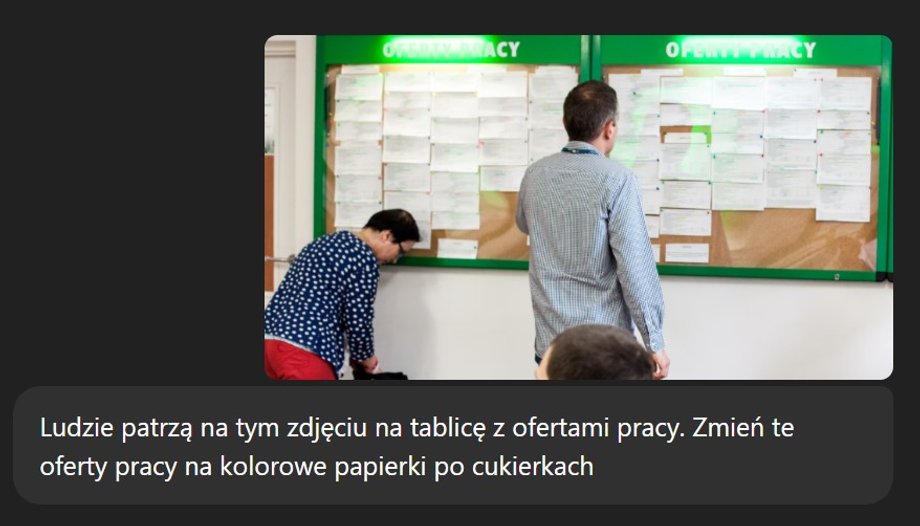
Prompt: People are looking at a job board in this photo. Turn those job offers into colorful candy wrappers
|
Matt. own / OpenAI
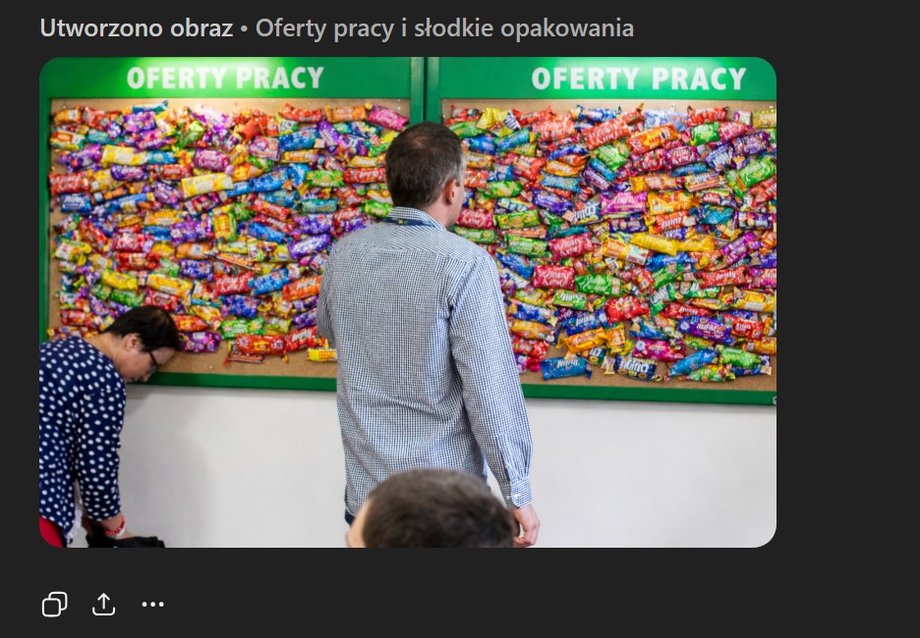
Effect after editing
|
Matt. own / OpenAI
OpenAI also strongly emphasizes that GPT-Image-1.5 handles more complex commands better and relations between elements in the image, and also takes a step forward in rendering text – also small and dense, which has so far been the Achilles' heel of generators.
The package includes quality improvements, such as a natural-looking result and better handling of scenes with many small faces, e.g. a crowd on the street.
Read also: The line between AI and humans is blurring. We're starting to talk like chatbots
The new mode is not only a model, but also an interface. A separate “Images” space appears in the sidebar in ChatGPT – something like a creative hub with ready-made styles, filters and prompts updated to reflect current trends. An interesting feature is the one-time “upload similarity” option, thanks to which you can later return to your own image in subsequent creations without having to look for a photo in the gallery again.
From the perspective of companies and creative teams, the most important thing is that the focus is shifting to predictable work, i.e. faster generation, more accurate corrections and greater consistency from one iteration to another. OpenAI explicitly points to such applications such as marketing, e-commerce, design and internal communication. These are areas where AI speeds up the process from idea to ready-to-use material.
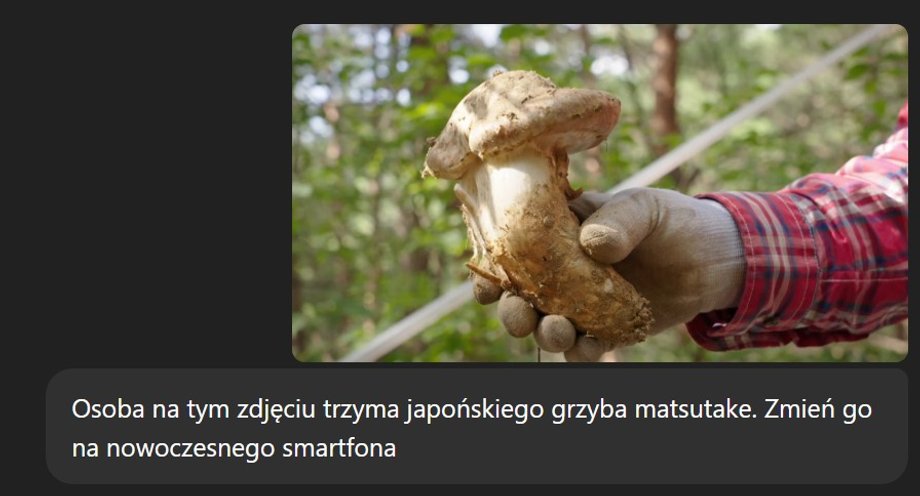
Prompt: The person in this photo is holding a Japanese matsutake mushroom. Change it to a modern smartphone
|
Matt. own / OpenAI
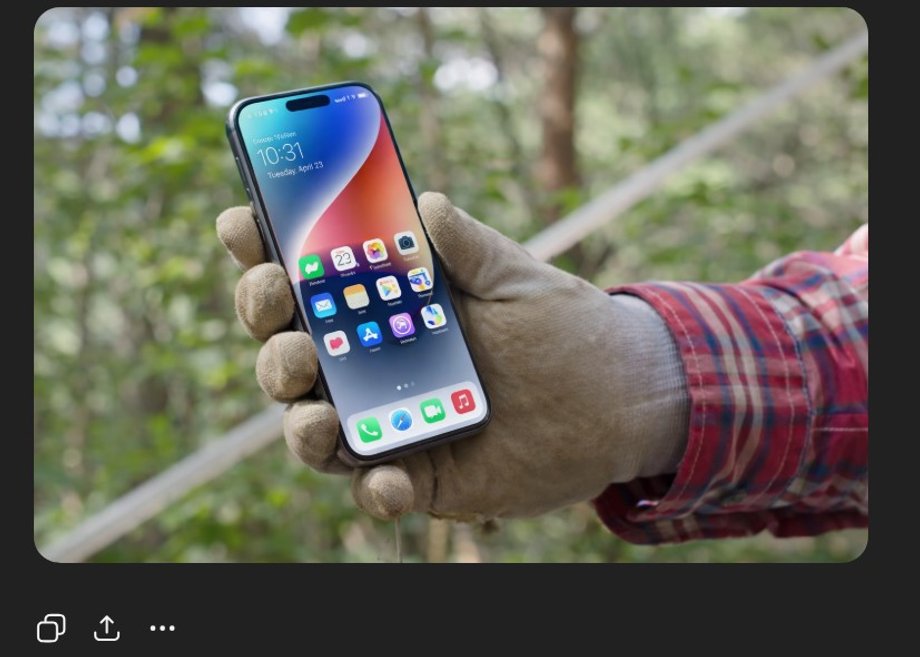
Effect after editing (obvious error – 6 fingers)
|
Matt. own / OpenAI
There will also be more in the GPT-Image-1.5 API brand safe (brand protection) in practice, because AI better maintains the logo and the most important elements of visual identification during editing. The company adds a budget argument – image input and output are to be approximately 20 percent lower. cheaper than in GPT Image 1, and the model can be tested, among others, at Playground.
Check also: ChatGPT is your digital confidant
This is not ideal yet
OpenAI doesn't pretend it's perfect. It appears in the official description the caveat that despite visible progress, results are still imperfectand some limitations (e.g. in more demanding styles, scenes with multiple faces or in multilingual applications) still need to be refined.
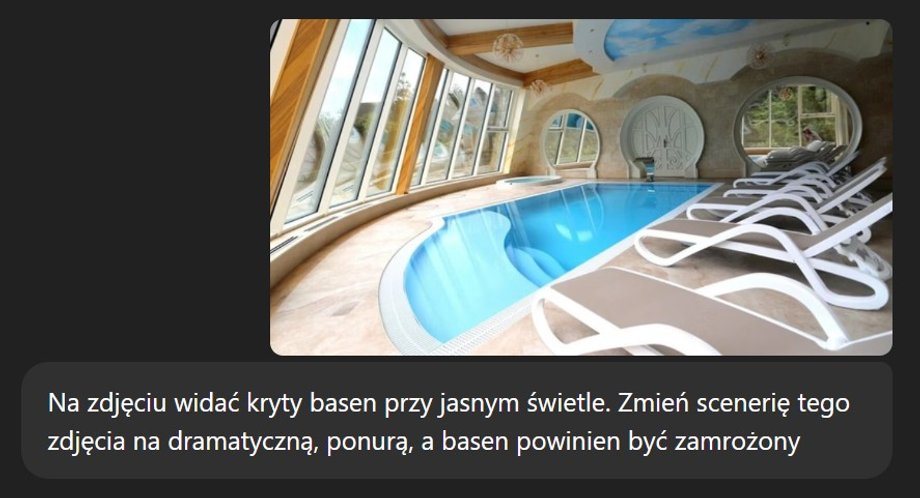
Prompt: The photo shows an indoor swimming pool in bright light. Change the setting of this photo to a dramatic, gloomy one and the pool should be frozen
|
OpenAI
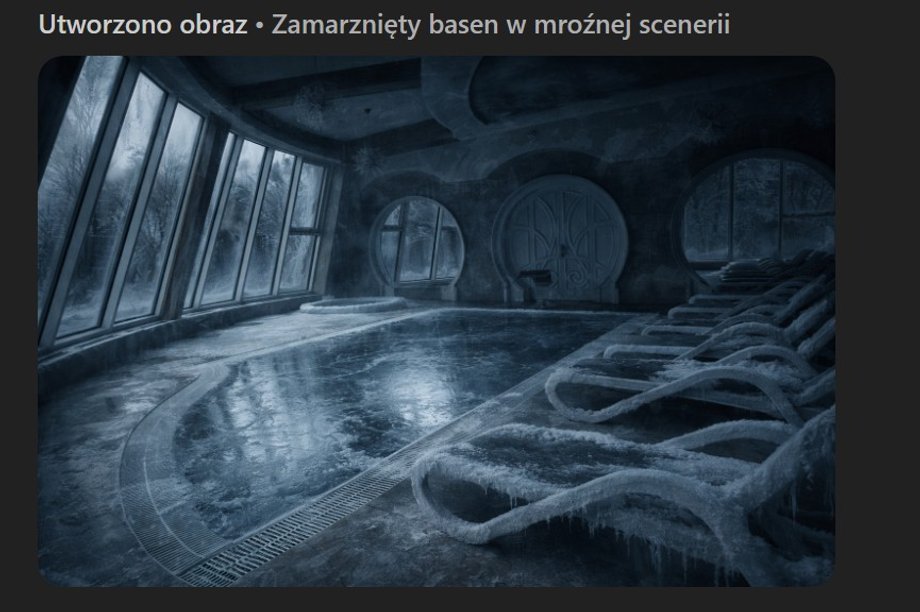
Effect after editing
|
OpenAI
The launch of the new ChatGPT image generator also has a clear market context. The media describes her as a response to the recent wave of admiration around competing imaging modelsespecially Google, which attracted attention for their realism and features. This is a signal that the battle for image generation is entering a stage where not only quality counts, but also speed, repeatability and usefulness in everyday work.
Author: Grzegorz Kubera, journalist of Business Insider Polska


