Article by GSP.ro – Published Thursday, December 25, 2025, 12:41 / Updated Thursday, December 25, 2025 12:42
There are 101 years of written press at Gazeta Sporturilor. In the whirlwind of 60-second videos, we stubbornly value the written word.
GSP reporters make a list of books, more or less current, that impressed them throughout the year. Here they are below:
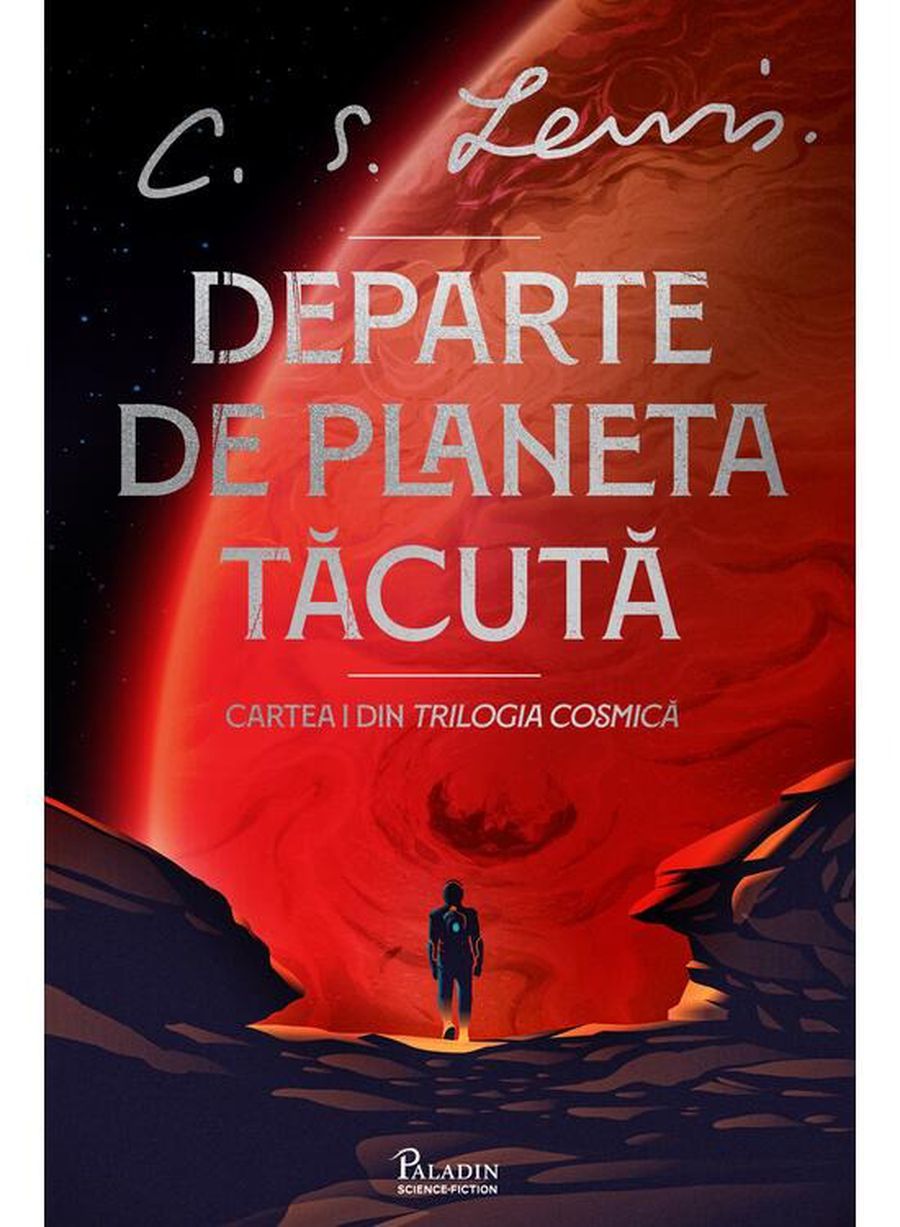
“Far from the silent planet” – CS Lewis (Art publishing house, translated by Andrei Dîrlău)
- Sebastian Culea, Special reporter
A curious recommendation. Curious to me, anyway. I discovered science fiction late, recently – rather, without ever really being drawn to fiction. Or fiction, for that matter. I preferred “serious” books: biographies, diaries, history, etc. Maybe that's why I find the decision odd: sci-fi turned out to be not just entertainment, but a lucid refuge. A break from the social noise, from politics, from the aggressive rhetoric of the world or the anxiety dictated by war.
It serves as a small inner decoupling, especially during the holidays, when we seem to need another air. In this context, CS Lewis's “Far from the Silent Planet” is exactly the kind of escape that doesn't make you stupid or take you away from yourself, but rather resets you.
The novel follows Ransom, an English intellectual kidnapped and transported to the planet Malacandra (a kind of Mars imagined before science completely disenchanted it). There he discovers a civilization very different from ours: intelligent species coexist without the logic of violence and domination, and the world has a moral and spiritual order in which man is no longer the center of the universe.
So that there are no specific “spoilers”, I will say this: the book combines space exploration with theological and philosophical questions about good, evil, destiny, the temptation of power and the limits of man. It's not technological sci-fi, but metaphysical sci-fi: the settings are cosmic, but the stakes are deeply human.
It offers escapism without superficiality. You don't run away from reality, but you look at it differently, from an angle where the conflicts on Earth seem small, but not insignificant. CS Lewis imagines an alien world that is not a pretext for a show, but a mirror: what makes us violent? why do we need dominance? what does man actually lose when he loses his moral compass? It's an easy read and stays with you. For the tranquility it leaves behind, it is not a book that excites and consumes, but one that settles. Just the kind of decent, tonic retreat you're looking for when you want to disconnect from the world for a bit without becoming apathetic.
The book is the first of a trilogy signed by CS Lewis, but the only one translated into Romanian by the Grupul Art publishing house.
Also in the essence of this spectrum, I will also recommend “Mario Vargas Llosa in dialogue with Gabriel Liiceanu – Faces of evil in today's world. Fiction as a vital necessity”, without further explanations, but also a short list of titles:
-
“The Cavalry Army. Tales from Odessa” – Isaac Babel (short prose volume)
-
“Letters from Russia” – Marquis de Custine (travel diary, but also a very detailed political analysis)
-
“The Eternal Man” – GK Chesterton (non-fiction)
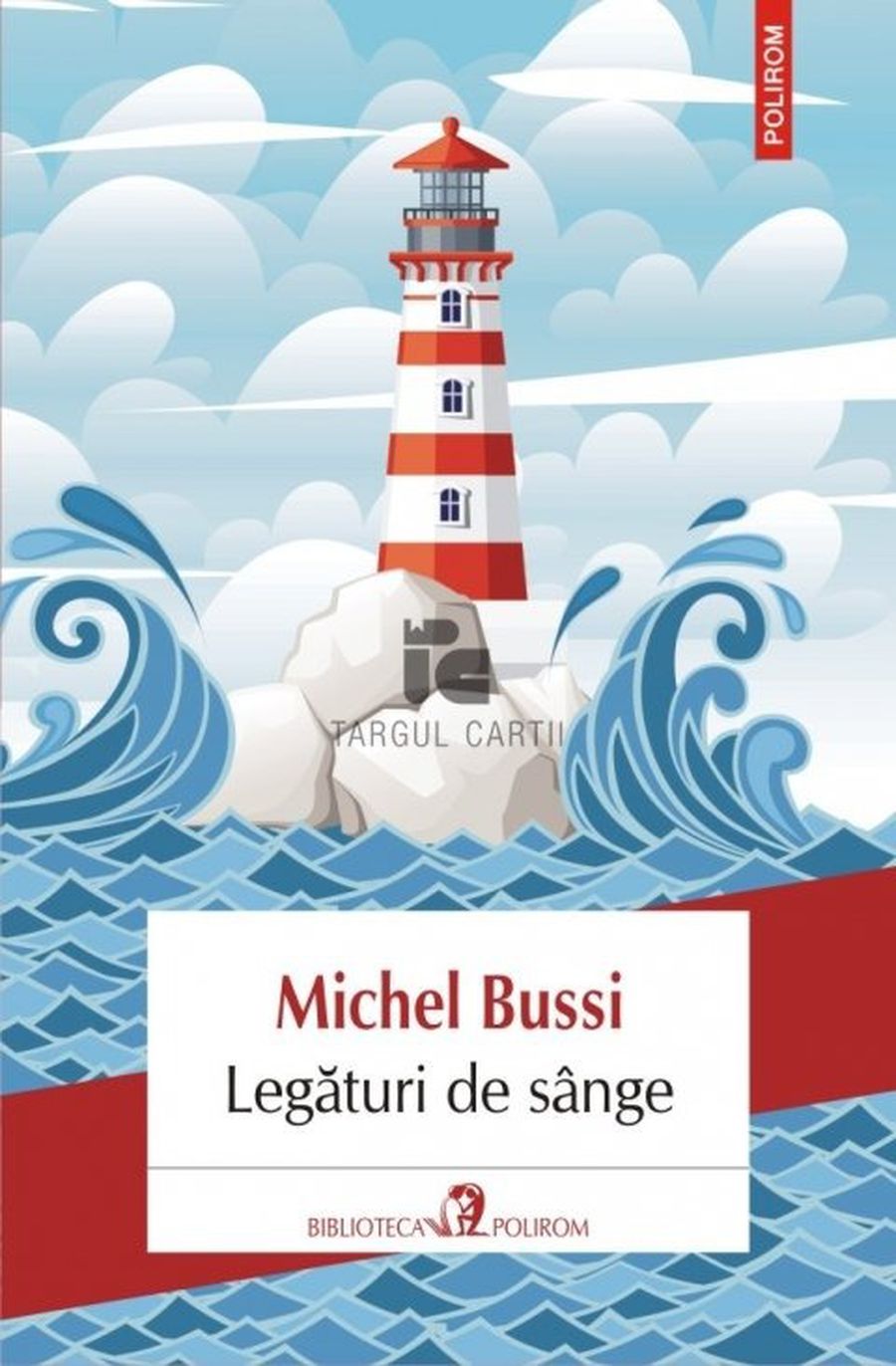
Blood Ties – Michel Bussi (Polirom publishing house, translated by Alexandra Cozmolici)
It depends. What kind of Christmas do you want in 2025. If your ideal is one where you see yourself sinking into the couch, nibbling on slightly unhealthy treats and drinking apple cinnamon tea, then this book could make a great companion. It keeps you glued, but at the same time it accelerates your pulse and stirs your brain, so laziness does not fit.
Everything takes place on an imaginary island, Mornesey, but so well described that the temptation to look for a geographical atlas and learn more about it is always present. Michel Bussi's talent for creating environments down to the last detail related to relief, flora, etc. is fully revealed here, using his knowledge as a geography teacher with precision and imagination.
The mystery seems to unravel slowly, starting from the memories of the protagonist, teenager Colin Remy, almost 16 years old, who begins to piece together the story of his childhood. One weighed down by blurred episodes and marked by his father's suicide and his mother's violent death shortly after. Raised by his aunt and uncle, lonely and sad, he finds in a yachting camp on the island of Mornesey the pretext to explore his past and discover, tab by tab and leaf by leaf, incredible things.
Coincidentally, the day of his arrival on the island also features the escape of two inmates from prison, a dangerous thief and a seemingly mundane clerk. And young Colin seems to recognize his father in the driver of a motor vehicle. But what if, in fact, he didn't die? From here the plot increases rapidly in pace and revelations, twists and turns, surprises and confirmations.
A liter of tea later, in the action concentrated over four days, with chapters precisely marked with hour markers, the stake is revealed: the treasure, the Madness of Mazarin. The core of a dubious real estate business, which is revealed step by step with the help of the teenager, his friends from the camp, the bright Armand and the tenacious Madi – initially the author had also used a male character, but when rewriting the book, in 2018, he replaced him with the silent and wise girl -, an employee of the town hall, Simon, the secretary and a skilled journalist.
In the end, with the soul in the mouth, the mystery dissolves in a fitting ending. But it's not just about adventure and emotions, but more about identity, friendship, loyalty, good ambition and bad, perverted ambition, about truth and the power of memories. About growing up and living in the middle of an unforgettable summer. Even if it's visited at Christmas, with tea and scones next to it.
“If you like hockey you're a lesbian and if you like the players you're a whore”
-
Hockey and life / The Björnstad trilogy / The scandal (Frederik Backman, ART publishing house, translated by Andreea Caleman)
-
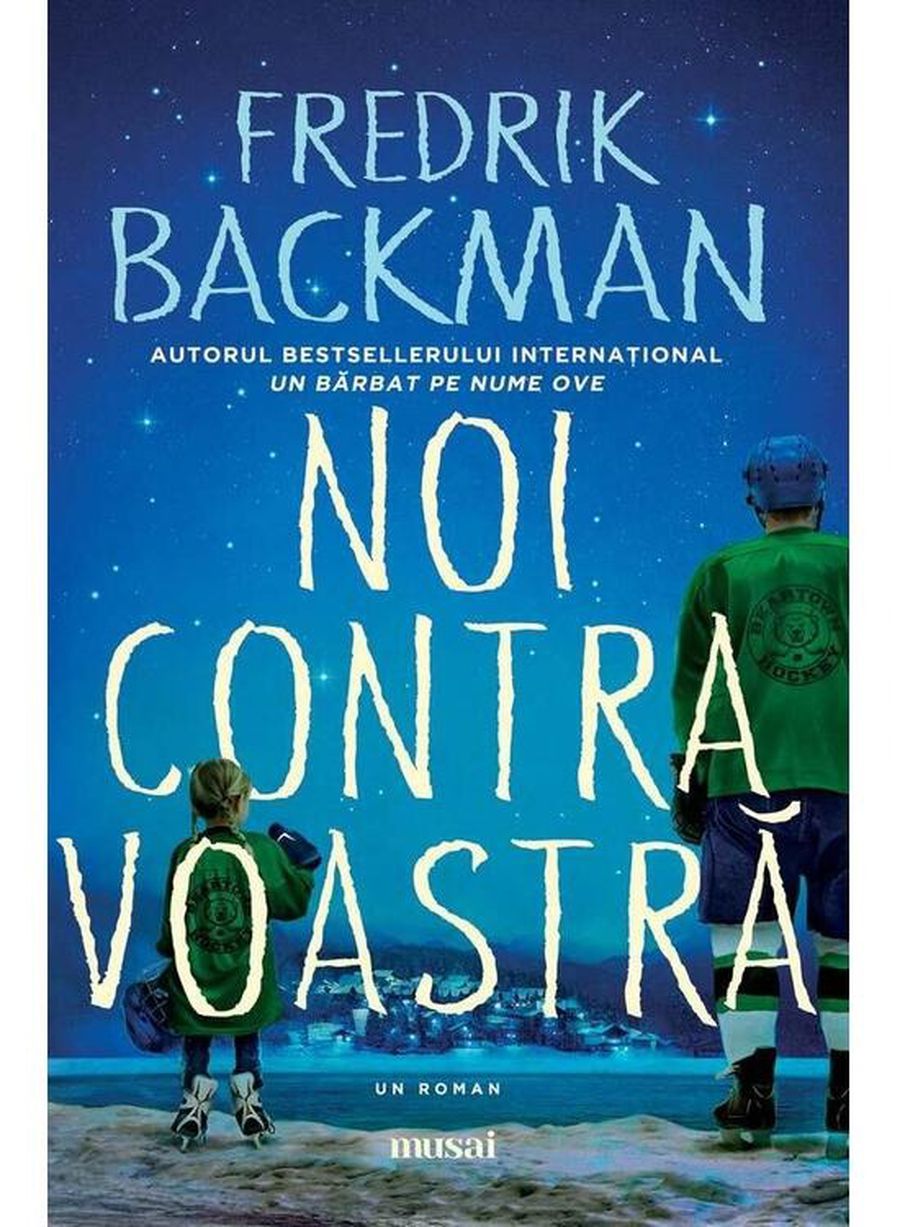
Us against you (Frederik Backman, ART publishing house, translated by Andreea Caleman) / winners (Frederik Backman, ART publishing house, translated by Andreea Caleman)
- Roxana Fleșeru, Sports reporter
If you miss winter, snow, cold, Swedish writer Frederik Backman's trilogy about the small town of Björnstad is the perfect read to feel them all. But the three books, The Scandal, Us Against You, The Victors, are gems. Frederik Backman writes simply, but a saying goes that this is the hardest thing to do, and yet you stick with whole sentences in your mind after going through his books.
scandal it's a shocking book, because it starts from a shocking deed. Beyond its dramatic side, it's also about a hockey team. It's about sport and how it can shape the life of a community. Among the 528 pages there are also some answers to some common questions: “Why do we care about sports?”. “Because it tells us stories” or “Because it has to do with who we are. And where we are.”
Backman is also cruel, bringing current topics such as sexual assault or discrimination into his pages: “In Björnstad, girls don't need to love hockey. Not at all. Because if you like the game, then you're a lesbian, and if you like the players, you're a whore.”
In Us against youFrederik Backman, former blogger and journalist, continues the story of the hockey team, now in danger of disbanding, and the town of Björnstad, putting the spotlight on other characters, but also giving details about the fate of those from the first volume. Rivalry in sports, but also in life, is addressed. “Sometimes a team needs an adversary to rally,” writes Backman, who manages to make you cry and laugh in 560 pages of shared facts.
The last volume of the trilogy, 840 pages long, dedicated “For you who talk too much, sing too loud, cry too often and love something in life more than you should”, tries to find answers to various mundane questions with the help of characters who grew up in the other parts of the series. Who are the winners in the end? Some leave, others return, and the city changes with them, but not the sport they worship. It's ordinary life in all three books, which can also be read as individual novels.
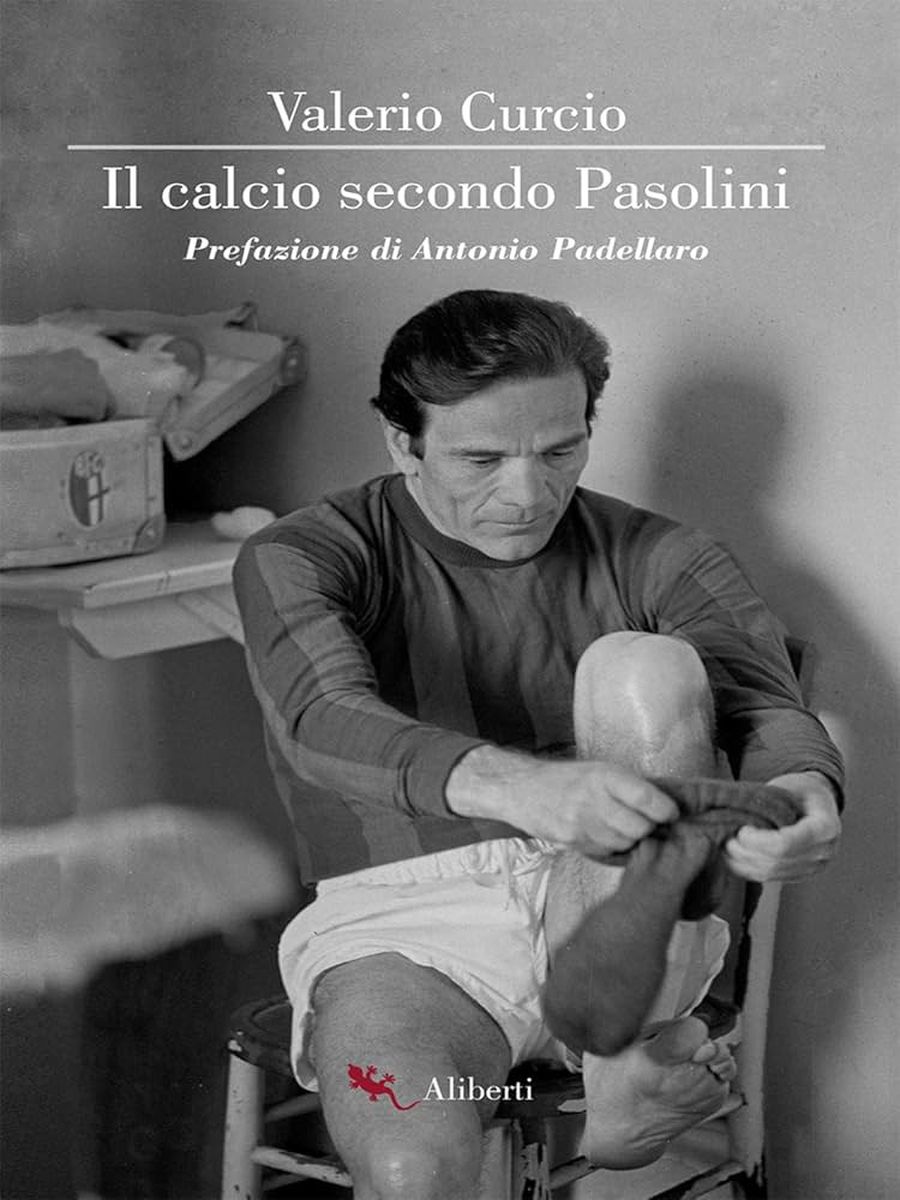
Il calcio secondo Pasolini (Football as seen by Pasolini), by Valerio Curcio, Compagnia Editoriale Aliberti publishing house
- George Nistor, domestic football reporter
For Pier Paolo Pasolini, one of the beautiful rebels of the 20th century, football was never a sport, but a type of language, through which man expresses himself every time his foot touches the ball.
The book I recommend is a journey into revelatory ideas, in which the supporter, footballer, storyteller, columnist and intellectual – all in one person – contemplates in an enthusiastic approach the phenomenon that, decades later, would become an industry.
That's how you come to think if the ball is not a natural extension of the body, as Pasolini, “director, essayist, occasional footballer and poet of the street”, as his colleague Sebastian Culea called him in one of the “Art and Sports” articles, discovered during a break in filming.
In Italy, Pasolini is considered the first great multimedia artist. In his bohemia, he often abandons filming to exchange a few passes or just to watch the children play in the slums of Rome.
The author Valerio Curcio, a sports journalist who inspires me and whom I had the pleasure of meeting, collected fragments, photographs, memories and went to the fields with aqueducts in the background, forgotten by time, where the non-conformist master, great fan of Bologna, roamed. He didn't find it, but he created a fascinating mosaic that makes you question and relive a world that wasn't given to us.
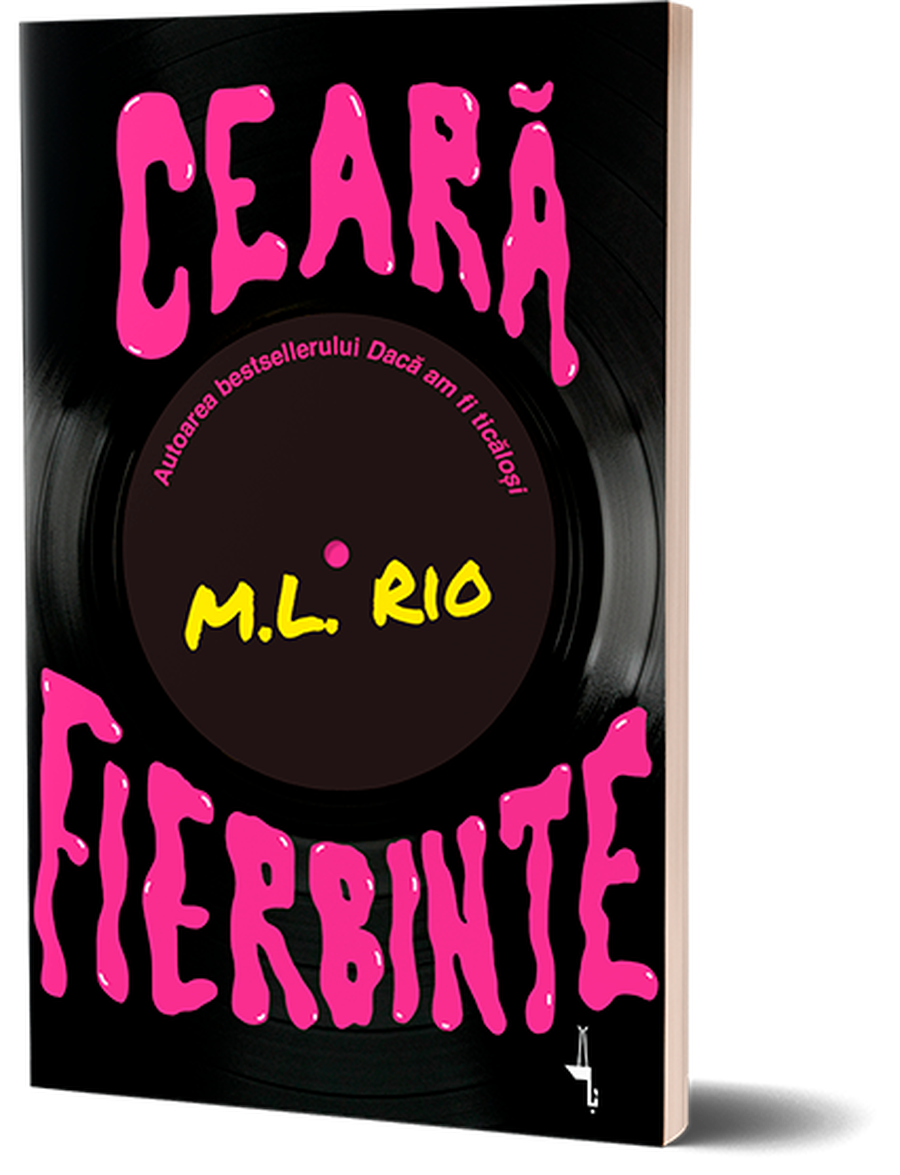
Hot wax (ML Rio, Alice Books publishing house, translated by Bogdan Ghiurco)
The book is a deep and elaborate foray into the mysterious world that surrounds rock music, with its stars, its vices, the sacrifices it demands, the wounds that remain attached to those who have spun, in one way or another, through this fascinating, but also poisoned universe.
Suzanne lives her childhood between electric guitars and the chaos of her father's life, who is a member of the prophetically named Gil and the Kills. She even turns into a little groupie, accompanying him on tours and attending the concerts that enchant her, but also the scandals between the musicians. This is where the thriller part of the volume comes in: one of these scandals ends as badly as possible, and the burden of the crime remains, decades in a row, on the shoulders of the little girl, who does not know how to manage the terrible secret that has stuck to her soul like a giant sea urchin.
Throughout the book, the author “saves” her character in the first instance, lifting him from the psychedelic environment of rock and dressing him in the sensation of a normal man, trying to take root in the real world. The death of the father, however, triggers nostalgia and adrenaline in Suzanne – on the one hand, the longing for the person she could have become, if she had kept her personal freedom, without her loving husband, Rob, in her, on the other hand, the questions she wants to know the answer to, despite the passing of the years and the oblivion that seems to encompass those around her.
The sins of the parents and the truths of psychoanalysis return, biblically and didactically, to the child of yesteryear, who gradually, in adulthood, transforms into the core of chaos from which she once fled, repeating the history and patterns she thought were lost in the mist of the past.
It's a living, believable, dynamic, raw, fascinating book, which combines the life of the rock scene of the 80s-90s with the personal dramas of those who gravitate around it. It has documentary value and is a great read if you listen to a playlist full of guitars and drums on Spotify. Rock on and happy holidays!