On Monday, December 22, an informal summit of the Commonwealth of Independent States, an organization bringing together some of the countries created after the collapse of the Soviet Union in 1991, will be held in St. Petersburg. It was created primarily to maintain political, economic and military cooperation between the former Soviet republics and to ensure a “civilized divorce” after the fall of the empire.
In practice, the CIS is neither a strong alliance nor a uniform organization – it has limited real significance, and its role has systematically decreased over the years. However, it is sometimes a tool for Russia maintaining influence in the post-Soviet spaceespecially through regular leadership meetings and formal cooperation mechanisms.
This event is as routine at the end of the year as Eldar Ryazanov's cult film “Irony of Fate, or Happy New Year”, which is broadcast on Soviet-Russian television always around the New Year.
Just such a tradition – although not yet a thousand years old – just like the Commonwealth of Independent States itself, which is most often recalled on the occasion of the December annual meeting.
Some guests have already arrived in the northern capital.
Apart from Georgia, Ukraine – which chose a different path than the one set out in the Kremlin – Moldova and the Baltic states that managed to join NATO and previously experienced Russian military claims. The leaders of the remaining former Soviet republics, which to a greater or lesser extent identify with the CIS “presidential club”, will come to talk to Putin.
The central event of the summit is to be the already announced meeting between Putin and the President of Azerbaijan, Ilham Aliyev. It can be said with a high degree of certainty that the main point of the talks will be an attempt to overcome the deep crisis in Baku-Moscow relations, which broke out exactly one year ago – on December 25, 2024.
Then, an AZAL airlines passenger plane crashed in Aktau, Kazakhstan. The resulting disaster killed 38 passengers and crew erroneous operation of Russian air defense over the territory of Chechnya. Baku has yet to receive a public apology from Moscow or an official admission that Russian missiles were the cause of the tragedy…
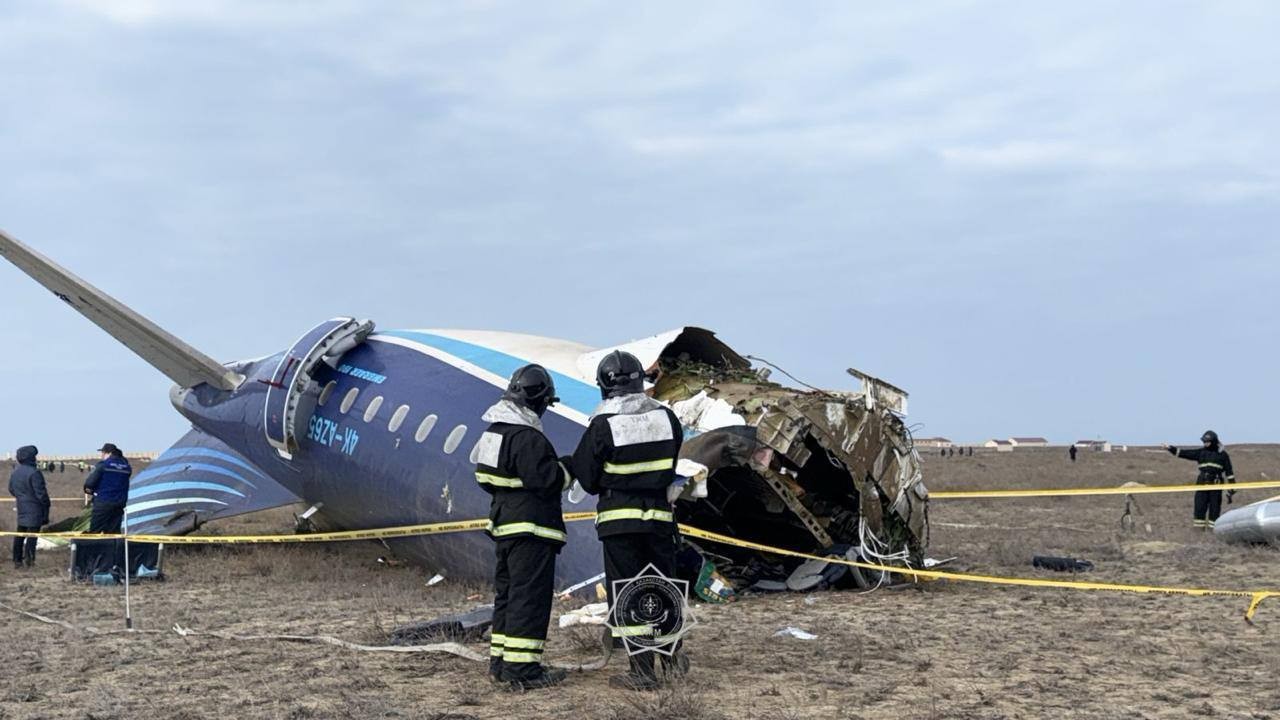
Crash site near the Kazakh Caspian city of Aktau – an Azerbaijan Airlines plane crashed with 67 people on board, Kazakhstan, December 25, 2024.Emergency Situations of Kazakhstan/Anadolu via Getty Images / Contributor / Getty Images
Shortly thereafter, deadly raids by Russian services in Yekaterinburg took place for ethnic Azerbaijanis. The scandal in relations between Russia and Azerbaijan began to grow like dry litter on a hot day, one spark was enough.
It is difficult to say today what the formula of reconciliation will be in tomorrow's arrangements between Putin and Aliyev. However, one thing is obvious: either such a formula has already been found or it will appear soon. Otherwise, the visit of the President of Azerbaijan to St. Petersburg would make no sense.
Another unknown is the presence of Armenian Prime Minister Nikol Pashinyan at the summit and, it seems, a trilateral meeting of Putin, Pashinyan and Aliyev.
Is Moscow returning to the Caucasus?
There will be no shortage of topics for discussion, especially in the context of a purely commercial proposal: inviting Russian business to participate in the construction of a transport corridor between the main part of Azerbaijan and its exclave, the Nakhchivan Autonomous Republic.
After the agreement between the US, Armenia and Azerbaijan was signed in Washington on August 8 this year, this route is sometimes referred to as the “Trump route”. Will Russia be able to consider this as a partial return of its lost influence in the South Caucasus? Only to the extent that Baku and Yerevan are ready.
There is also a question whether Putin will show interest in the court case in Azerbaijan against former Russian oligarch Ruben Vardanyan. Vardanyan renounced his Russian citizenship in 2022 and left for Nagorno-Karabakh to head the government of the unrecognized republic. Today he faces life imprisonment.
Will this topic come up in conversations? It's hard to guess – unless the host of the summit finds such “humanitarian sensitivity” useful from the point of view of his geopolitics in the region.
Multi-vector game of Central Asia
Bilateral meetings between Putin and the presidents of Central Asian countries may also be interesting. On Saturday, December 20, they all met in Tokyo at the C5+ Japan summit.
It is worth noting that the diplomatic activity of Central Asian leaders in relations with global centers of power – China, the USA, Russia and the European Union – recently seems unprecedented.
This region, in troubled and tense times, is looking for a point of balance. Or, as the president of Kazakhstan put it during a lecture in Tokyo, he seeks harmony with the rest of the world.
As for Kazakhstan, particular attention was drawn to reports appearing just before the St. Petersburg meeting about preparations for the launch in that country own production (not yet existing) of artillery shells and mines according to NATO standards. It is not difficult to guess whether this topic will appear in the talks between the Russian and Kazakh delegations.
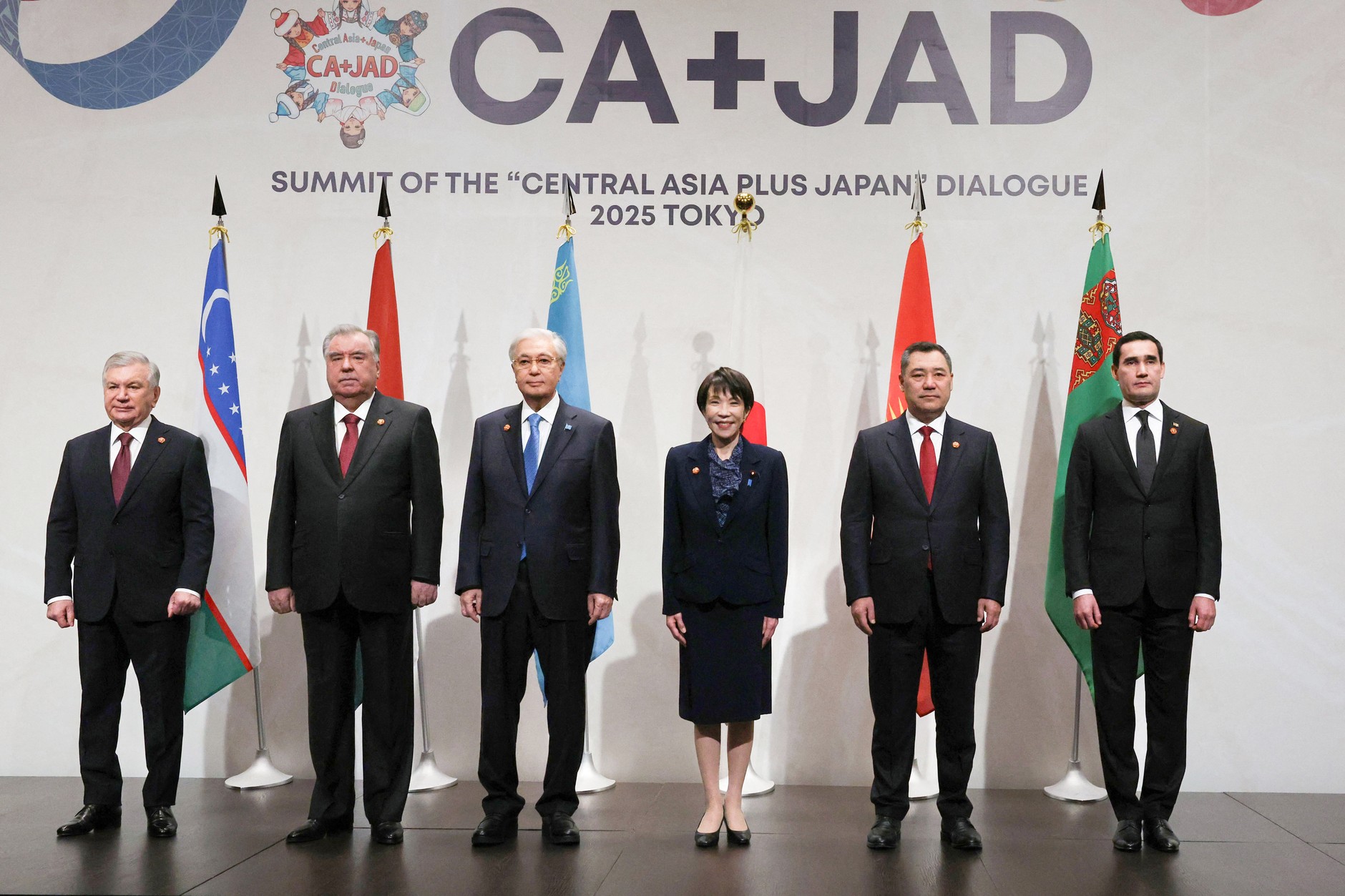
The Presidents of Kazakhstan, Uzbekistan, Kyrgyzstan, Tajikistan and Turkmenistan and the Prime Minister of Japan at the C5+ Summit, Tokyo, Japan, December 20, 2025.Pool for Yomiuri / Yomiuri / The Yomiuri Shimbun via AFP / AFP
It also seems inevitable that the burning issue of migrants from the CIS countries will be raised in Russia again. This problem re-emerged dramatically after the tragic death of a 10-year-old boy from a Tajik family, murdered in the city of Odintsovo near Moscow by a 15-year-old Russian teenager.
I have no doubt that the President of Tajikistan Emomali Rahmon will once again try to remind Putin about the dramatic situation of Tajiks in Russia, where they regularly fall victim to xenophobia and ethnic hatred that part of Russian society harbors towards economic migrants from Central Asia.
Lukashenko's nuclear card
And finally, the icing on the cake will most likely be Alexander Lukashenko's speech. It will present Belarus in a new role: a de facto nuclear state.
Russian Oreshnik missile systems have already been put on combat readiness. You can be sure that Lukashenko has just gained solid arguments to offer his “nuclear umbrella” to his allies.
In cold St. Petersburg, decisions are made whose consequences may be much hotter than they might seem.