
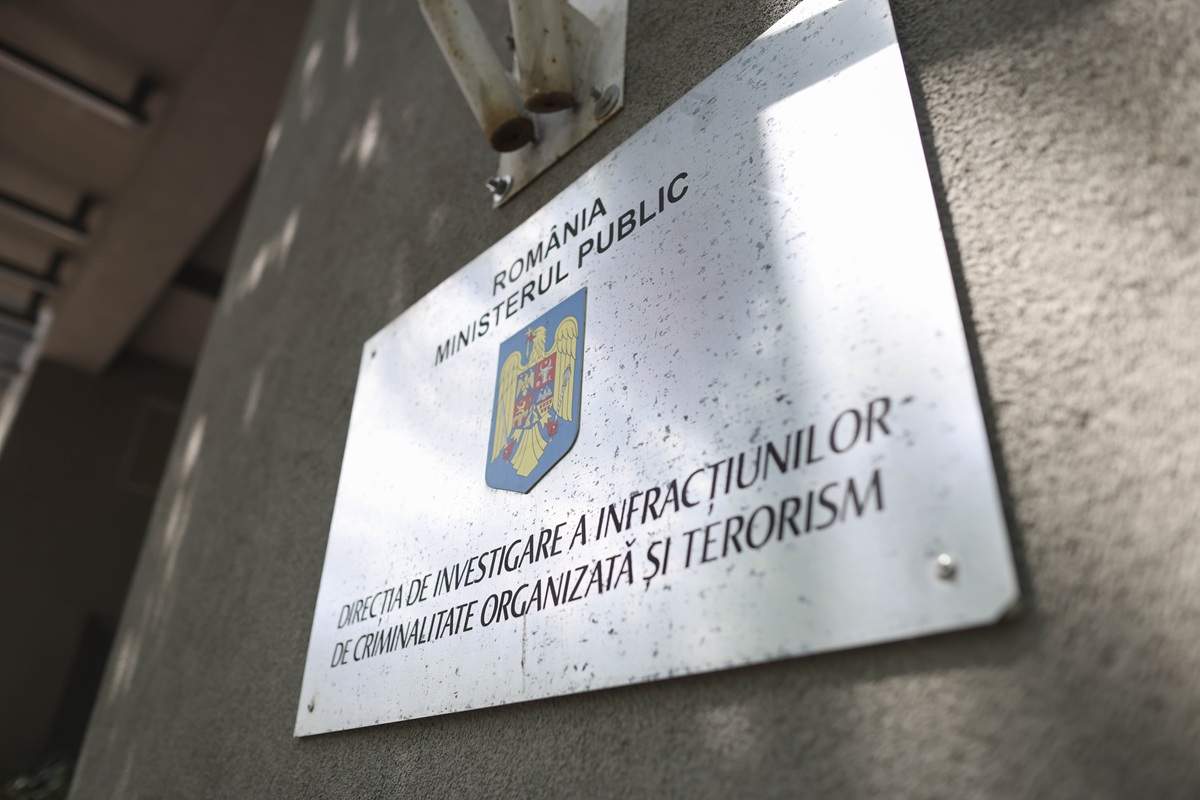
Illustration with DIICOT headquarters. Inquam Photos / Sabin Cirstoveanu
The Directorate for the Investigation of Organized Crime and Terrorism (DIICOT) announced on Monday that a criminal file was registered on the part of the central structure, in which investigations are being carried out in rem, after the cyber attack that targeted the “Romanian Waters” National Administration.
DIICOT specified that investigations are being carried out regarding possible crimes of illegal access to a computer system in continuous form, disruption of the operation of computer systems in continuous form and illegal operations with computer devices or programs.
“The investigations were launched, after the APELE ROMANE WATERS National Administration filed a criminal complaint regarding a “ransomware” computer attack, consisting of the fact that unknown authors accessed the institution's computer systems, a computer attack that resulted in the encryption of the computer data on the attacked devices and servers”, notes DIICOT in the statement sent on Monday.
The institution stated that criminal investigation activities are carried out together with policemen of the Directorate for Combating Organized Crime.
“We specify that this stage of the criminal process does not signify the formulation of accusations against a person/s, but establishes the procedural framework necessary to gather evidence for the correct and complete establishment of the state of facts to allow the adoption of a legal and thorough solution in the case”, DIICOT also declared.
On Monday, the “Apele Romanian Waters” National Administration came up with new information related to the ransomware cyber attack that compromised several workstations and servers in the country, stating that “there is no impact on essential activities”. The investigation is ongoing and at this time it is not known exactly how the attackers penetrated the network.
 Cyber attack on “Romanian Waters”: Essential activities are not affected. It is not known exactly how the attackers penetrated the network


