over 50 percent electricity from renewable energy sources by 2030, nuclear and gas in the mix


— We have hard data that show that the energy transformation is simply profitable for Poland. The National Energy and Climate Plan is a roadmap for transformation based on security, competitiveness and lower energy prices, said the Minister of Energy, Miłosz Motyka, during a press conference. Today, the ministry headed by a PSL politician presented an updated version of the leading strategic document in the field of energy.
The rest of the article below the video:
Read also: We know the government's nuclear plans. There will be more power and state support for SMR reactors
More than half of the electricity comes from renewable energy sources
The National Energy and Climate Plan (NECP), previously prepared at the Ministry of Climate and Environment, has been revised. As before, the Ministry of Energy presented two variants – an “ambitious” (so-called WAM scenario – with additional measures) and a “sustainable” (so-called WEM scenario – with existing measures) transformation. It is the latter that will be recommended to the European Commission as binding.
By 2030, renewable energy sources are to be responsible for 30 (WEM scenario) or 32 percent. (WAM scenario) gross final energy consumption. From 51.6 to 53.2 percent. will fall on the electricity sector, 31.6-36.5 percent. for heating and cooling, and 16.5 percent for transport. As for the first sector, in 2040 renewable sources are expected to generate from 65 to 68 percent. electricity.
In 2030, we are expected to have from 30.5 to 32.4 GW of installed capacity in photovoltaics (again, in the WEM and WAM scenarios, respectively), 15.8-16.5 GW in onshore wind farms, 5.9 GW in offshore wind farms (the same in both scenarios) and 14.8-14.9 GW in coal. By 2040, the mix will be supplemented with nuclear energy – from 4.9 GW in the WEM scenario to 5.9 GW in the WAM scenario.
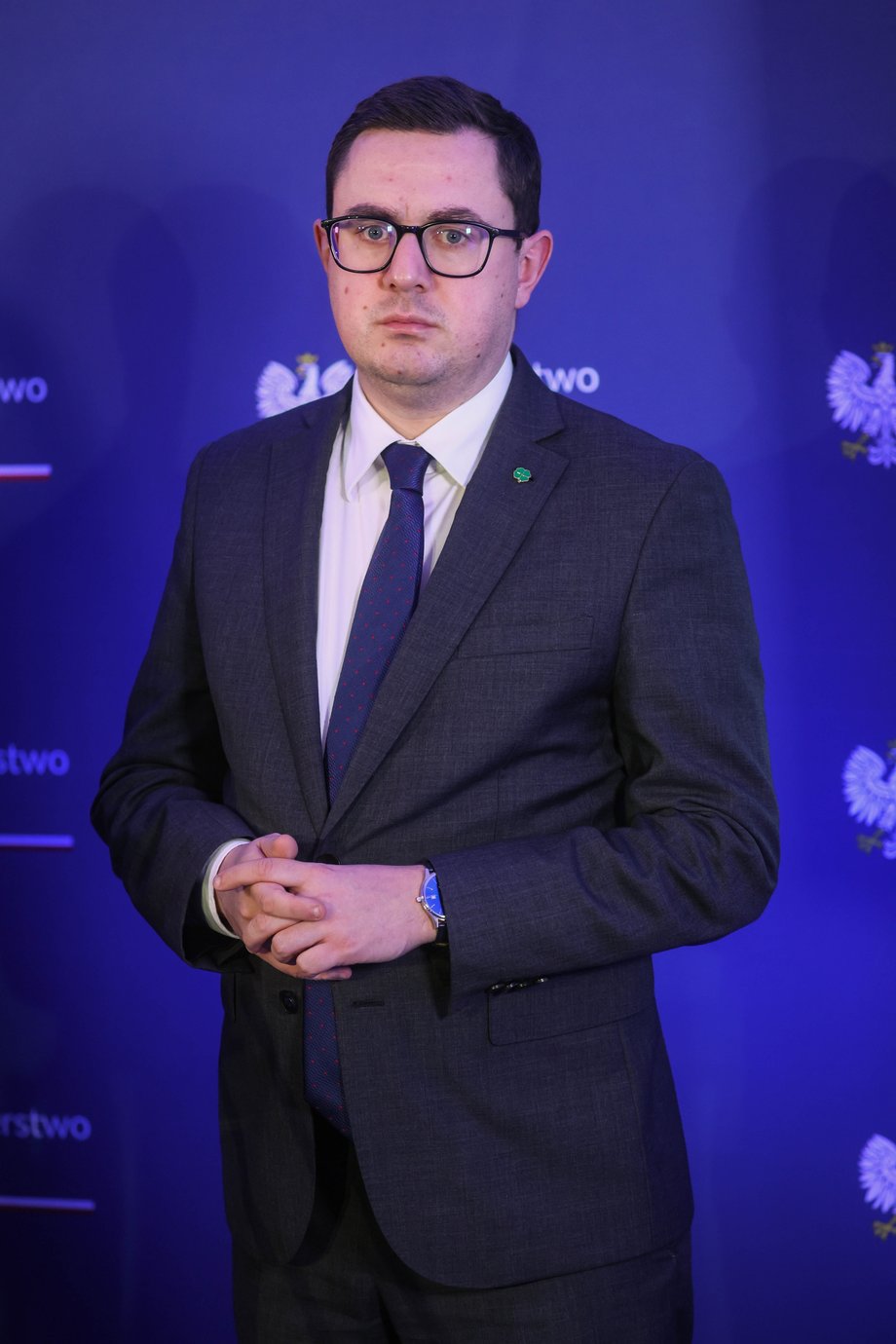
Minister of Energy Miłosz Motyka
|
PAP/Leszek Szymański / PAP
The role of gas will increase
As for electricity production, in 2030, solar sources are to be responsible for 26-29 terawatt hours, onshore wind energy for 39-42 TWh, and offshore wind energy for 22 TWh in the WEM scenario or 21 TWh in the WAM scenario. By 2040, onshore wind energy (74 TWh in the WAM scenario and 54 TWh in the WEM scenario) and offshore wind energy (58 TWh in the WAM scenario and 44 TWh in the WEM scenario) are expected to gain in importance. Nuclear energy in the “sustainable” scenario in 2040 will be responsible for 38 TWh of electricity produced or 44 TWh in the “ambitious” scenario.
The next fifteen years will also be a share natural gas as a transition fuel to be replaced by decarbonized and renewable gases. The peak of gas consumption will occur in 2030 – 24 billion cubic meters. in the WEM II scenario, 25 billion cubic meters. in the WAM scenario. In 2040, the “sustainable” scenario assumes 19.3 billion cubic meters. consumed gas, and the “ambitious” scenario – 14 cubic meters. In both scenarios, hard coal will also remain in use until 2040 – at the level of approximately 10 million tons (in 2020 it was 53.2 million tons).
Read also: How long will gas stay with us? Difficult questions about decarbonization
Thermal modernization will reduce the demand for heat
In the heating sector, by 2030, renewable energy will be responsible for approx. 32-36%. production (in the WEM and WAM scenarios, respectively). In 2040 it will be from 43 to 57 percent.
Greening the heating sector will involve increased biomass consumption. By 2040, coal-fired heat and power plants are also to cease operation, and the heating sector will instead use nuclear energy (e.g. in the form of waste heat). The Ministry of Energy also predicts that the demand for heat will decrease thanks to thermal modernization.
The biggest project after 1989?
The scenarios also differ in the assumed level of greenhouse gas emission reduction. The WAM variant is 53 percent. fewer emissions in 2030, and the WEM variant – 43%. less. In 2040, the “ambitious” scenario is expected to reduce the climate impact by 75%, and the “sustainable” scenario – by 61%. All options refer to 1990 emission levels.
The ministry also promises to reduce the unit costs of energy production by 8%. by 2030 or 18 percent by 2040. It also assumes a reduction in energy poverty.
The NECP is also to be an “engine of the country's development”. By 2040, investment outlays for new capacity, network expansion and thermal modernization should amount to PLN 2.8 to 3.5 trillion. Similarly to the Ministry of Climate and Environment, the Ministry of Energy also describes the Plan as “the largest modernization project after 1989.” The transformation in its proposed form is to mean economic growth and strengthening the competitiveness of Polish companies, creating new jobs, a decrease in spending on emission allowances, reducing the import of raw materials, but also better air quality and “a better quality of life for citizens.”