There is oversupply in the global oil market. Prices are near five-year lows, giving President Donald Trump a unique advantage freedom to increase military pressure on the South American OPEC member.
However, these low prices are what they are too little incentive for companies to take risks and invested huge amounts of money in Venezuela's declining oil infrastructure, taken over decades ago by former dictator Hugo Chavez, which is highlighted by industry representatives and analysts.
On Wednesday afternoon, American crude oil cost approximately $56. [ok. 200 zł] per barrel, which is the lowest price since January 2021. This means that Trump has little reason to worry that a possible attack on Venezuela will cause a sharp increase in gasoline prices – but also that American oil companies have more attractive investment opportunities in other regions of the world.
— There is an initiative to establish contacts with the industry regarding the potential of re-entering the Venezuelan market, says one of the people familiar with the talks. — But honestly, with low oil prices and more attractive deposits in the world, there is little interest from companies.
“It's not easy to convince companies”
According to two sources, the administration only recently started talks with the industry. “It's not easy to convince companies to risk capital in an uncertain political environment,” one of these people admits. We guaranteed anonymity to three of our interlocutors so that they could freely describe the course of internal conversations.
The American activities, led by the Department of State, were also supported by Evanan Romero, a former manager of the state oil company Petroleos de Venezuela, now a consultant from Houston, according to an industry insider.
The article continues below the video
Romero tells POLITICO that the Trump administration's actions included: organizing a meeting in Washington at the end of November, chaired by Secretary of Energy Chris Wright, attended by representatives of Exxon, ConocoPhillips and a group of Venezuelan oppositionists to which Romero belongs. They discussed the possible return of the two oil giants to the country.
Romero, who did not participate in the meeting but received reports from other opposition members, describes it as “positive” and emphasizes that Wright's presence was 'very, very helpful'. According to him, Exxon and ConocoPhillips expressed concerns about Venezuela's debt, and representatives of the Venezuelan side proposed taking over further deposits as a form of compensation for these liabilities.
The State Department and the Department of Energy did not immediately respond to requests for comment. Exxon and ConocoPhillips for now did not confirm their participation in the meeting.
Romero says Wright encouraged companies “to find common ground and gradually resolve their issues,” but made clear the Trump administration would like to see more Venezuelan oil flowing to US refineries. – We need these barrels. This is an important signal from the government, Romero emphasizes and admits that he is participating in ongoing talks regarding the technical details of the possible return of American companies. He added that the Venezuelan group is also in talks with Spanish and Italian oil companies.
“The president cuts off the regime's access to basic sources of income”
Trump made the announcement on social media on Tuesday blockade of ships leaving Venezuela with oil subject to US sanctionsadding that the United States “will not allow a hostile regime to seize our oil, land or other assets that must immediately return to the United States.”
A White House spokesman did not respond to questions.
In the early 2000s, Chevron, Exxon, ConocoPhillips, Halliburton, Schlumberger, Weatherford International and Baker Hughes had operations in Venezuela when Chavez tried to force them to give up majority stakes in the projects to state-owned Petroleos de Venezuela. Venezuela seized the assets of companies that opposed it.
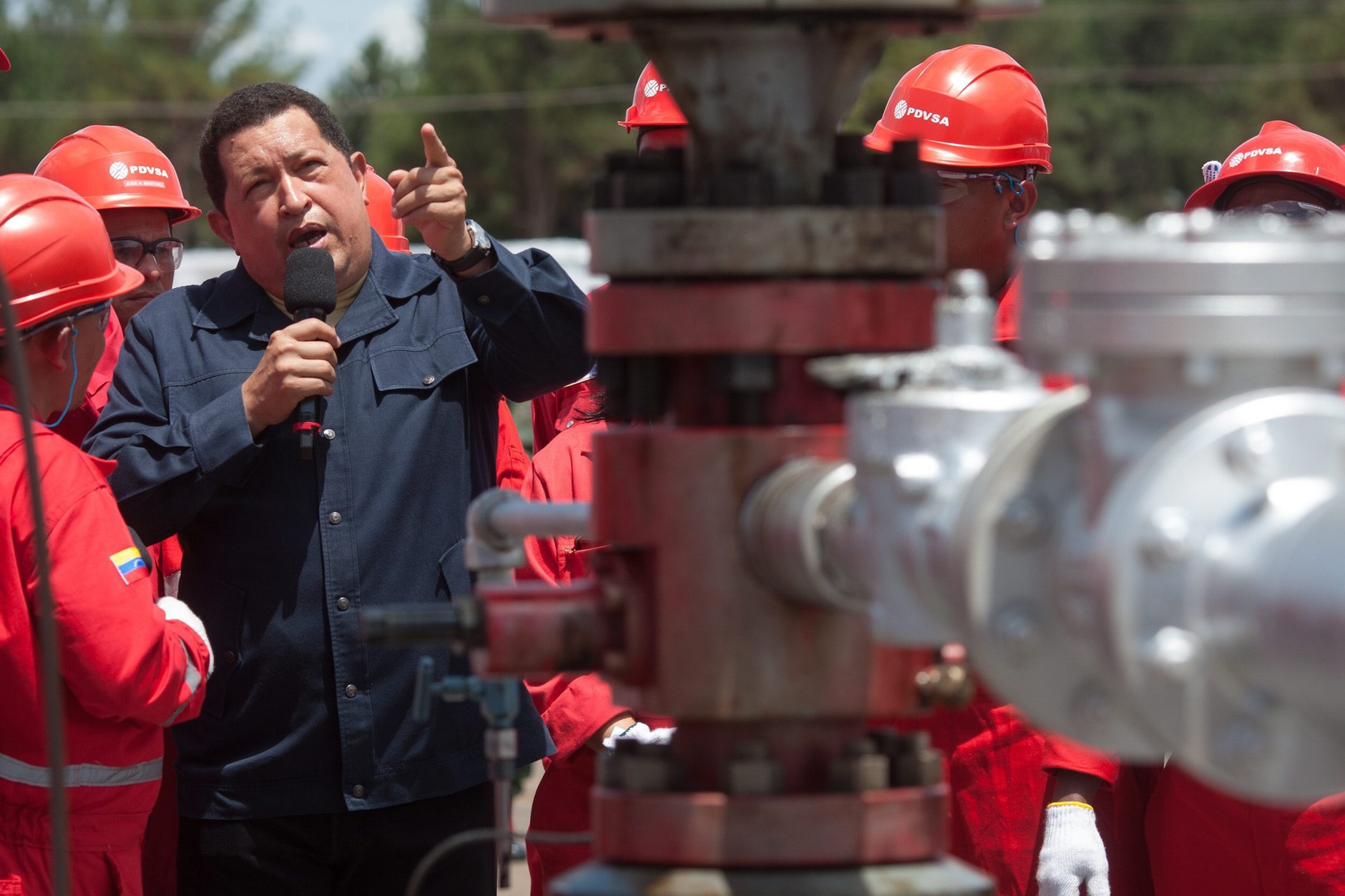
Hugo Chavez visits the Orinoco Oil Belt, August 22, 2012.EPA/MIGUEL GUTIERREZ / PAP
Richard Goldberg, a former White House official and co-creator of the Energy Dominance Council in the Trump administration, believes that “it makes sense” for the administration to approach companies “in the current reality.”
— With the naval blockade the president cuts off the regime's access to basic sources of income – comments Goldberg, emphasizing that he has no direct knowledge of the ongoing talks. — If Venezuela's oil exports are free from sanctions and return to pre-Chavez levels, there will be huge opportunities for oil companies. Many of them, like Chevron, already have infrastructure in place, so it would just be a matter of restarting operations.
Spokesmen for Exxon, ConocoPhillips, Halliburton and Weatherford did not respond to questions. Spokesmen for Baker Hughes and Schlumberger (now SLB) declined to comment.
Chevron representative Bill Turenne referred all questions about security in Venezuela to the appropriate U.S. government services. Chevron was the only major oil company to continue operating in the country under a special license enabling oil extraction and its export to the United States.
“Chevron has been operating in Venezuela for over a century, and we believe our presence continues to stabilize the local economy, the region and U.S. energy security,” Turenne said. — Our operations in Venezuela are in full compliance with applicable laws and regulations and the sanctions regime established by the United States government. The most important thing for us is the safety of employees, local communities, the environment and the integrity of the joint venture's assets.
“Companies that have been burned once will be cautious when returning.”
The first Trump administration imposed sanctions on Venezuela, including its oil sector. Years of sanctions, insufficient investment and political chaos have turned the country that was once one of the world's largest oil producers into what industry officials say is almost a scrapyard.
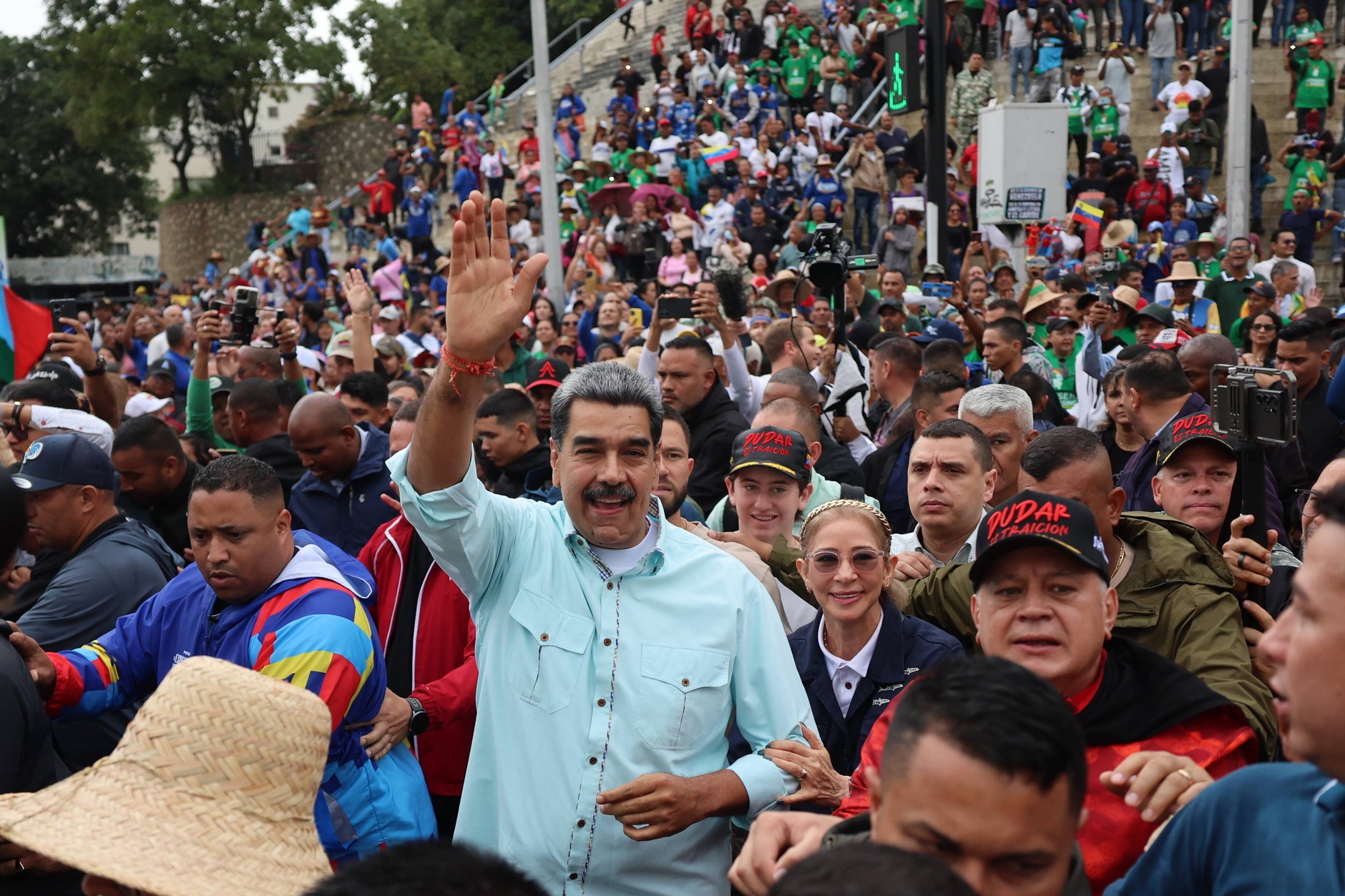
Nicolas Maduro, president of Venezuela, during a demonstration of support for the ruling party. Caracas, December 10, 2025EPA/MIGUEL GUTIERREZ / PAP
However, as analysts point out, restoring oil production in Venezuela may not be as easy as some in the administration believe. Fernando Ferreira, director of geopolitical risk at Rapidan Energy Group, believes oil giants will “cautious before jumping into the deep end, as perhaps the administration expects”.
“Companies that have already been burned once will be cautious when coming back – they need to demonstrate to shareholders that the situation has now changed,” Ferreira said. – He will probably perform the gap between the change of government and the inflow of investments into Venezuela.
However, he pointed to increased interest in companies returning to Venezuela after the Biden administration began easing sanctions in 2022. — There is definitely hidden interest in Venezuela – he concluded.
I’m Ashley Davis as an editor, I’m committed to upholding the highest standards of integrity and accuracy in every piece we publish. My work is driven by curiosity, a passion for truth, and a belief that journalism plays a crucial role in shaping public discourse. I strive to tell stories that not only inform but also inspire action and conversation.