Europeans and Americans celebrate the success of Berlin negotiations to end Russian aggression against Ukraine. And indeed, they have made significant progress in developing security guarantees for Kiev in the event of renewed aggression by Moscow. Europe wants to lead a coalition of countries willing to take on this task.
The Europeans only vaguely and peripherally mention possible operations in Ukraine, apparently in peacetime. In the event of a renewed conflict, it refers to “actions aimed at restoring peace and security.” These may “include the use of armed forces, intelligence and logistical support, and economic and diplomatic activities.” The Americans' assurance of “support” for European forces in this regard is equally unclear.
The Trump administration presents this as security guarantees similar to those provided for in Art. 5 of the NATO Treaty. Despite all the progress in the talks, this is a huge exaggeration. Therefore, it is more interesting to look at the political messages coming from the Berlin Agreement. In this way, the Europeans want to signal to Washington that they are ready to make a significant contribution to lasting peace in Ukraine, that they want to be part of the solution and not – from the point of view of the Trump administration – part of the problem.
What is much more questionable is what the Trump administration wanted to achieve in Berlin. The promotion of supposedly solid security guarantees is aimed at increasing pressure on Ukraine to agree to Russia's demand for a bloodless surrender of the remaining part of Donbas. The message is this: if you get security guarantees, you will no longer need the fortified zone in Donbas.
Unclear security guarantees
In reality, however, this would not increase Ukraine's security, but would significantly threaten it. Because who really believes that in the event of a serious threat, one can rely on the security guarantees of militarily weak European countries and the pro-Russian Trump administration? Under his rule, the Americans have become such an unreliable partner that Europeans cannot even be sure whether the United States would defend its NATO partners in the event of Russian aggression.
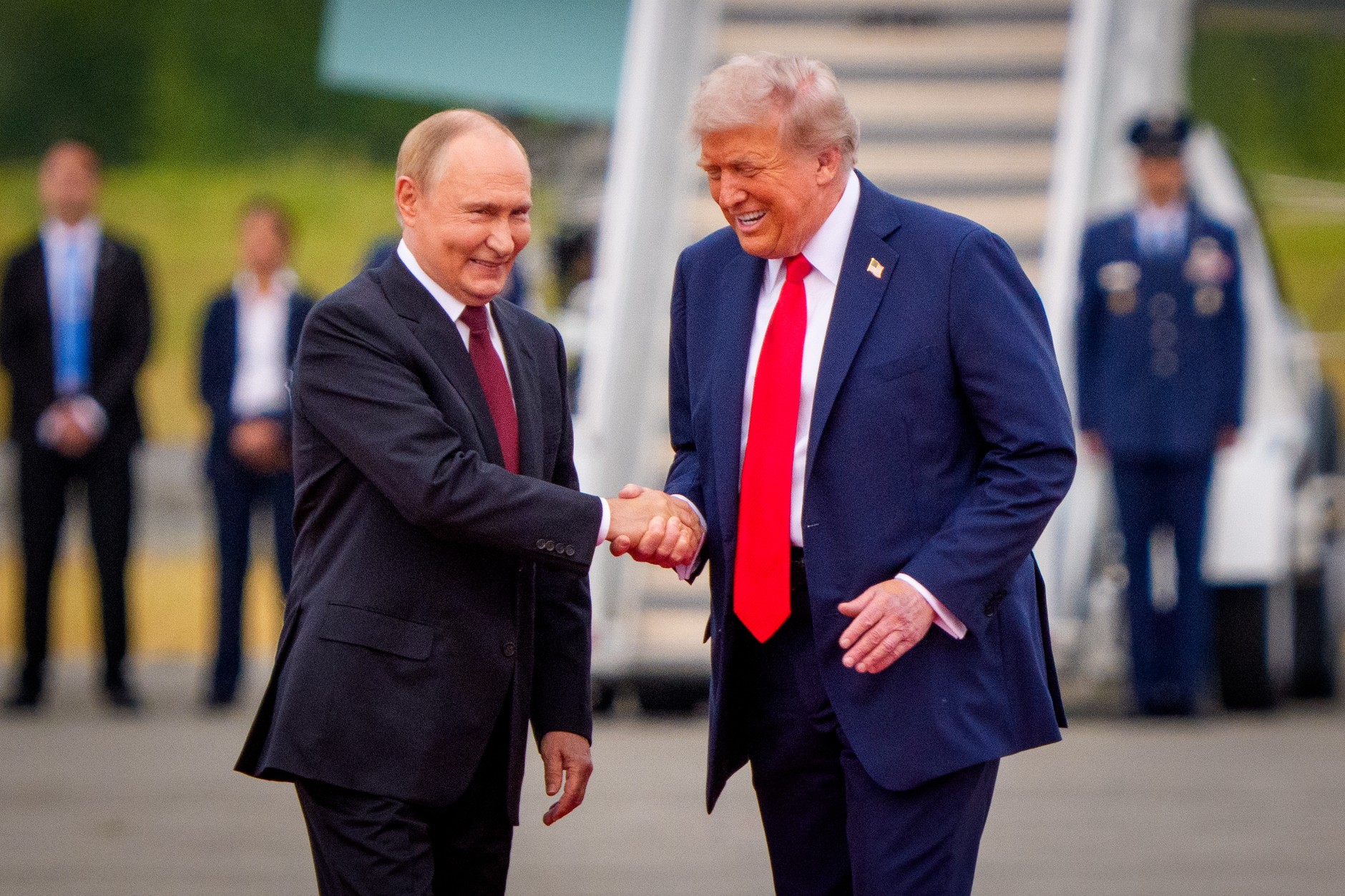
Vladimir Putin and Donald Trump, Alaska, August 15, 2025.Andrew Harnik / Staff / Getty Images
In this situation, who seriously believes that Americans will seriously engage in protecting Ukraine in the event of another attack from Russia? The unclear security guarantees formulated in Berlin may therefore constitute only a small part of the deterrent against future Russian aggression. Ukraine will have to bear the main burden of its defense itself. Moreover, western Donbas is essential to it.
After Russia invaded eastern Ukraine and Crimea in 2014, it turned western Donbas into a fortress with few defense lines. During almost four years of war, the Russians failed to capture this fortress belt. Now they are trying to do it politically – with the help of the US government, which wants to end the war at all costs.
The ball is in Russia's court
However, giving up Donbas without a fight would mean exposing hundreds of thousands of Ukrainians to the repression of the Russian regime and its murderers and torturers. Moreover, the Ukrainians would have to retreat to lines that were previously poorly fortified and more difficult to defend due to geographical reasons.
As with the Budapest Memorandum 30 years ago, Ukraine once again faces the danger that the United States will force it to give up its powerful military defenses. Then it was nuclear bombs, strategic bombers and long-range missiles – now it may be Donbas. Kyiv may be forced to give it up in exchange for security guaranteeswhich are stronger this time, but still too unreliable.
This is the negative news coming from Berlin: the United States is clearly still determined to put pressure on Ukraine while at the same time giving in to Russia's absurd demands to give up Donbas.
Now, however, the ball is back in the Russians' courtwho clearly expressed their dissatisfaction with the results of the talks in Berlin. They are not interested in a peace that could guarantee Ukraine's survival and sovereignty.