War fatigue is growing in Europe. Germans and French are increasingly saying “enough” of further aid for Ukraine. On the other side of the Atlantic, the mood is completely different
In France and Germany, the EU's two largest economies, more respondents want their governments to reduce financial aid to Kiev than to increase it or keep it at the current level. Meanwhile, in the United States, Canada and the United Kingdom, respondents support maintaining financial support, according to a POLITICO poll that polled more than 10,000 people earlier this month. people from five countries.
The survey results come at a crucial time as European leaders prepare for their meeting in Brussels on Thursday, where will be to provide financial support to Ukraine.
They also appear at a time when Washington is trying to mediate a peace agreement between Moscow and Kiev, and German Chancellor Friedrich Merz is taking the initiative among European countries in negotiations for Kiev.
In all five countries, the most frequently cited reason for supporting further aid to Ukraine was the belief that countries should not be allowed to take over territories by force. The most frequently cited argument against additional aid was concerns about costs and pressures on the domestic economy.
“Our research shows that people in Europe believe that the current situation requires political compromises, and financial support for Ukraine is no exception,” notes Seb Wride, head of public opinion research at Public First, an independent research firm based in London that conducted the survey for POLITICO.
The article continues below the video
— At a time when public finances are perceived as limited resources, people's interests are increasingly focused on national issues, he adds.
The divided West
Germans were the most reluctant to increase financial aidwhere almost half of the respondents (45%) were in favor of limiting financial aid for Kiev, and only 20%. wanted to increase it. In France, 37 percent respondents wanted to reduce aid, and 24 percent voted in favor of increasing it.
In contrast to the growing opposition to aid for Ukraine in Europe, support in North America remains extremely strong. In the United States, President Donald Trump expressed skepticism about Kiev's chances of defeating Moscow and sent interlocutors to negotiate peace terms with the Russians. Still, the United States had the highest percentage of respondents (37%) supporting increased financial support, followed by Canada at 35%.
Support for Ukraine was declared primarily by supporters of Democratic candidate Kamala Harris in the US presidential elections in 2024. About 29 percent Harris voters said one of the three main reasons the United States should support Ukraine is to protect democracy, compared with 17 percent supporters of United States President Donald Trump.
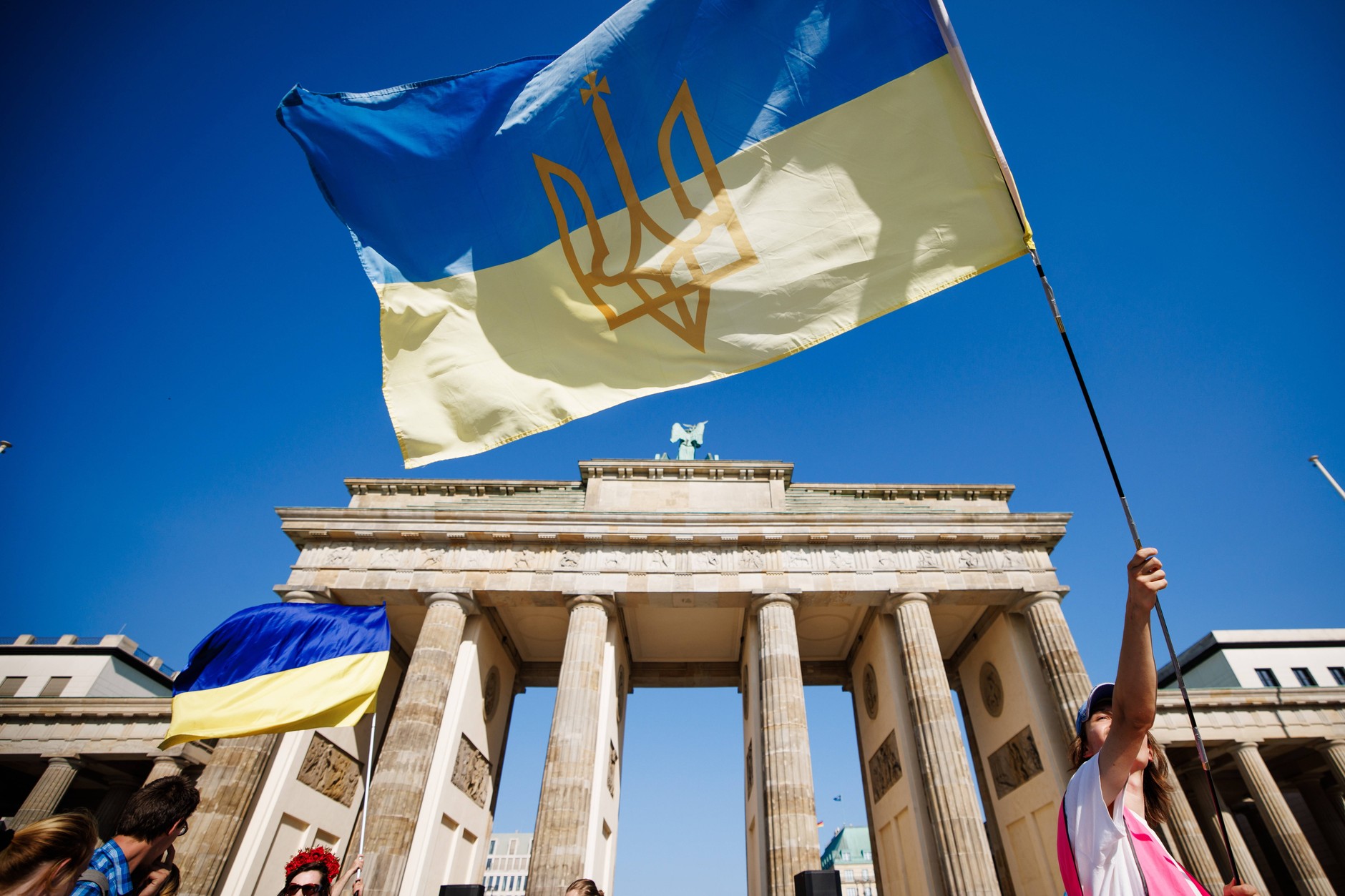
Ukrainian Independence Day celebrations in Berlin, Germany, August 24, 2024.Clemens Bilan / PAP
“The partisan divide in the United States is pretty radical right now,” Wride points out.
In Germany and France, opposition to aid was particularly pronounced among supporters of far-right parties — such as the Alternative für Deutschland and France's National Rally — while centrists were less skeptical.
— The way Ukraine's financing is perceived in Germany, especially as many European governments face challenges from populists, should be a particular warning signal to other leaders says Wride.
Refugee fatigue
A similar split was noted in the case of support for military aid. Almost 40 percent respondents in the United States, Great Britain and Canada were in favor of increasing it, and about 20 percent were against.
In Germany, 26 percent supported increasing military aid to Ukraine, and 39 percent there were people against it. In France, opinions were evenly divided, with 31 percent were in favor of increasing aid, and 30 percent for its limitation.
Germany was also the only country where a majority of respondents said that their government should accept fewer Ukrainians displaced as a result of the war.
In a country that has sheltered more than a million Ukrainian refugees since the beginning of Russia's full-scale invasion in 2022, 50 percent Germans said that Berlin should accept fewer people.
Half of respondents also said that Germany should limit support for Ukrainians who have already settled in the country – indicating that Public fatigue goes beyond military aidcovering the broader social and political aspects of the conflict.
Lower support for Ukraine in France and Germany, however, does not appear to reflect warmer feelings towards Moscow. Voters in all five countries supported sanctions against Russia, suggesting that even where societies want to reduce aid, they remain largely aligned on punishing the aggressor and limiting Russia's ability to finance the war.
I’m Ashley Davis as an editor, I’m committed to upholding the highest standards of integrity and accuracy in every piece we publish. My work is driven by curiosity, a passion for truth, and a belief that journalism plays a crucial role in shaping public discourse. I strive to tell stories that not only inform but also inspire action and conversation.