The Battle That Brought Hell to Earth: A Million Dead and Hundreds of Thousands of Wretched for Life


On December 18, 1916, the bloodiest battle of the First World War and of all modern history ended. It is about the battle of Verdun, where over a million people died in just 10 months.
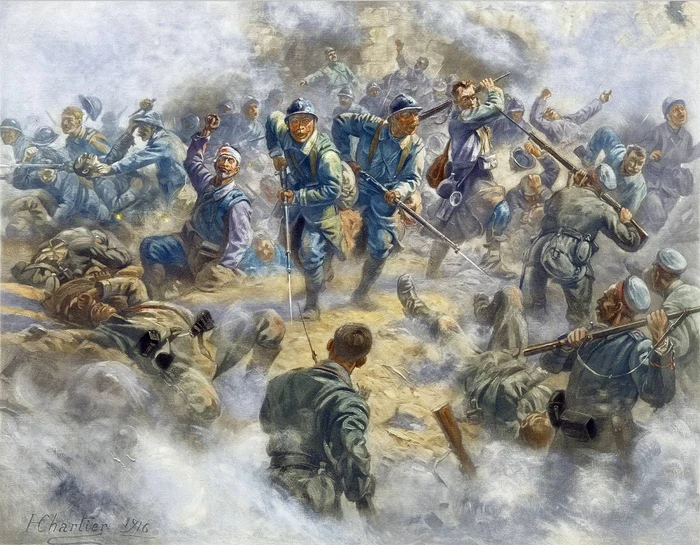
An attack during the Battle of Verdun PHOTO wikipedia
World War I was one of the bloodiest wars in human history. It was a shock to the entire European population in particular, with multiple long-term consequences. As a result of the First World War, more than 22 million people died, including more than 6 million civilians. To these are added more than 23 million wounded. In addition, the traumas of war affected millions of other soldiers and civilians, with extensive destruction, cities razed to the ground, countries on the brink, poverty, famine and epidemics. One of the bloodiest battles of this war was at Verdun, in present-day France. In just 10 months, more than a million soldiers died, and hundreds of thousands more were wounded or left traumatized for the rest of their lives. The Battle of Verdun brought to the surface the futility of positional or trench warfare and the horrors of power struggles in Europe. It was the most traumatic battle but also the one that decided the fate of Europe.
Victory or death. Why at Verdun?
The Battle of Verdun lasted 10 months, taking place between February 21 and December 18, 1916 with bloody fighting, frantic assaults and bombardments. It was originally planned by the Chief of the German General Staff, Erich von Falkenhayn, to ensure German victory on the Western Front.
The aim was to crush the French army before the Allies could gather their strength by fully deploying British forces to the German border. The Battle of Verdun was an all-or-nothing affair for both the Germans and the French. Erich von Falkenhayn, Chief of the German General Staff, believed that the attack and capture of the fortress of Verdun would have been a key to German victory on the Western Front. The heavily fortified area of Verdun remained a thorn in the side of the German offensive that threatened the main lines of communication. By attacking Verdun, von Falkenhayn believed that the French army would have had to mass the majority of its forces there, and a victory would have brought all of France to its knees militarily and morally.
He hoped that France would “bring every man she has” to defend her, which would thus deplete her military resources. By combining the Verdun offensive with a submarine offensive against British shipping, Falkenhayn believed that France and Britain would be forced to sue Germany for peace. On the other hand, for the French, Verdun was a fortress city on the Meuse River and a vital strategic link in the French sector of the Allied line on the Western Front. For the French people, Verdun was also a symbolic fortress and a national treasure. The loss of such a citadel would have been an enormous blow to French morale. And as Falkenhayn had anticipated, the French had concentrated a good part of the troops in the fortified line at Verdun. A new trench battle was brewing on the Western Front. A war of positions, of attrition, extremely bloody and traumatic.
Blood, despair and 10 months of hell
The attack on the fortified area at Verdun began on February 21 with a nightmarish artillery barrage. In the first eight hours of bombardment of the French trenches and fortifications, the Germans fired two million shells. The German plan was based on the immense firepower of the artillery available to the German Empire.
After unleashing hell on the French lines with two million shells, the German High Command ordered a massive attack on the area, designed to “bleed the French white” and destroy their morale. At 4 a.m. on February 21, 1916, the battle began, with a massive artillery bombardment and a steady advance by the troops of the German Fifth Army under the command of Crown Prince Wilhelm. Five days after the battle began, German forces captured Fort Douaumont, the largest and tallest of the 19 forts protecting Verdun. The battle seemed to be going in Falkenhayn's favor.
In the following weeks, the German army scored success after success and it looked like the Verdun line would collapse. At that moment, the French commanders realized how they could counter this destructive rush. Moreover, they asked the soldiers and officers to fight to the last man but not to lose Verdun.
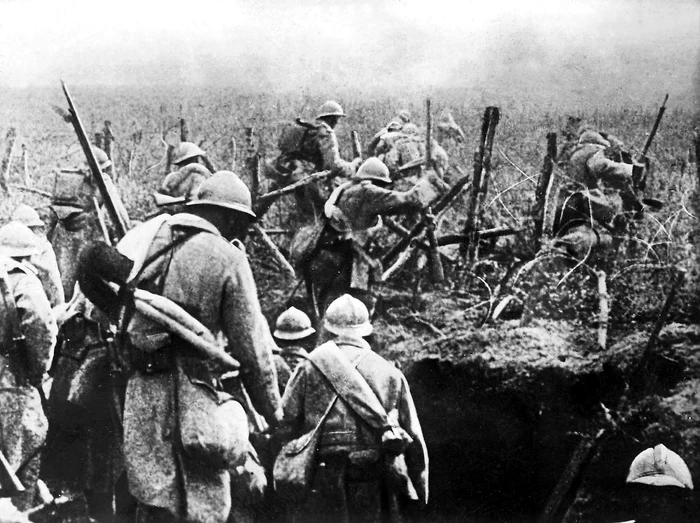
Battle of Verdun PHOTO wikipedia
A new approach was needed to combat the extremely powerful German artillery. Therefore, the defense of the fortress focused on the concentration of defenses in smaller forts with reduced troops but strongly protected. French commander Philippe Petain ordered his men to regroup and defend their new lines to the death. In the spring of 1916, offensives and counter-offensives were launched at high cost and little gain for both sides. During the 10 months there were several attacks and devastating counter-attacks with a huge number of casualties. Among the greatest carnage during the Battle of Verdun occurred from March to May 1916, when the Germans attacked the areas of Le Mort Homme and Hill 304. Horrible losses resulted on both sides, becoming a symbol of French resistance.
French heroism and the vision of General Petain
Despite the rush and the incredible pressure of the German artillery, the French held out admirably. And the master of this resistance was General Petain. He had a reputation as a master of defense and organized the defense forces by establishing a series of mutually supporting strong points, rather than pushing all his troops into the vulnerable front line trenches. Petain also rotated the units at Verdun regularly, and although this put most of the French army into combat, it ensured that the troops did not spend long periods of time at the front.
This strategy represented an advantage, especially as the German troops became increasingly tired. The French greatly increased the number of artillery pieces at Verdun, with which they put pressure on the German lines by almost incessant bombardment. The ability of the French to sustain the battle was due to ammunition and supplies arriving along the “Sacred Road”, the only road to Verdun kept open despite constant German bombardment. At the same time, the heroism of the French soldiers also mattered. For example, at the siege of Fort Vaux in June 1916, a small French garrison heroically held out for days under siege before being captured, showing extreme courage.
“What a massacre! What scenes of horror”
During the 10 months, the Germans managed to advance only 8 kilometers. Especially in the summer and autumn months, the battle was characterized by a savage series of attacks and counter-attacks that ended in bloodbaths. For example, in the Battle of Fleury in August–September 1916, German and French troops battled for the village of Fleury-devant-Douaumont and nearby fortifications such as Froideterre, turning into a needless massacre.
The desperation of the Germans in the face of French resistance translated into the replacement of command of General von Falkenheyn. Crown Prince Wilhelm and his staff stopped following Falkenheyn's strategic concept and engaged the Fifth Army in a wider offensive. Conquering the ground hand to hand became the priority. It proved a catastrophic decision for the Germans, with huge losses. Exhaustion, low morale and despair reigned in both camps. French morale suffered greatly from the prolonged siege. Badly paid, the soldiers had to endure almost 10 months of hell.
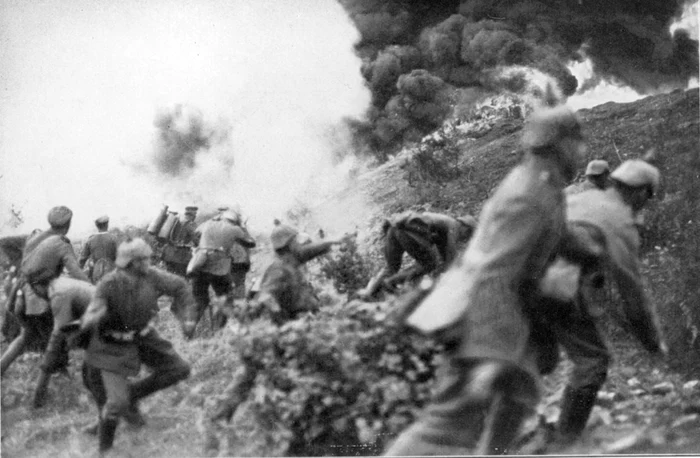
Battle of Verdun PHOTO wikipedia
In addition to the near-continuous German bombardment, Verdun was the first time flamethrowers were used in combat, a shocking but effective new weapon. On the other hand, the German army was exhausted and frustrated by the French resistance. People had been fighting for 10 months and were at the end of their patience. “Mankind is mad. They must be mad to do what they do. What a massacre! What scenes of horror and carnage! I cannot find words to express my impressions. It was a real hell. People are mad”wrote a French lieutenant who participated in the battle of Verdun.
In October and November, the outlying forts lost to the French in February were recaptured. The French were able to achieve a decisive victory that ended on December 18 with the capture of thousands of German soldiers. What was left behind was a sea of death and destruction caused by artillery over an area larger than the city of Paris. No less than nine villages were wiped off the face of the earth. The German plan had failed, and it would cost them dearly. Without the dogged resistance of the 96 French divisions, Verdun would have fallen and Allied victory on the Western Front would have been all but impossible. The French writer Maurice Genevoix, who participated in the battle, wrote that “Verdun was the fighting symbol of the entire war”. “By the heroism and sacrifice of the combatants, by its impact, by its emotional resonance, it is truly the symbol of the Great War”also specified the French historian Guy Pedroncini.