December 16: The day the end of Ceausescu's dictatorship began. Who was the person from Timisoara who stopped the trams


The day of December 16 is marked by multiple cultural meanings and moments that changed the world, but, above all, it remains in the collective memory of Romanians as the day when the revolt that would overthrow the communist dictatorship broke out in Timișoara.
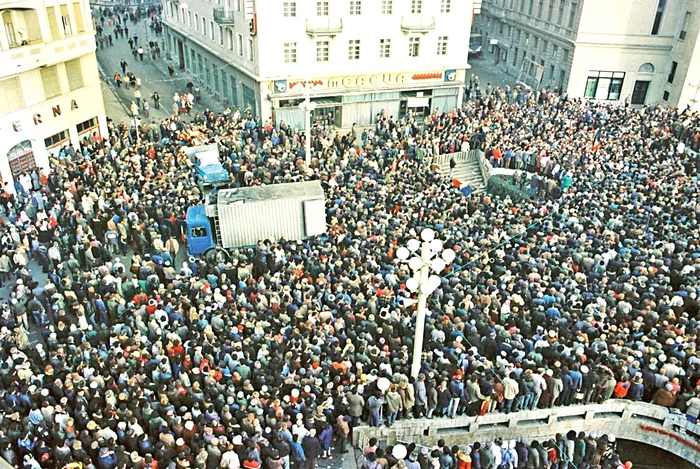
The people of Timișoara were the first to take to the streets in December 1989. PHOTO: archive
1770: Ludwig van Beethoven, German composer, was born
Ludwig van Beethoven, considered one of the most influential composers of all time, was born in Bonn on December 16, 1770, his musical talent was evident from childhood: he was studying the piano at just four years old, and at eight he was giving his first public appearances.
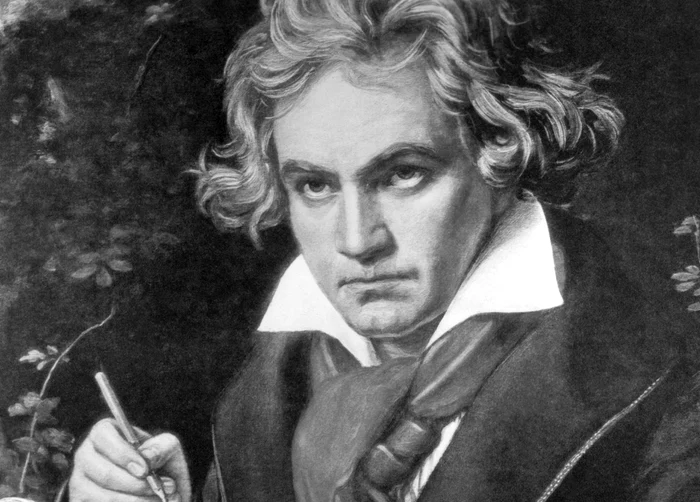
Ludwig van Beethoven, one of the world's greatest composers. PHOTO: Shutterstock
The first important sonatas, such as op. 7 and Op. 10, composed between 1796–1798, already reveal the signs of his originality: asymmetrical structures, dramatic tension and innovative courage. In works like “Pathetica” (op. 13) or the sonatas op. 26 and op. 27, Beethoven begins to “break” the traditional classical form, reshaping thematic dualism and the architecture of musical developments.
From 1798, the series of string quartets begins, simultaneously with the appearance of the first signs of hearing loss, which will gradually isolate him from society. However, the period remains one of major creation: the sonatas op. 31, the 3rd “Eroica” Symphony, the “Appassionata”, the Violin Concerto, the 5th Symphony – often called “of Destiny” – and the 6th “Pastoral” Symphony.
Between 1813 and 1818 he goes through a deep crisis, but even then he composes reference works: Cello Sonata op. 102, the cycle of lieds “An die ferne Geliebte”, the sonatas op. 101 and op. 106. The Last Sonata, Op. 111 (1821–1822), is often interpreted as a “good remainder” to this musical form.
The composer died on March 26, 1827, in Vienna, after months of suffering, being buried with a grandiose funeral.
1773: The revolt called the Boston Tea Party takes place
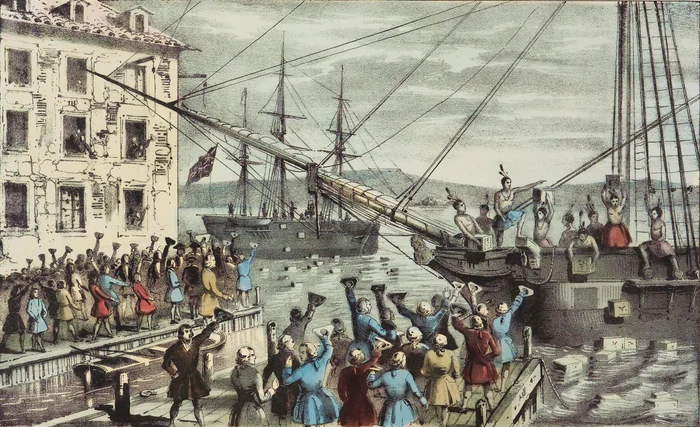
Boston Tea Party, lithograph by Nathaniel Currier. PHOTO: Wikipedia
In Boston Harbor, American colonists sank tea shipments belonging to the British East India Company, protesting taxes imposed by the British Crown. The “Boston Tea Party” would become a symbol of resistance and one of the sparks that would ignite the American Revolution (1776–1784).
1775: British writer Jane Austen was born
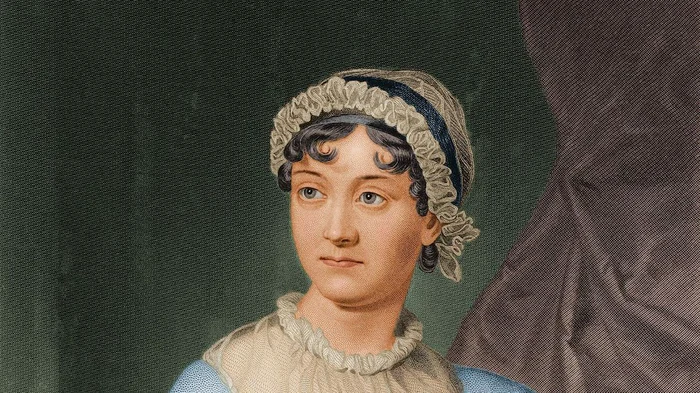
Jane Austen. PHOTO: archive
Jane Austen, one of the most influential names in English literature, was born on December 16, 1775 – a date that later became a national day in Great Britain. His six novels, of which the most famous remain “Pride and Prejudice” and “Emma”, are today landmarks of classical prose, remarkable for their irony, psychological finesse and analysis of 19th century English society.
1891: Ion Ionescu de la Brad, the founder of Romanian agricultural science, died
Ion Ionescu de la Brad, a complex personality – agronomist, economist, writer, scientist – and an emblematic figure of the Pașoptist generation, contributed decisively to the development of modern agriculture in Romania. Honorary member of the Romanian Academy, he leaves behind a vast body of work and a reforming vision.
1910: The world's first experimental flight of a jet plane, invented and piloted by Henri Coandă
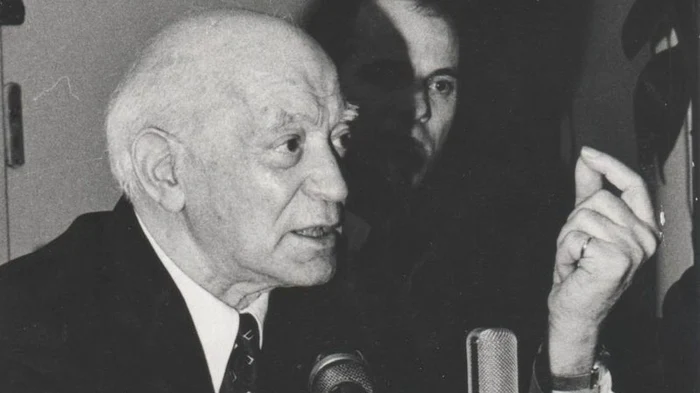
Henri Coanda. PHOTO: archive
Henri Coandă, born in 1886 in Bucharest, made the first experimental flight of a jet plane in 1910 – an invention that revolutionized world aviation. Coming from a family with an intellectual and military tradition, Henri Coandă became an innovator of international scope, laying the foundations for discoveries that will influence the technology of the 20th century.
1917: Famous British science fiction writer Arthur C. Clarke was born
Arthur C. Clarke, one of the “Big Three” of sci-fi literature, along with Heinlein and Asimov, was born on December 16, 1917. In addition to his literary contributions, including the masterpiece “2001 A Space Odyssey,” Sir Arthur C. Clarke was an inventor, futurist and specialist in radar technology.
He proposed as early as 1945 the concept of geostationary satellites for communications, and was subsequently decorated for this visionary idea. Moved to Sri Lanka, passionate about diving and marine archaeology, remained active until his death in 2008.
1950: The violinist Nelu Ploieșteanu was born
Nelu Ploieșteanu (Ion Dumitrache), originally from Ciorani, Prahova, made his musical debut at only six years old. He played the accordion and the piano, and in the 70s he settled in Bucharest, where he worked at the “Ion Vasilescu” Magazine Theatre.
He toured internationally and, after 1990, recorded numerous albums that became popular, being considered one of the strongest voices in fiddle music.
1963: Viorica Dăncilă was born, the first female prime minister in Romania
Viorica Dăncilă became, on January 16, 2018, the first female prime minister in the history of Romania, being nominated by PSD after Mihai Tudose (PSD) resigned as a result of the withdrawal of political support by his own party and accepted by President Klaus Iohannis.
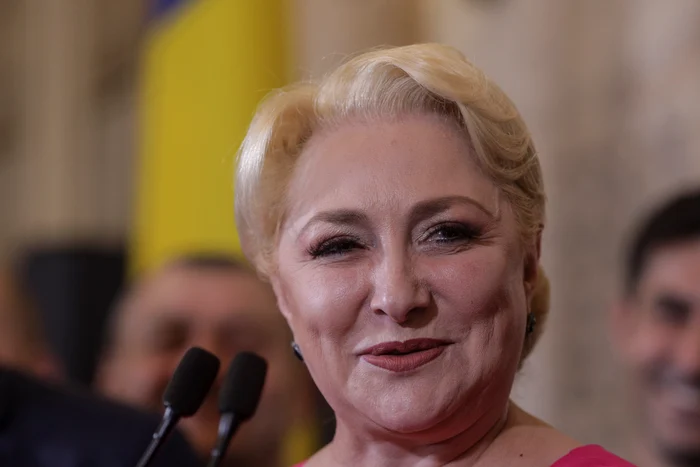
Viorica Dancila. PHOTO: archive
Her mandate was accompanied by controversies, criticisms related to expression, diplomatic blunders and support given to the policies promoted by Liviu Dragnea, culminating in the violent street protests of August 10, 2018.
Viorica Dăncilă ran for the 2019 presidential elections, losing in the second round. After 2020, he gradually disappeared from active political life, to then join the Romanian National Conservative Party, led by Cristian Terheș.
1979: The artist Mihai Trăistariu was born
Mihai Trăistariu, coming from a family of artists, became known as a member of the band Valahia, then as a soloist. He won the title of “Best voice in Romania” three times and achieved international success after Eurovision 2006 with the song “Tornerò”, broadcast in over 30 countries.
1989: The beginning of the Romanian Revolution in Timișoara
On December 16, 1989, Timișoara became the starting point of the revolt that would lead to the collapse of the Ceaușescu regime. It all started as a peaceful protest against the eviction of pastor László Tőkés.
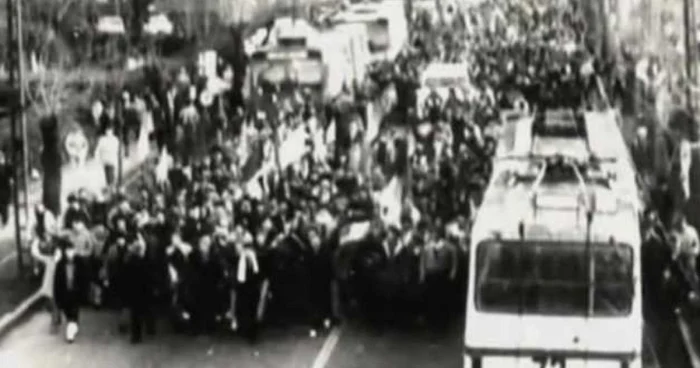
Timisoara, December 1989. PHOTO: archive
At first, around 200 people from Timișoara gathered in front of the Reformed Cathedral in Piaţa Maria, but their number quickly grew, after they were joined by students, workers and intellectuals, and the crowd headed towards the city center, turning the initial protest into an anti-communist demonstration, accompanied by chants of “Freedom!” and “Justice!”.
In the evening, the trams were blocked, and the protests gained momentum. The police intervened violently: they used water cannons and tear gas, direct clashes took place, and people were beaten and arrested, including pastor László Tőkés, which amplified the anger and solidarity of the protesters.
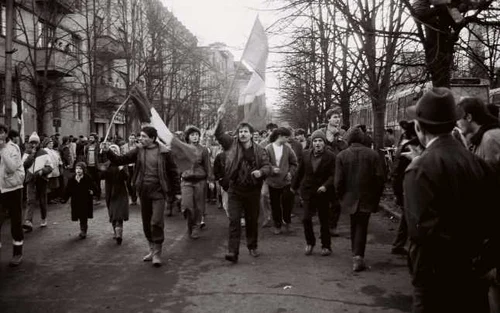
Image 1/4:
Timisoara Revolution
A key role was played by the poet Ion Monoran, who initiated the stopping of the trams, a gesture intended to prevent the dispersion of people and to attract as many Timișoara residents as possible to the protest.
What Ion Modoran told about the beginning of the revolution
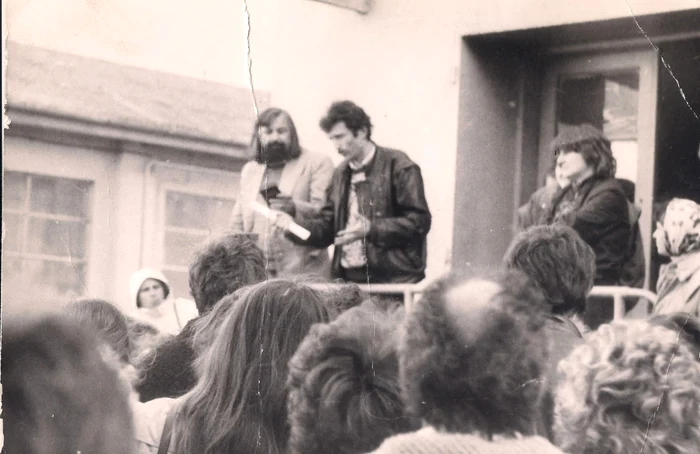
Ion Monoran, in the 90s. PHOTO: www.ionmonoran.ro
“I knew since Thursday that in front of Tokes' house there was a group of parishioners protesting against the move of the pastor from Timisoara, a move dictated by the Securitate. On the morning of Saturday, December 16, I passed by there, and in the afternoon of the same day – it was a clear day, as you rarely find in December – at “Cina” we were commenting on what was happening in Piaţa Maria.
(…) In the evening, because I had to go on duty, I went home, after which, around 19:15, I went straight to Piaţa Maria. Around 200 people were in front of pastor Laszlo Tokes' house. I recognized some of them and, approaching, I said: “We need leaders if we want to do something”.
The world began to gather around them, hearing what they were discussing. I also said: «Look at the surrounding windows and notice how the flashes of the cameras sparkle. The first thing we have to do is stop the trams. With only 200 people we can't do anything. If we miss this moment, the fate of those from Braşov in 1987 will await us”.
I approached the tram line and stopped the first tram. Near the tram I noticed the determined Zoly Borbely, who had already pulled the pantograph of the tram, disconnecting it with all the protests of the vatman, scared to death. I told him to get in the cabin, that nothing would happen to him and that we would take full responsibility. A tram also came from the opposite direction and I stopped it too. Several “citizens” dressed in civilian clothes were shouting around and were dissatisfied with our action. I took out my work ID and report card and denied my identity.
The world began to gather from both directions. They shouted “We want heat!”, “We want food!” And so on
At one point, he saw Dan Zagănescu on the bumpers of a tram. After saying his name, he started shouting “Down with communism!”, “Down with Ceauşescu!”, after which Tibi Covaci did the same, but he got on one of the trams.
Surrounded by the crowd from Piaţa Maria, he said: “In 30 minutes, we're leaving for the County Party Committee, but not through the center!”.
I was afraid, on the one hand, that we would be stopped by the Security, and on the other hand, I wanted to avoid possible destruction, but at the student dormitories, in the hope that groups of students would be added to the 2,000-2,500 people. Immediately several of our group protested against this idea, but without any effect.
At 20:30 I got ahead of the crowd and stopped on the bridge to the Cathedral, directing the world to Flora. At the intersection at the Thermal beach I waited for the students to come; the same “citizens dressed in civilian clothes” tried to block the Michelangelo bridge, stopping the cars that were driving in the area and, to my cries that they would not be listened to, one of them said to me: “I'll leave you to see what happens to you, little man!”. Seeing that the students were not coming, I crossed the bridge and arrived in front of the County Party Committee”, the story of Ion Monoran, in a dialogue with George Lână, on December 17, 1991 and published in the “Timişoara” newspaper, according to mariusmioc.wordpress.com
After the Revolution, in 1990, Ion Monoran founded Ziarul Timişoara and Societatea Timişoara, which initiated the famous proclamation, the programmatic document that announced that the ideals of the Revolution of December 1989 had been betrayed and that the revolution had to continue peacefully. The famous point 8 of the proclamation prohibited, by electoral law, the right to run for positions in the state to all former activists and securists, for three legislatures.
Ion Monoran died on December 2, 1993.
2017: The funeral of King Michael
On December 16, 2017, the funeral of King Mihai I, one of the most respected figures of modern Romania, took place. The service was held at the Patriarchal Cathedral, and the coffin was then transported by royal train to the Curtea de Argeș Monastery.
The ceremony was attended by numerous monarchs and members of European royal houses.
2018: The football player and businessman Mircea Petescu died
Mircea Petescu, one of the pioneers of the Romanian sports impresario after 1990, was the one who facilitated historic transfers, such as the transfer of Hagi to Real Madrid and Gică Popescu to PSV Eindhoven.
As a footballer, he played at UTA, Știința Timișoara, Steaua and FC Dordrecht, marking a solid career in Romanian sport.