December 15 11:35
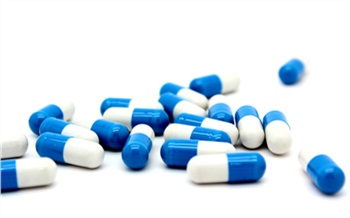
Krasnoyarsk scientists have found that most dietary supplements with omega-3 contain significantly less healthy fatty acids than the manufacturer promises on the packaging.
Specialists from the Krasnoyarsk Scientific Center of the SB RAS and the Siberian Federal University analyzed 15 food additives in capsules from various Russian and foreign manufacturers. The results of their research were published in the journal of the Siberian Federal University. Biology”.
Representatives of the Krasnoyarsk Scientific Center recalled that omega-3 polyunsaturated fatty acids, especially eicosapentaenoic (EPA) and docosahexaenoic (DHA) acids, play a key role in the functioning of the body. They are necessary for the normal functioning of organs and tissues, and especially the cardiovascular and nervous systems, as well as muscles. Getting enough of them from food is difficult, so millions of people take nutritional supplements.
The results of the study showed that virtually all samples actually contained lower amounts of the declared substances. The capsules contained from 16% to 85% of the promised dose.
One of the authors of the study, Corresponding Member of the Russian Academy of Sciences, head of the laboratory of experimental hydroecology at the Institute of Biophysics SB RAS, Mikhail Gladyshev, noted that such discrepancies can affect the effectiveness of the use of additives.
“It is obvious that the discovered discrepancy prevents doctors and patients from calculating adequate amounts of dietary supplements for daily use for the prevention of cardiovascular diseases. In recent years, the key role of DHA has been proven not only in the functioning of the nervous and cardiovascular systems, but also in the work of skeletal muscles: it increases endurance and reduces fatigue,” the professor noted.
Scientists emphasize the importance of more careful quality control in the dietary supplement market and recommend taking into account possible discrepancies between the declared and actual content of omega-3 polyunsaturated fatty acids when choosing and using such drugs.
Related links:
- Krasnoyarsk Rospotrebnadzor sued the seller of dangerous dietary supplements on the marketplace
- In the Krasnoyarsk Territory, the list of goods labeled “Honest ZNAK” is expanding