Ukraine, funded by Moscow's money. Political scientist: “The EU puts pressure on Russia, to push it towards a reasonable peace”

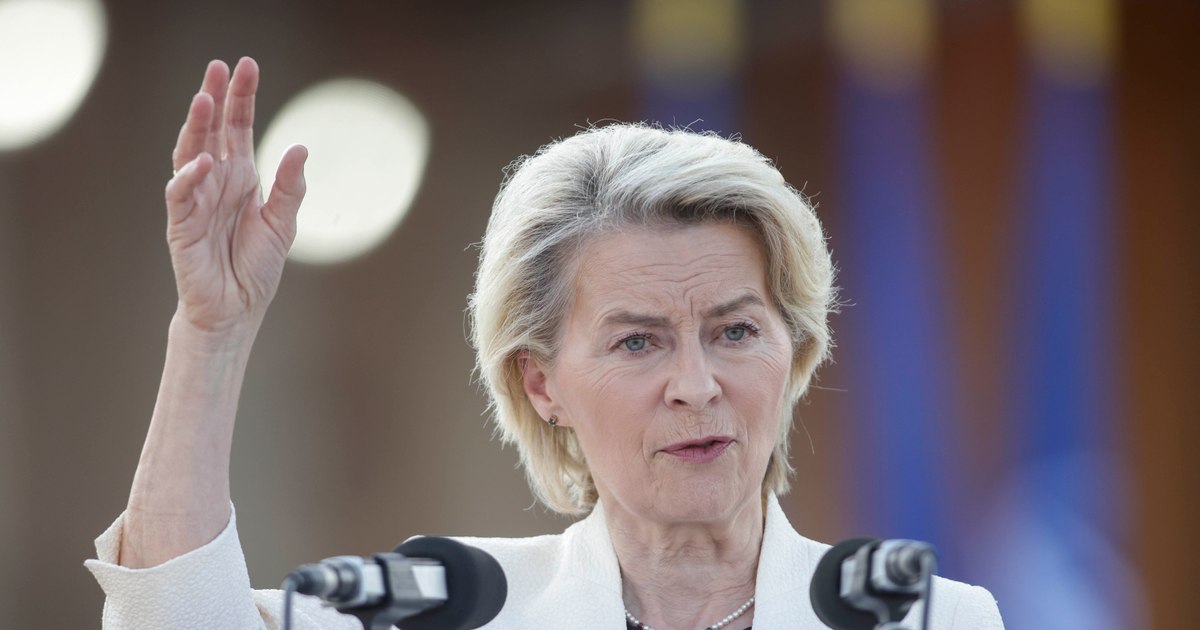
The EU managed to eliminate the need for a unanimous vote to freeze Russian funds, the first step towards their use by Ukraine. Political scientist Sergiu Mișcoiu explains the effects of this measure.
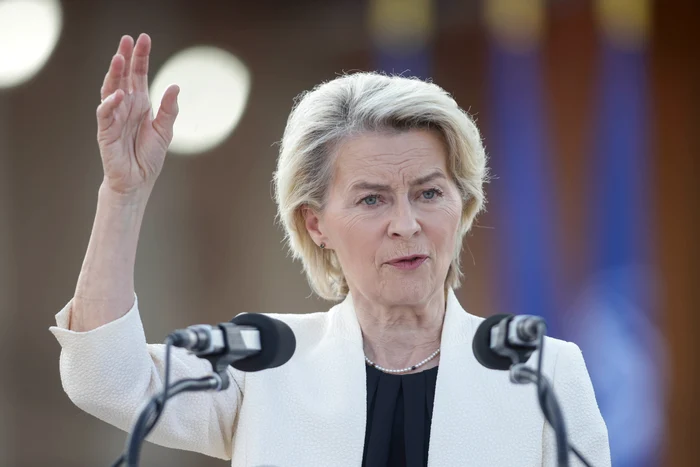
President of the European Commission, Ursula von der Leyen. PHOTO: Inquam Photos
Russian state assets in Europe could remain permanently frozen under a legal mechanism approved by EU capitals on Thursday.
EU ambassadors have granted the European Commission emergency powers to keep 210 billion euros of Russian state assets frozen until the Kremlin pays post-war reparations to Ukraine, the Danish Council presidency announced on Thursday.
The legal mechanism is a major blow to the Kremlin's hopes of getting its money back as part of a post-war peace deal — an idea supported by US President Donald Trump but unpopular in Europe, Politico writes.
The EU's new emergency powers will remain in place until “Russia ends its war of aggression against Ukraine and offers reparations to Ukraine”according to a legal text seen by Politico and supported by EU ambassadors on Thursday afternoon.
In a major boost for Ukraine, this legal artifice significantly reduces the chances that pro-Kremlin countries in Europe, such as Belgium, Hungary and Slovakia, will return frozen funds to Russia.
The emergency clause basically changes the current rules, which require EU states to unanimously reauthorize sanctions every six months.
Kremlin-friendly countries will thus lose their power to return the money to Russia only with a “no” vote on renewing the sanctions. If this were to happen after the EU granted Ukraine a loan secured by these assets, the 27 EU capitals would be obliged to repay the loan to Russia.
“Opens the way to asset forfeiture”
According to RFI, the decision “paves the way for the confiscation of assets worth 210 billion euros in favor of Ukraine, which can be decided without the vote of Hungary and Belgium.”
If Russian assets are unlocked on December 18, as desired, Ukraine immediately takes advantage of the 90 billion euros it would receive early next year to maintain its economy and arm itself, the quoted source said. However, the strategy stipulates that after the end of the war, the money will be returned to Russia.
The measure, which could pave the way for the confiscation of the 210 billion euros later destined for Ukraine, was analyzed for Adevărul by political scientist Sergiu Mișcoiu, a professor at Babeș-Bolyai University and Paris-Est Créteil University.
According to him, the step taken by the EU is “a decision that suits all the actors involved”, because it avoids an anticipated political deadlock from Belgium and Hungary. “Belgium can exonerate itself from direct responsibility related to the confiscation of Russian assets. It can claim that it did not agree, but it executes what was decided at the European level”, explains Miscoiu.
At the same time, the decision also helps Hungary, which can continue its ambiguous diplomatic game: “Ungaria can vote against, knowing that her vote will no longer count, but keeping her pro-Russian message for internal use.“
A useful decision for the EU, but also deeply controversial
The political scientist emphasizes that, in this way, the Union can demonstrate that it maintains its commitment to Ukraine, while avoiding the use of its own funds. “The EU can say it supports Ukraine without taking money out of taxpayers' pockets, but using money 'obtained by Russia', often under illegal or fraudulent conditions,” says Miscoiu.
However, he points out that the measure opens an extremely sensitive legal precedent. “A number of international treaties are being violated, but let's ask ourselves: what treaties has Russia not violated so far?”, he adds, pointing out that over time Europe may be forced to return at least some of the confiscated assets to Russia.
The actual confiscation – 2026 at the earliest
Even if a possible decision date, December 18, is already being discussed, the practical implementation will take a long time, says Mișcoiu: “From decision to operationalization is a long way. A policy measure can be postponed, modified or partially implemented. I think the EU is using this tool first as pressure on Russia, to push it towards a reasonable peace for Ukraine“.
If peace talks do not progress, confiscation could become a reality “in early to mid-2026”.
“The EU abandons unanimity – a major step in its internal functioning”
Miscoiu believes that the change in the voting procedure is, in itself, a historical moment: “It ends the practice that allowed some states to block decisions of the entire Union. Unanimity has been one of the causes of repeated deadlocks in the EU. The transition to qualified majority is a necessary solution for making the Union more efficient.”
He argues that the EU cannot function only at the pace of political changes in the member states: “The Union has its own, timeless life, which must continue regardless of national governments.“
Why doesn't the EU follow a radical model
Asked why Europe does not adopt the American strategy of complete and final confiscation, the political scientist is categorical: “The EU is an area of the rule of law. The rule of law is essential and differentiates it from authoritarian regimes. You can't take someone's property and give it to someone else through a discretionary decision.”
Confiscation, Mișcoiu explains, represents “an exceptional measure, linked to historical circumstances”which must not undermine the legal foundations of the EU, including the stability and credibility of the European banking system.
Regarding the possible reaction of Moscow, Miscoiu does not anticipate sudden moves, but a continuation of the current strategy: “Russia will ramp up anti-European rhetoric and may attempt controlled escalations, particularly in airspace. It will continue to encourage dissension within the EU and destabilize governments hostile to the Kremlin.”
If the measure becomes operational, the effects for Kiev will be important both symbolically and financially. “It is a gesture that shows that the aggressor is punished, and Ukraine receives the necessary resources to partially compensate for the lack of American support”says Miscoiu.
The 210 billion euros will not fully solve Ukraine's military or economic problem, but “they will help a lot, in a very concrete way”, being a lifeline at a decisive moment of the war.