Controversial order signed by Donald Trump. He calls on the government to sue states that try to regulate artificial intelligence


President Donald Trump on Thursday signed an executive order requiring the federal government to sue states that introduce regulations on artificial intelligence (AI) technology that are seen as undermining the United States' “global dominance” in AI.
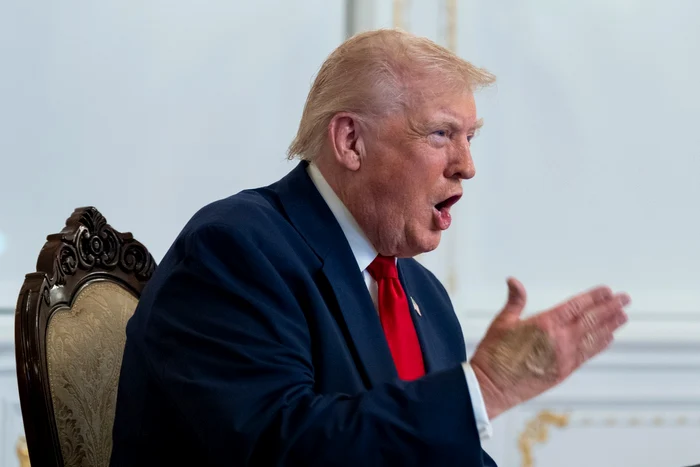
Donald Trump PHOTO: Profimedia
The order directs the Justice Department to sue states over bills the White House deems contrary to its policy of maintaining a regulatory framework “minimally burdensome” for AI.
Legal experts said the tactic would face considerable challenges in court because the Constitution gives states a wide leeway in enacting laws on matters not covered by federal law, the News writes.
The order also requires federal agencies to consider withholding funds for states that enact their own laws, and calls on White House technology advisers to draft new legislation formalizing federal AI laws over state laws.
“Until such a national standard is adopted, however, it is imperative that my administration take steps to rein in the most burdensome and excessive state laws that threaten to stifle innovation,” Trump's order states. It specifically mentions a Colorado law that aims to protect citizens from discrimination by algorithms, which has also been targeted by tech industry lobbyists.
During the signing ceremony, Trump said that artificial intelligence has already led to medical advances and that the US needs a thriving industry to compete geopolitically with China. He also said that jeopardizing industrial growth could hurt the US economy. “It could be 50, 60 percent of our economy for some time in the future,” he estimated.
But the dispute over how artificial intelligence should be regulated has opened a rift within Trump's MAGA coalition of right-wing populists and tech billionaires.
Critical voices, including in the Trump camp
Republican figures such as Florida Gov. Ron DeSantis and Sen. Josh Hawley of Missouri have opposed moves by the White House to use federal legislation to block or “preempt” state AI laws.
In addition to citing the Republican Party's long tradition of defending “states' rights” to govern themselves, they argue that many Americans are concerned about technology's impact on jobs, potential dangers to children and its role in driving up electricity prices. Tech companies are spending hundreds of billions of dollars to build energy-intensive data centers to support their AI ambitions, putting pressure on the US power grid.
Trump fired back, insisting that a patchwork of state laws could jeopardize America's ability to build the best artificial intelligence and compete with China, an argument also invoked by AI executives and their lobbyists. “Right now, we are ahead of ALL COUNTRIES in this race, but that won't last long if we have 50 states, many of them misbehaving, involved in REGULATIONS and the APPROVAL PROCESS”he wrote in a post on Truth Social on Monday, as he promised an executive order on AI this week.
Tech industry groups representing companies such as Google, Meta, OpenAI and Microsoft hailed the executive order, while state politicians, including California Governor Gavin Newsom, issued statements condemning it.
The order signed by Trump on Thursday is almost identical to a draft that circulated in November and that sparked protests from some Republican politicians and activists.
But the final order includes new provisions in the section directing White House technology advisers to draft new legislation. The additions state that any federal AI bill should not prevent states from enacting regulations on child safety, building data centers that power AI software and other digital services, or state government use of AI. The exemptions reflect some of the demands made by Republican and Democratic politicians who opposed the White House's original draft order on AI.
But the concessions may not be enough to win back the support of conservatives who strongly oppose the president's approach to pave the way for the AI industry, notes The Washington Post.
State lawmakers have proposed and passed dozens of AI provisions in the past two years. A June survey by the Pew Research Center found that half of American adults are more concerned about AI than excited about it. A number of federal AI laws have been proposed in recent years, but none have passed, reinforcing the feeling among some state elected officials that they must act to regulate the technology.