Ilie Bolojan: “There is no need to raise taxes anymore.” The Prime Minister relies on budgetary discipline


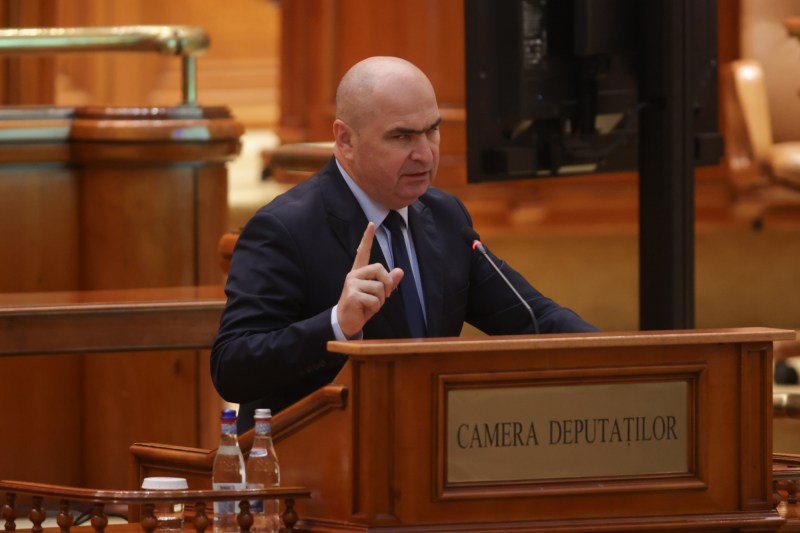
Prime Minister Ilie Bolojan, in Parliament. Inquam Photos / George Călin
Prime Minister Ilie Bolojan stated, on Wednesday evening, on B1 TV, that next year there will be no need to increase taxes and fees, but there will be a need for budgetary discipline and the reduction of expenses where this will be possible.
“There is no need to increase taxes. What we must do next year, so that it is the last year of fiscal consolidation, after which, against the background of the reduction of inflation, we resume healthy growth, on economic bases, based on production, on investments, is to collect the taxes that have been established, in such a way that we combat tax evasion and those who do business pay their taxes to the state budget, to attract the money Europeans, to finance the investments (…) to maintain a strict budgetary discipline and to reduce our expenses where we can, based on an analysis”, declared Ilie Bolojan, quoted by News.ro.
The Prime Minister explained how the budget deficit can be reduced.
“In this way, by working on measures to support the economy, especially on the investment component, eliminating waste, collecting our taxes, we can reduce the deficit. The main stake for us is to borrow at much lower interest rates. We will not be able to avoid loans, because the deficits are so large that you cannot correct negative accumulations for years in a year or two”, Prime Minister Ilie Bolojan also declared.
The Constitutional Court of Romania rejected the objection of unconstitutionality of the law that establishes measures for the recovery and efficiency of public resources and amends and completes normative acts, an objection formulated by senators of the parliamentary group of the Alliance for the Union of Romanians.
The law disputed by AUR aims to increase some taxes and fees on housing, land, cars and dividends, as well as some tariffs for parcels, increases that the Government hopes to apply from the beginning of next year.
The CCR showed that the Parliament's re-examination of the criticized law – initially adopted by engaging the Government's responsibility – for agreeing with the Constitutional Court's Decision no. 481/2025 was carried out correctly. Also, not requesting the opinion of the Fiscal Council is irrelevant in the context of the review procedure of the criticized law, the CCR established.