At the end of 2025, the Western media looks, as if on command, with different eyes at Ukraine, after four years of war and another eight years of conflict. The word “corruption” is used more often when it comes to Ukraine, the reports from the front are about suffering and hopelessness.
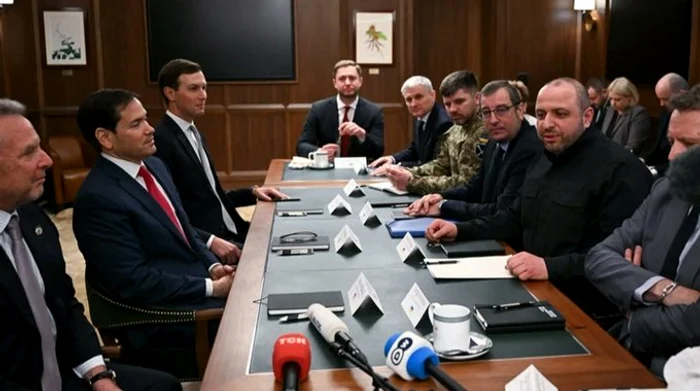
Photo: Twitter / X
One of the skeptic Murphy's laws goes something like this: If something can go wrong, it will.
The title of the article is, however, adapted from a Romanian paraphrase of it: Bad news never comes alone!
We also say that
If something bad is going to happen to you, it happens a lot, though our general tone does not fit this expression, or we would not pass easily, even lightly at times, over the difficult trials of history.
Others have a harder time getting over the moments of balance, perhaps because things happen to them that are much more painful and for a longer time.
And if they happen at the end of the year, it's like a balance sheet.
And if it happens when there is more and more talk of an end to war, it looks like… I don't want to tell you what it looks like, because some of you still hope and believe in miracles.
Christmas is coming soon and we have the right to believe that anything can happen, even a miracle.
In everyday reality, however, December is a month like all the others, a bit colder, but surely only a slice of the indigo of the year it ends, as rich or poor as the previous eleven months, as bitter or sweet as the whole year.
In war, there is no year-end balance sheet, war has its own rules, its own calendar.
It is just a coincidence that this discussion about the end of the conflict in Ukraine is taking place more intensively right now, at the end of the year.
We could also bet on the fact that she, the discussion, or they, the negotiations, will not end (if the real ones will start soon…) until the end of 2025, maybe even in the winter we are in.
War starts easily and ends hard.
But there are several signs (I told them at the beginning of the article “bad news” but, of course, this definition does not apply to everyone who is waiting for them) that this moment would not be so far away.
And instead of “signs”, which sound a bit astrological, let's call them neutrally “evolutions”, let everyone be satisfied.
We could number them, but the list is long, and we write briefly, not to bore, not to annoy, the world has work, war is a pressing subject, and in the multicolored reality that surrounds us, who wants to read about the dark tragedies of the neighbors?
Perhaps the most important year-end development is the peace plan to end the war in Ukraine.
I am not resuming the 28, 27, 20, 19, 12 or how many points were agreed on in different discussion groups, nor whether or not they will be divided into negotiation chapters.
It is a business that is discussed, as the number one businessman on the planet would say, everything is still in the initial stages, soon all this will change, only the red lines will remain.
The good news, for now in the form of a small light at the end of the tunnel, is that this conflict may end in the near future, there is hope.
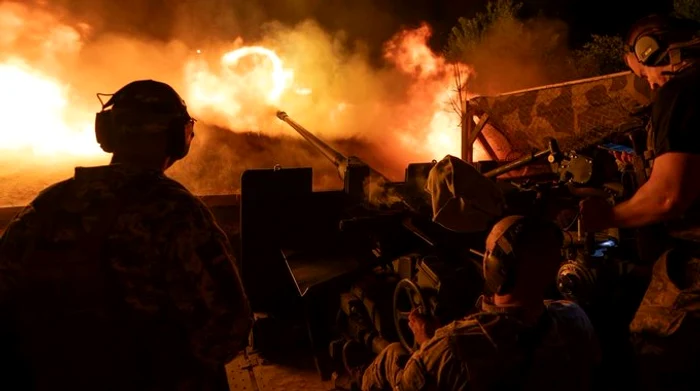
Photo: Twitter / X
The bad news is that, as is the case at the end of most wars, the bill is not split evenly, sometimes even unfairly, but someone will have to foot it.
To it will be added, of course, the sufferings of the war experienced by both sides, not shared equally.
Another bad news is that no matter how many try to engage in these talks about peace plans, it only matters what two sides are negotiating and not both directly combatants.
The meetings in London, Paris, Brussels or Berlin have and will also have their purpose, perhaps they will influence some approaches, but what will be important will be how much the US will want to end this conflict and how much Russia will insist on its red lines.
The leadership of Ukraine could influence these developments only if there are syncopes in the Washington-Moscow bilateral dialogue, with Kiev doing, of course, everything to make this happen, otherwise they will have to find someone with the right to sign (the point with the elections in 100 days is not put there to be counted…) and look for the stamp with “Approve” through the cabinets in the presidential palace.
It's an evolution that can only be reversed by a miracle at the end of the year, let's not forget that we are in a period where miracles still happen.
At the end of 2025, the Western media looks, as if on command, with different eyes at Ukraineafter four years of war and another eight or so of almost as bloody conflict (but located at the level of Donbas) in which he appeared to be wearing glasses covered with foil “blue – yellow / blue – жовтий“
It is not a generalized phenomenon, there is no way it can be, but some of the most important publications and press agencies, including “The New York Times”, “Reuters”, “Politico”, “The Telegraph”, have become, almost overnight, much less enthusiastic about the continuation of the war, the word “corruption” is used much more often and almost exclusively when it comes to Ukraine, reports and analyzes about the front are more about suffering and hopelessness, absent more and more the optimistic – mobilizing tones from before.
More color still exists in some European publications and media agencies, where part of the previous tone is also transferred, with references to the values and principles that must be defended (“BBC” is a kind of journalistic Downing Street 10), but especially across the ocean that should bring closer, not separate, the atmosphere is that of the previous paragraph.
I will give only three examples of materials that support this recent evolution: one material from “Reuters” and two from “The New York Times”.

Photo: Twitter / X
In the first, “Band of brothers: how the war crushed a cohort of young Ukrainians” “Reuters” – the agency is among the exceptions of the European media – presents the case of a group of 11 Ukrainian recruits, very young, who tried to solve the financial problems specific to the beginning of adult life through the voluntary and apparently advantageous enlistment offered by a decree of President Zelenski from the winter of 2024 aimed at the 18-24 age group.
“Reuters” specifies that it is not a compact group, although the title suggests this, there are only 11 individual cases, which could be identified by the authors of the journalistic investigation, no general conclusions can be drawn from these examples, but…
… the statistical conclusion is that “none of the 11 is fighting anymore. Four were wounded, three are missing in action, two are unauthorized absent (deserters, most likely, nn), one fell seriously ill, and another recruit committed suicide…”.
Only a few hundred young men volunteered following that decree, it was a drop in the ocean of an army of nearly a million men, but even that drop evaporated prematurely.
The second example is about “The New York Times”, which recently published an analysis of recent military developments in Pokrovsk, at this moment, probably the most important town on the front line threatened by the Russian offensive.
Although most military correspondents on both sides present this city as already under Russian control, Kiev media and Ukrainian officials continue to provide examples of resistance, national flags flying in the center of the city, armed groups operating behind enemy lines.
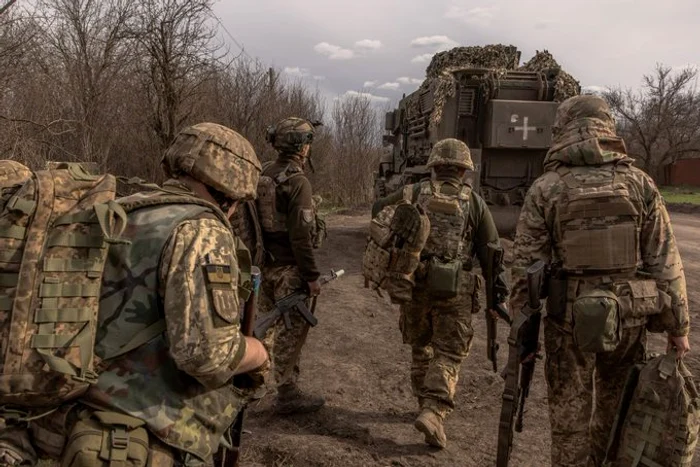
Photo: Twitter / X
As it happened in other previous cases, in Bahmut, Avdeevka, Ciasov And.
This time, “The New York Times” is more direct: “Battlefield Picture Worsening for Ukraine as Trump Pushes Peace Plan” / “Battlefield Picture Worsening for Ukraine as Trump Pushes Peace Plan”.
The publication states that
“ “Moscow's forces captured 505 square kilometers (…) of territory in November, compared to 267 square kilometers (…) in October, according to the battlefield map maintained by DeepState, a Ukrainian group with ties to the military.”
The article quotes Emil Kastehelmi, a Finnish military analyst at the Finland-based Black Bird Group, who also states: “The future looks very, very bleak for Ukraine”…”I don't see a clear way out.”
So, an American publication, a pro-Ukrainian website, a Finnish analyst, all from the pro-Kiev camp, the same implicit message: “The future looks very, very bleak for Ukraine. (…) I don't see a clear way out” (Emil Kastehelmi quoted by NYT, nn).
As for the concrete situation in Pokrovsk, the publication appeals to the testimony of a Ukrainian soldier, Oleh, a platoon commander with the rank of sergeant: “Russia attacks Ukrainian positions daily. (…) The drones have turned the entry and exit roads into death traps. (…) Neither day nor night give us peace”. “If we (Ukrainians, nn) we have three people, they have 30″. (…) It's just unbelievable how many people they have.”
And the sergeant at the front, who knows how an article ending should look, be he more pessimistic than usual, adds: “But they didn't expect us to fight this long either.”
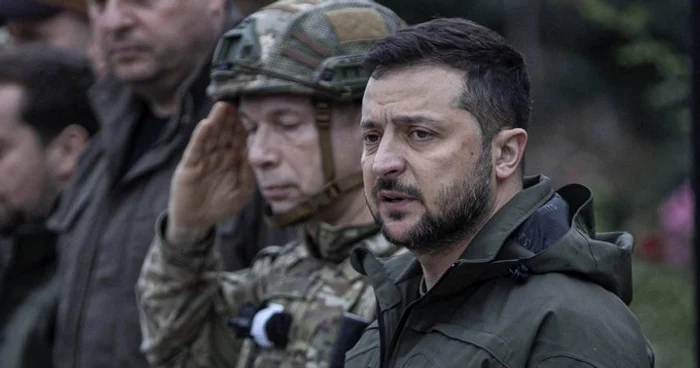
Photo: Twitter / X
“The New York Times” also twists the knife in the wound, publishing an analysis about the subject that has recently rolled dangerously close to the top of the presidential administration in Kiev: corruption.
The title is: “Zelensky's Government Sabotaged Oversight, Allowing Corruption to Fester” / “Zelenski's government sabotaged oversight, allowing corruption to spread”.
And this is precisely where a small problem of memory, let's call it institutional, of the publication itself could come.
“The New York Times” states that the problem of corruption is not a recent discovery, it has existed since the moment when economic partnerships with the West were initiated and massive funds began to arrive for the reformation of entire economic sectors.
The only leverage the partners had to keep under control how these funds were spent were some kind of Western-majority governing councils, with representatives sent by the donor states, who could have censored any illegalities.
Over time, in a process that began under President Poroshenko, continued in the early years of President Zelenskiy, and intensified with the outbreak of war, almost all of these external “witnesses” were eliminated by various methods.
The phenomenon was known but ignored: “We care about good governance, but we have to accept that risk,” said Christian Syse, the special envoy to Ukraine for Norway, one of Kiev's main donors. He added: “Because it is war. Because it is in our interest to help Ukraine financially. Because Ukraine is defending Europe from Russian attacks.”
He was ignored by his partners, but also by the media in these states, which emphasized Ukraine's position as an outpost in the defense of democracy and Europe west of Kiev.
“The New York Times” details the mechanism by which a percentage of 15% of any contract went on the Dnieper water in private directions and pockets.
Until it was about 100 million dollars from just one corporation, Energoatom.
The phenomenon of that time, the almost generalized corruption, was known but not made public because it helped to continue the war.
The Ukrainian judiciary, independent and equidistant, also had its reasons for not intervening.
The phenomenon revealed now, through the crisis that led to the resignation of two ministers and the head of the presidential administration, has, however, another use: pressure on President Zelenski to accept the peace plan in the form that will be provided to him by the US-Russia tandem.
For now, the same judiciary, the wing with external sponsors, opened its eyes, began to see, got down to business and cleaned up the corruption around the president.
***
Paradoxically, after so many searches and confiscations of currency and documents, after a platoon of resignations and dismissals, no one is officially accused, it's just a game of power in which someone will have to give in until other cards are thrown on the table.
And we will hear, perhaps, the final chorus: “Oh, what wonderful news!”