10 great shots for 2026. These companies can make big profits on the stock market [ZESTAWIENIE]


Recent years investors have become accustomed to thinking in terms of spectacular storiesthe so-called The Magnificent Seven, the AI boom, index records.
Meanwhile, some of the most interesting investment opportunities for 2026 arise at the intersection of less media-covered trends.
These include: space infrastructure, last mile logistics, digital wallets in Latin America, coffees with drive-thru in American suburbs or software that turns an ordinary restaurant into a precisely managed data business.
Here are the potential 10 hits of 2026.
Important: the companies and valuations included in the text are for information purposes only and do not constitute a recommendation or any other form of suggestion for the purchase or sale of financial products. Investment decisions should be preceded by your own analysis of risk and financial situation.
A perfect ten
Tesla, MercadoLibre, DoorDash, Toast, Rocket Lab, Dutch Bros, Aritzia, Klarna, T-Mobile US and Tractor Supply Together they create a mosaic of companies that are already investing in development, but are still perceived too narrowly by many — as a car manufacturer, a BNPL application or a “farmer's shop”, instead of as full beneficiaries of major structural changes.
Analysts from The Motley Fool and S&P Global Market Intelligence indicate these companies as worth considering when investing in the near future.
Tesla Tesla will focus on autonomous cars, including robotaxis
|
Cover Images/East News / East News

ISIN No.: US88160R1014
The energy storage segment is currently growing faster than car sales – in the third quarter of 2025 alone, Tesla deployed a record 12.5 GWh of energy storage, making it one of the main global players in utility-scale storage, and not only a manufacturer of electric cars.
The growing share of this business in revenues and margin means the diversification of profit sources, making the company less dependent on car demand cycles and sensitivity to subsidies.
At the same time, the closure of the Dojo supercomputer project in 2025 shows that Tesla can relatively quickly cut expensive dead ends and redirect capital towards scalable products (FSD, Optimus robot, energy storage). The market often underestimates such activities, looking mainly through the prism of the volume of car deliveries.
MercadoLibre
ISIN No.: US58733R1023
MercadoLibre has consistently grown faster than the e-commerce market in Latin America, with revenues up 39% in Q3 2025. y/y to USD 7.4 billion, with 35 percent increase in GMV and decrease in EBIT margin to 9.8%. by deliberately lowering the free shipping threshold in Brazil, which drives growth in its customer base.
What is less obvious is that Mercado Pago's fintech has become the second pillar of the business: the loan portfolio grew from approximately USD 6 billion. in the third quarter of 2024 to USD 11 billion. a year later (an increase of 83%), and at the same time the quality of the portfolio improved thanks to a decrease in the 15-90 days arrears rate from 7.8 to 6.8 percent.
The company consciously sacrifices some short-term profitability to… gain shares in logistics and financial services faster. After the price drop following the 2024 results, investors thinking about the 2026+ horizon may see an interesting growth case here.
DoorDash
ISIN No.: US25809K1051
DoorDash is no longer just a food app — in 2024, the number of orders increased by approximately 18-19 percent. y/y, revenues by 20-25%, and the company entered a sustainable path to profitability, reporting USD 162 million in the third quarter of 2024. net profit and record adjusted EBITDA of USD 533 million.
The advertising business is becoming a less obvious driver of profits – DoorDash and Wolt Ads exceeded USD 1 billion in 2024. revenues, and the platform is used by over 150,000 people. advertisers from 30+ countries. This creates a high-margin “second engine” alongside the food delivery itself.
Expanding the offer to include grocery shopping, retail, pharmacies and fast last-mile deliveries makes DoorDash becomes an urban logistics infrastructure in 2025, not just a “food delivery” company. The market can fully discount this only around 2026.
Toast
ISIN No.: US8887871080
Toast reached an important turning point in 2024 – for the first time it generated positive annual adjusted EBITDA ($373 million) with an approximately 20-point margin expansion, and SaaS net retention remained around 110%. Effect? Restaurants are constantly purchasing new modules of the platform.
Special offer
The company adds over $400 million annually. ARR (Annual Recurring Revenue), and its share in the US restaurant market already reaches approximately 20 percent, with the fastest growing segments being less frequently described – international markets and enterprise customers, including large chains such as Dine Brands or Marriott.
Investments in AI (demand forecasting, automatic scheduling, menu recommendations) make this possible each new module increases the income from one premises with relatively constant service costs. In the horizon of 2026, this may translate into further improvement in margins and a valuation more reminiscent of SaaS companies than traditional transactional fintech.
Rocket Lab A cargo rocket project for the US military, carried out by Rocket Lab
|
Rocket Lab/Ferrari Press/East News
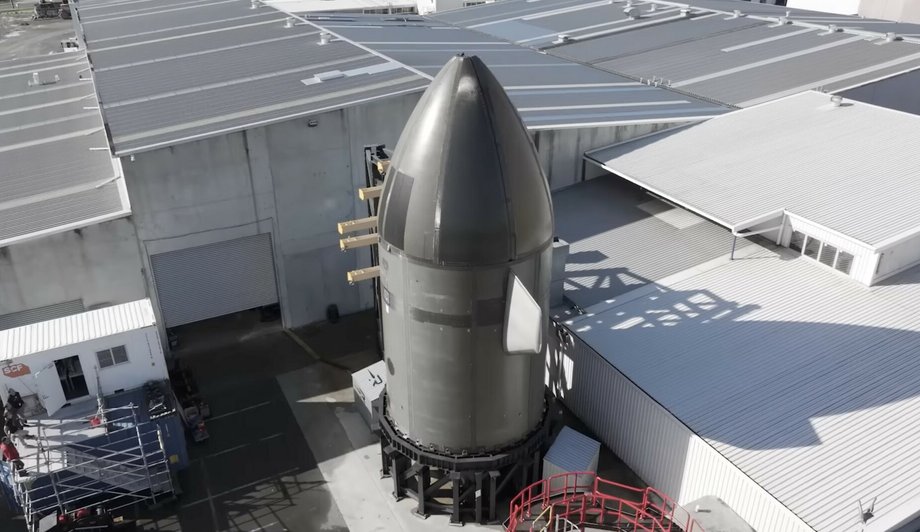
ISIN No.: US7731211089
Rocket Lab is increasingly resembling a “mini-prime” like SpaceX – in the third quarter of 2025, the company recorded record revenues of $155 million. (+48% y/y) with a record gross margin thanks to the mix of cargo launches and sales of satellite systems.
The order portfolio amounts to approximately USD 1.1 billion, of which approximately 53 percent falls on the Space Systems segment, and the management estimates that approx. 57 percent entire backlog will turn into revenue in the next 12 months. This provides visibility into results that is rare for the space sector.
Additionally, the debut of the Neutron rocket – a potential alternative to Falcon 9 – and further long-term contracts with US government agencies are planned for 2026, which means that RKLB may be perceived as a full-fledged provider of orbital infrastructure in 2026.
See also: 2 thousand PLN from dividends every month. Five model portfolios
Dutch Bros
ISIN No.: US26701L1008
Dutch Bros combines the profile of a growing QSR network with the dynamics typical of growth companies – in the third quarter of 2025, revenues increased by 25.2%. y/y to USD 423.6 million, system LFL sales by 5.7%, and the company opened 38 new cafes in 17 states, bringing its total to 1,080 locations.
The management board raised its forecasts in 2025: it expects USD 1.59–1.61 billion. annual revenues, LFL sales growth of approx. 4.5–5 percent and at least 160 new premises. In the long term, it wants to exceed 2,000 points by 2029, which means that the company is still at an early stage of geographic expansion.
Few people appreciate that the foundation of high loyalty is the extensive Dutch Rewards program and the drive-thru-only format allows you to achieve higher customer turnover and transactions per square meter than classic cafes. Thanks to this, margins can be resistant even to an economic slowdown.
Aritzia
ISIN No.: CA04045U1021
In recent years, Aritzia has undergone a successful transformation from a “Canadian chain” into an international premium brand. In fiscal year 2025, revenues increased by approximately 19%. to CAD 2.74 billion (Canadian dollars), and sales in the USA increased by 31%. and is responsible for 58 percent. whole.
The risk profile for 2026 looks interesting. At over 30 percent increase in revenues, inventories grow only by about 3%. This limits the risk of markdowns, and expansion in the US and new boutiques on key high streets give the company operational leverage, to which the market is only just beginning to assign an appropriate valuation premium.
Klarna
ISIN No.: GB00BMHVL512
After years of volatile valuations and painful restructuring, Klarna entered the NYSE in 2025 under the ticker KLAR with a valuation of approximately USD 14-15 billion, which makes it one of the most interesting fintech “turnarounds” on the stock exchange in the next few years.
The company returned to profitability in 2024 – revenues reached $2.81 billion. (+24% y/y), and net profit was USD 21 million. — while financing almost the entire loan portfolio with approximately USD 14 billion. customer deposits, co reduces dependence on wholesale financing.
Although Klarna again showed a loss in the first half of 2025 due to higher write-downs, the long-term investment thesis is based on the growing share of BNPL in e-commerce payments, a strong position in the US and a base of approximately 93 million active users in 26 countries. At the current post-IPO valuation, this provides the potential for re-rating once the quality of the portfolio stabilizes.
Read also: Profit of up to PLN 5,000 PLN per year. Dividends and AI in one wallet
T-Mobile US
ISIN No.: US8725901040
T-Mobile US uses the advantage in the range and quality of the 5G network to systematically increase its market share. At the end of 2024, it had approximately 35%. share in the US wireless market and was the leader in the growth of post-paid customers (6.1 million in 2024 and 1.3 million in the first quarter of 2025 alone).
At the same time, the company is generating massive cash flow ($4.8 billion in adjusted FCF in Q3 2025) and aggressively returning capital to shareholders – it paid out a total of $3.5 billion in the same quarter. in the form of buybacks and dividends under a program reaching USD 14 billion.
The development of 5G home internet and business services makes TMUS increasingly resemble a combination of a defensive telecommunications operator and a growing infrastructure company. With such a large scale of buybacks, it may be interesting in 2026 for investors looking for a mix of growth and cash return.
Tractor Supply
ISIN No.: US8923561067
Tractor Supply is a beneficiary of the “life outside the city” trend. The company raised its addressable market estimate to USD 225 billion, increased the target number of stores to 3,200 and plans to open approximately 90-100 new branches annually in 2025-2026, partially taking over locations from weaker chains such as Big Lots.
The “Life Out Here 2030” strategy includes the development of private labels, the PetRx program, direct sales and last mile deliveries. This helped the company double its revenues in five years and increase the share of exclusive products with a higher margin.
Even in the more difficult 2024, the company maintained positive comparable sales growth and stable margins, and conservative debt, expansion in the agricultural and hobby niche and buybacks reducing free float by 1-2%. annually, they create a solid “cushion” for the valuation entering 2026.
Check also: This is how you will earn money on AI and layoffs in 2026. Top 10 companies for investors
Summary
If we are serious about 2026, it is worth moving away from the simple question: “who had the best results in the last twelve months?” and ask another: “who is building an advantage today that the market will fully understand only in two or three years?
That is why, in addition to traditional analyzes of financial results, debt ratios and valuations, the importance of understanding business models and hidden sources of margins, from advertising in delivery applications, through loyalty programs, to own brands in retail, is growing.
Ten companies described is, of course, not a ready-made recommendationbut it can be a good set of landmarks for further research. Especially for investors who they want to overtake the market not only with courage, but above all with a better understanding of where the business is heading.
Author: Grzegorz Kubera, journalist of Business Insider Polska
Note: the information contained in the text is for informational purposes only and does not constitute an investment recommendation, information recommending or suggesting an investment strategy within the meaning of applicable regulations, or any other form of advice regarding the purchase or sale of financial products.