Washington was in a frenzy. Trump's plan for Europe derailed. Congress put up a wall


A sweeping U.S. defense bill that could come to a vote as soon as this week imposes new restrictions on reducing the number of U.S. troops stationed in Europe. This is a bipartisan response to the actions of the Donald Trump administration, which – according to many parliamentarians – could weaken the United States' involvement on the continent.
On Sunday, December 7, a compromise was released on the National Defense Authorization Act (NDAA), the document that annually authorizes Pentagon programs and policies.
The bill stands in stark contrast to President Trump's new national security strategy, which sharply criticizes European allies and suggests that Europe is experiencing cultural regression.
Europe is becoming an arena of political struggle between Congress and Trump. The upcoming bill may limit the president's freedom on one of the key security issues.
Lawmakers also agreed to a slight increase in the Pentagon's budget, by $8 billion. (about PLN 32 billion) more than what Trump requested. The document also repeals old authorizations to conduct war in the Middle East — a small victory for those members of Congress who have been trying for years to regain some statutory control over the declaration of war.
The final bill is the result of weeks of negotiations between leaders of both chambers and both parties, the heads of the armed services committees and the White House. Work has been delayed in recent days due to disputes over non-defense issues, including: for a large housing package supported by the Senate and for tightening controls on US investments in China.
Typically, a defense bill passes with a broad bipartisan majority. However, Speaker of the House of Representatives Mike Johnson will have to regain the support of some Democrats who voted against the original, strongly right-wing version of the bill in September. At the same time, he will have to face the dissatisfaction of some Republicans who are disappointed with the lack of implementation of their priorities.
One thing remains clear, however: Both the House and Senate versions reflected bipartisan concerns that the Trump administration may seek to significantly reduce the U.S. military presence in Europe. Both bills included provisions imposing a number of conditions on the Pentagon that must be met before the number of troops on the continent could drop below certain thresholds.
A brake on the withdrawal of troops
Republicans, led by the chairman of the Senate Armed Services Committee, Roger Wicker, and the head of the similar committee in the House, Mike Rogers, openly opposed the Trump administration. They argued that troop reductions — such as the recent decision to withdraw a rotational army brigade from Romania — could encourage Russia to act more aggressively.
The final version of the bill blocks the Pentagon from reducing the number of US troops permanently stationed or deployed in Europe below 76,000. soldiers for a period longer than 45 days. This restriction will remain in effect until Defense Secretary Pete Hegseth and the commander of U.S. forces in Europe confirm to Congress that the decision is in the interest of U.S. national security, has been consulted with NATO allies, and provides an analysis of its effects.
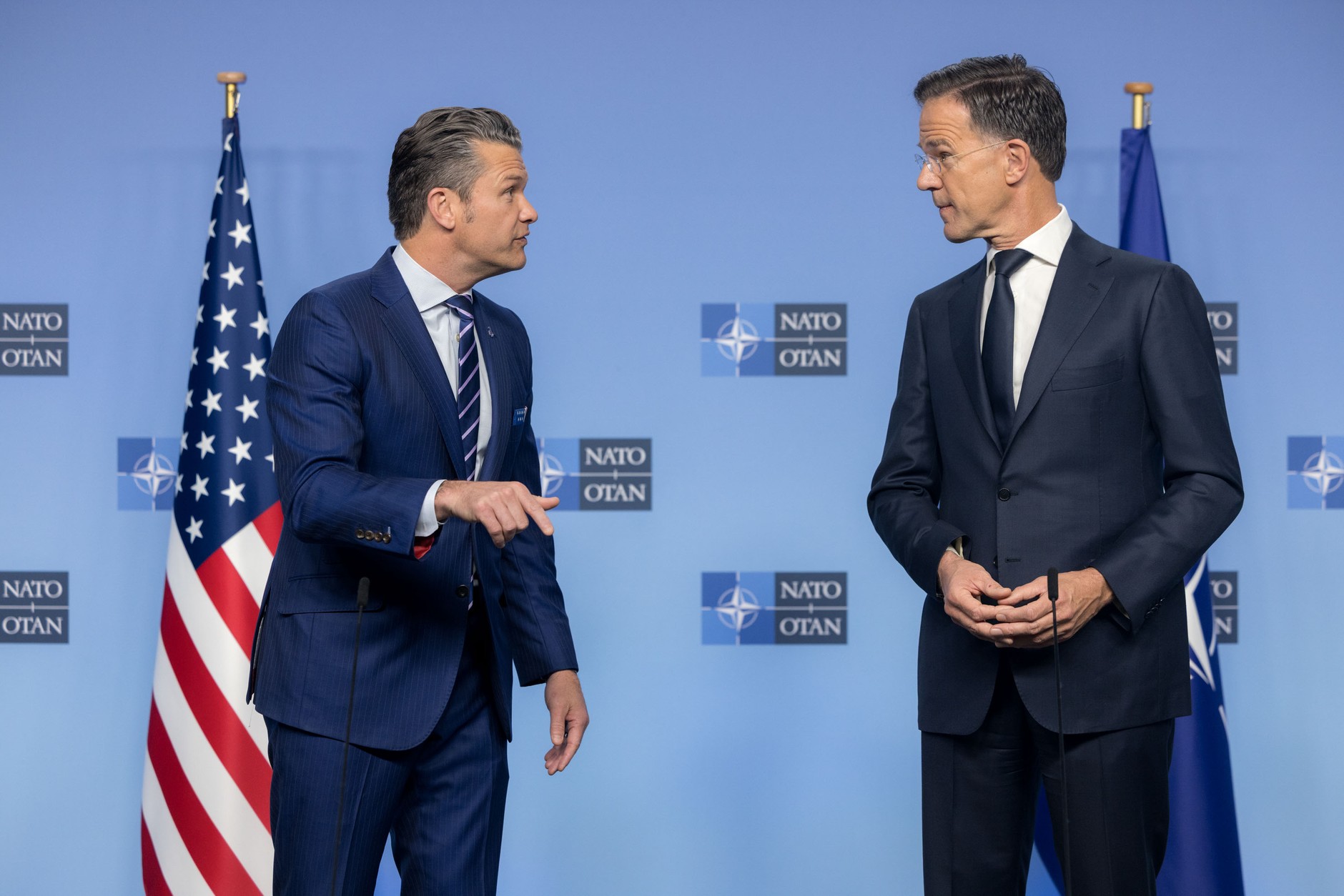
U.S. Department of War Secretary Pete Hegseth and NATO Secretary General Mark Rutte meet in Brussels, Belgium, October 15, 2025.NATO / NATO
The act provides for the same restrictions on the possible resignation by the US of the position of Supreme Commander of NATO Allied Forces in Europe – a function that has been held by the commander of the US European Command for decades.
Negotiators also introduced similar restrictions on reducing the number of US troops on the Korean Peninsula below 28,000. 500 soldiers – the provision originally adopted by the Senate.
Lawmakers agreed to slightly increase the overall defense spending cap, reflecting Capitol Hill's growing willingness to provide more military funding. The final agreement assumes an increase in Trump's budget from $893 billion. (approximately PLN 3,570 billion) by an additional USD 8 billion. (approximately PLN 32 billion), which gives a total of approximately USD 901 billion. (approximately PLN 3,600 billion) for the Pentagon, the development of nuclear weapons and other national security programs.
The House had previously adopted a bill exactly matching Trump's proposal, while the Senate opted for a much larger increase — by $32 billion. (approximately PLN 128 billion). Regardless, Republicans have already approved an additional multi-year package for the Pentagon worth $150 billion this year. (approximately PLN 600 billion), which is part of a broader tax and expenditure law adopted by the votes of their parties.
The Defense Policy Act, although it sets the overall level of spending, itself provides no resources to the Pentagon. Their granting requires separate annual budget acts.
Sorting out war powers and political frictions
Democrat Adam Smith, his party's top representative on the House Armed Services Committee, described the agreement as a “starting point” that would allow work on the NDAA to be completed while budget committees continue work on separate full-year funding for the Pentagon.
One adviser to the Republican leadership in the House, speaking anonymously, said the new spending ceiling was
a financially responsible increase that meets our defense needs.
The bill also repeals two old pieces of legislation authorizing military action in the Middle East: a 2002 law preceding the invasion of Iraq and a 1991 law related to the Gulf War. Both repeals were included in the House and Senate bills – bipartisan support for “cleaning up” the old authorizations proved stronger this time than the opposition of some leading Republicans.
This is a step forward for critics of the president's broad war-making powers, who have argued for years that these provisions are outdated and unnecessary. They also point to potential abuses — as when Trump invoked the 2002 authorization to partially justify the 2020 attack that killed Iranian general Qassem Soleimani.
However, one of the other Republican advisers in the House indicated that these two acts would be repealed will not limit Trump's powers as commander in chief.
Ultimately, however, this is a minor victory for those trying to regain congressional control over war decisions. The most important authorization — the one from 2001, adopted after the September 11 attacks and underpinning most U.S. counterterrorism operations around the world — remains in force.
The bill also does not address Trump's ongoing campaign against alleged drug-smuggling ships in the Caribbean. Many lawmakers — including some Republicans — question the legal basis for these deadly strikes.
The final version of the bill also did not include expanding access to in-vitro procedures and other infertility treatment services for military families under the Tricare system. This provision, supported by, among others, by Senator Tammy Duckworth and Congresswoman Sara Jacobs was previously included in bills of both chambers, but was ultimately removed. According to reports, it was Speaker Johnson who pushed for his removal – as he did last year.