Netflix has agreed to buy part of Warner Bros. Discovery, responsible for film and television studios and streaming platforms, said in a statement published on Friday. The value of the transaction will be USD 72 billion. The news itself and the merger of the giants are not a surprise. It may be – especially in Poland – the fact that the famous Warner brothers came from the small Masovian village of Krasnosielc.
See also: Netflix will buy part of the TVN owner's business. A staggering amount
In 2023, the village of Krasnosielc commemorated the Hollywood film tycoons Warner Brothers. As “Tygodnik Ostrołęcki” reported, the authorities unveiled commemorative plaques in honor of Harry, Sam, Albert and Jacek Warner in the village park, and a special mural commemorating the brothers was also unveiled.
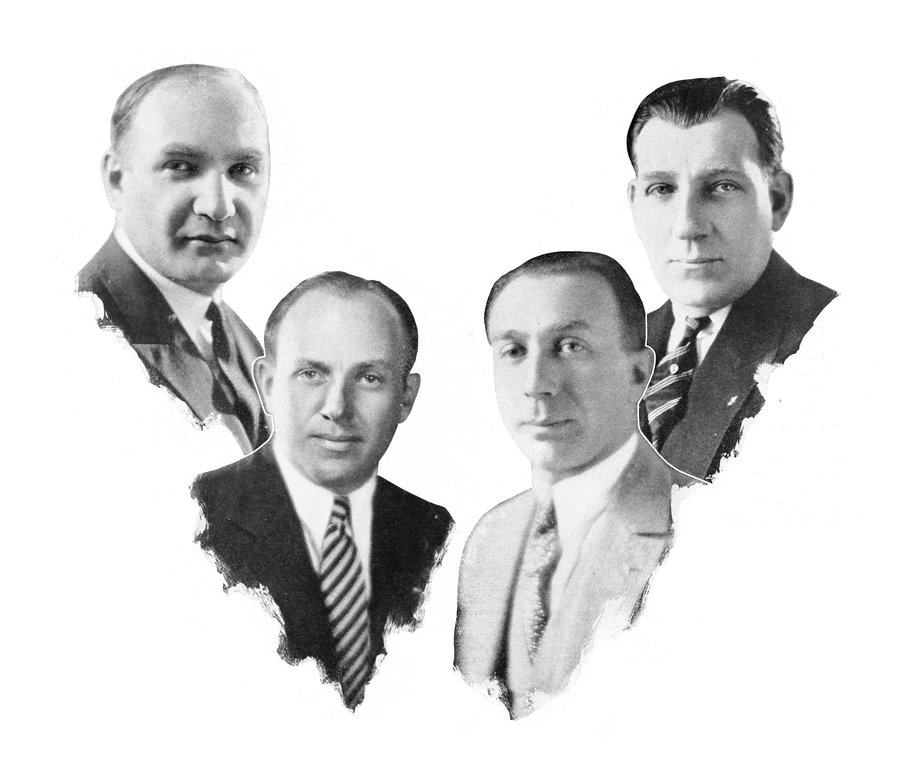
Warner Brothers – Albert, Jack, Harry and Sam
|
Wikimedia
The father of the famous four brothers was named Benjamin Wonsal. The name of the family's doyen is given differently by numerous sources – it could also have been Eichenbaum, Wonskolaser or Wrona.
However, it is certain that he was a Polish shoemaker of Jewish origin living in Krasnosielc. In 1888, Benjamin, fearing a wave of pogroms, emigrated to America in search of better economic prospects for his growing family.
As “Gazeta Wyborcza” explained, a humble shoemaker from Krasnosielc decided to change his name after arriving in New York. He adopted the surname Warner and also anglicized the names of his sons.
Brothers from a Masovian village created Hollywood. Now their empire is taken over by Netflix
Benjamin's sons – Hirsz, Aaron and Szmuel – were born in the village of Krasnosielc. The fourth son, Isaac, was born in London or Canada. A year after arriving in the United States, the family's elder brought his family with whom he initially lived in Canada. Eventually, the sons were given American-sounding names: Albert, Jack, Harry and Sam.
The text continues below the video
It was not easy for the family of Polish immigrants. The later famous brothers had eight more siblings. Everyone was struggling with financial difficulties, and the humble shoemaker from Krasnosielc was unable to earn enough. This forced the clever and brave brothers to look for new ways to earn money.
See also: Netflix already offers games, and now it is seriously considering something else. There is a slight optimism among investors
The brothers' first step towards cinema was to buy a kinetoscope. It cost as much as $1,000, which was a huge amount. The brothers decided to pawn the family horse and their father's gold watch, which he had brought from Poland.
The investment not only paid off, but paid off many times over. The kinetoscope came with a copy of “The Great Train Robbery” by Edwin S. Porter. The brothers set up a tent in their backyard and invited neighbors and community members to see the moving images emanating from Sam's projector. The attraction turned out to be a hit.
The Warner brothers came from a small village in Poland. Their empire built the magic of Hollywood
Now the brothers needed a more permanent place. Knowing that the carnival was coming to the town of Niles, northwest of Youngstown, Ohio, they found an empty store there and set it up, hoping to take advantage of the influx of people attracted by the carnival.
Showing movies in small towns, they earned money to open their first cinema hall. They soon began producing films, and in 1923 they founded Warner Bros. Pictures. Each brother had a role in the company: Harry was in charge, Albert was in charge of distribution, Sam was in charge of technology, and Jack oversaw day-to-day operations.
As the Hollywood Reporter notes, the Warner brothers – Harry, Sam, Albert and Jack – were different from other Hollywood movie moguls in the industry's early years. They were smart, brash, outspoken and passionate in a way that was different from the industry norm.

Warner Bros
|
Dmitry Kropachev / Unsplash
The most publicly consistent brother was Harry, a stoic businessman and proud immigrant. Sam was a technical visionary who died too soon. Albert largely avoided the public eye, although he served as a loyal ambassador for the family brand. Jack was a wild child, an artist, and sometimes unpredictable.
See also: The British calculated the “Hevelius” effect. This is how the Netflix hit affected Poland's GDP
“Who the hell wants to hear actors talk?” Harry said when Sam suggested investing in Vitaphone sound technology. Despite initial skepticism, Harry ultimately took the risk and invested $7 million. in the development of sound cinema.
The Warner brothers created an empire, but lost their own friendship
This resulted in the success of “The Jazz Singer” in 1927, which ushered in the era of sound films. Unfortunately, this triumph was overshadowed by the death of Sam Warner, who died the day before the film's release.
The brothers started producing their own and used the name Warner Bros. at least since 1920. Two years later, they applied for a new trademark: “Warner Brothers' Classics of the Screen”.
As the Hollywood Reporter recalled, Harry said the trademark was intended to distinguish the brothers from other film production companies, which were too numerous to count. Harry assured viewers that Warner films were “distinctly individual in terms of production and story value, as well as in terms of the excellence of screen actors.” The studio was registered on April 4, 1923.
The success of Warner Bros. did not protect the family from conflicts. Harry, modest and socially engaged, was different from the flamboyant Jack, who loved luxury and publicity. Their relationship deteriorated to the point that they avoided each other, and in 1956, Jack tricked him into buying out the brothers' shares, ending their collaboration.
Despite this, the studio continued to produce films that became classics such as “Casablanca” and “Whatever Ever Happened to Baby Jane?”.
See also: Netflix revealed profits. “Healthy customer growth and solid advertising sales”
Warner Bros. it's not only films, but also the courage to discuss difficult topics. Harry Warner was the first in Hollywood to refuse to cooperate with the Germans after Hitler came to power and wanted to draw attention to the threat of Nazism. His words: “The challenge is not money, but ideas and ideals” remain valid to this day, reminding us that true success in cinema is a combination of passion, courage and vision.