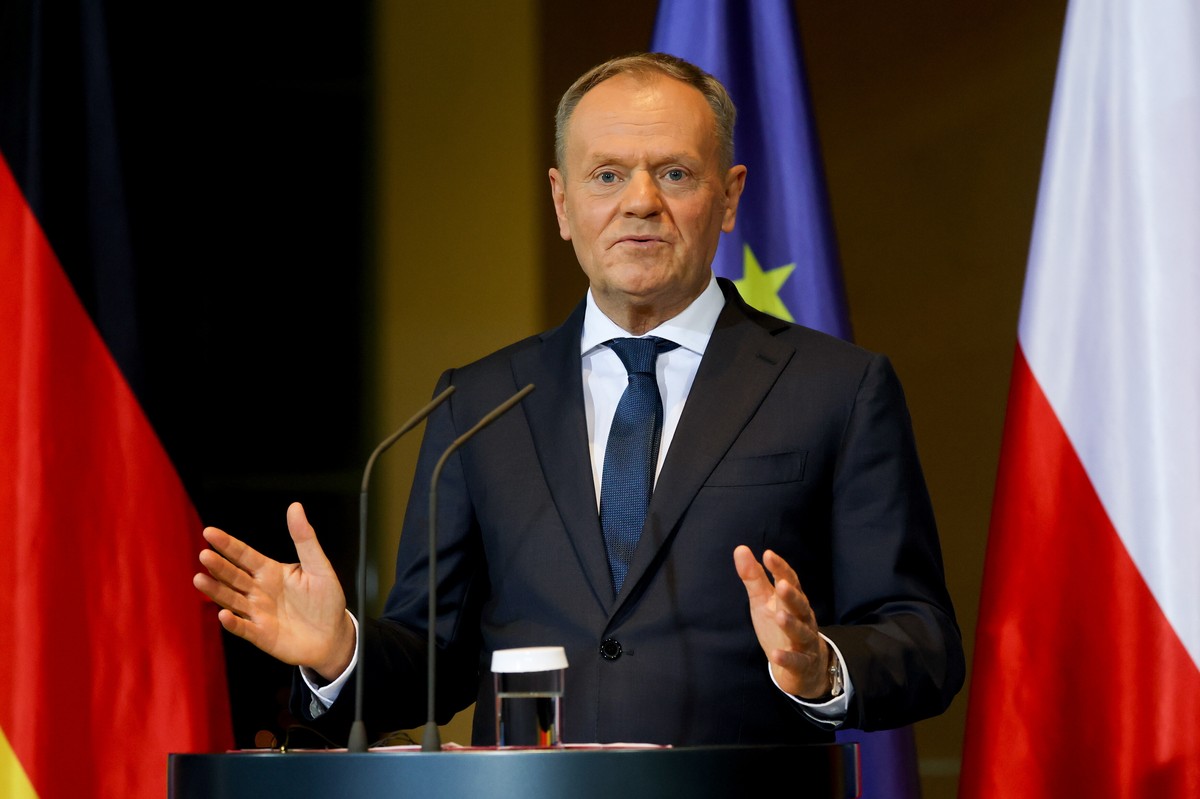
On Monday, intergovernmental consultations were held in Berlin with the participation of representatives of Poland and Germany. During a joint press conference, Prime Minister Donald Tusk and Chancellor Friedrich Merz addressed the issue of compensation for living victims of World War II in Poland. Tusk turned to Merz, emphasizing that if Germany wanted to make such a gesture, they should hurry up. The Prime Minister added that next year he would consider the possibility of Poland implementing this program itself from national funds, but did not elaborate on the details of this proposal.
The rest of the article below the video:
According to the calculations of the Onet Data team, the cost of paying compensation in 2026 could amount to PLN 440 million. Over the next 15 years, this amount would exceed PLN 2 billion.
Donald Tusk's proposal regarding reparations from Germany
SW Research conducted a study commissioned by Onet, in which respondents were asked whether “In your opinion, should Poland pay compensation to living Poles – victims of World War II, if Germany does not make such a decision?”
The results are sharply divided. 25.8 percent respondents support the payment of compensation by the Polish government, while 43.3 percent she is against it. The remaining 30.9 percent people cannot clearly assess whether Poland should make such a decision.
The survey results indicate that women are more likely than men to support the payment of compensation – 28.4%. women answered “yes”, while among men this percentage was 22.9%.
The greatest support for this initiative is expressed by people aged up to 24 (33.8%), while respondents over 50 years of age view it the least favorably (20.9%).
Read also: Who will take up arms in the event of war in Poland? [SONDAŻ]
The survey was conducted on December 2-3, 2025 by the SW RESEARCH agency using the online interview method (CAWI – Computer-Assisted Web Interview) on the SW Panel online panel. As part of the study, 828 surveys were carried out among adult Poles. Quota sampling ensured the representativeness of the sample in terms of gender, age and size of the place of residence.