Employers and PSL block changes in PIP. The government is looking for a compromise before the KPO deadline


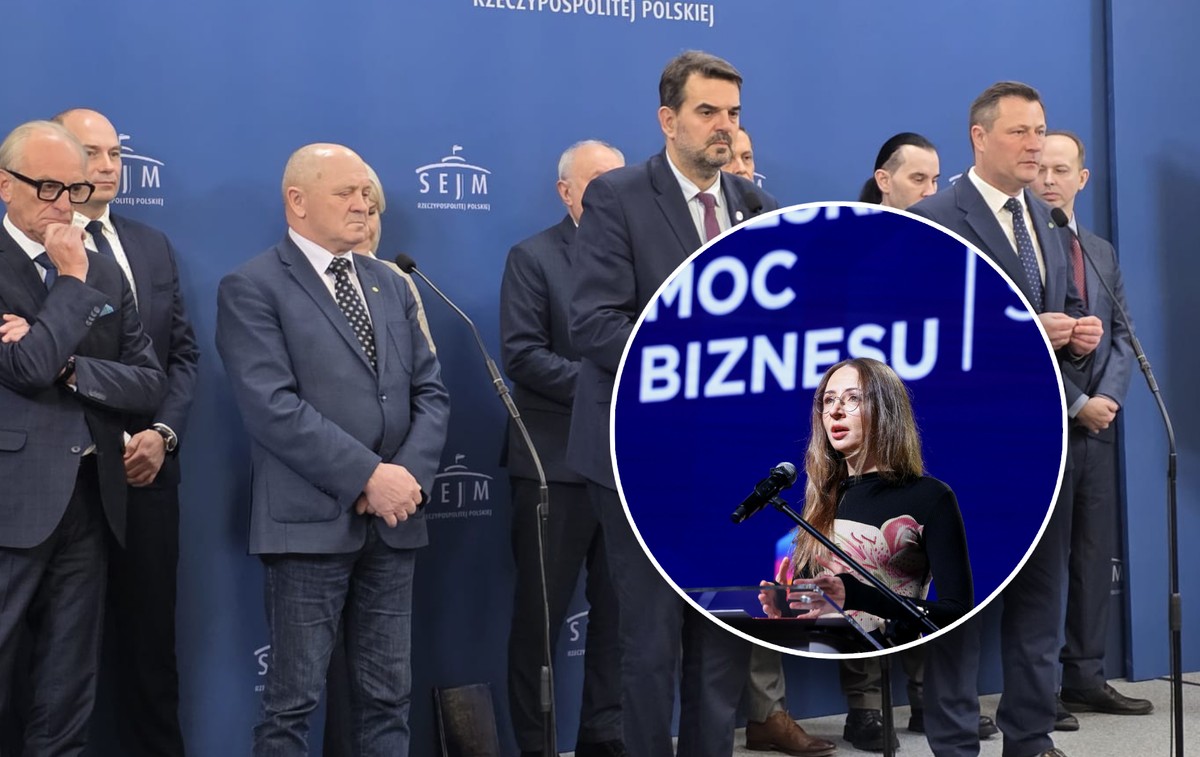
“Unacceptable” – this is what not only two PSL MPs say, but the entire club and nine employers' organizations. This is about the reform of the National Labor Inspectorate, which allows an administrative decision to turn a contract of mandate or self-employment, i.e. a contract for the provision of services with a person running a business, into a full-time job (employment contract).
The text continues below the video
Project on this matter prepared by the Ministry of Family, Labor and Social Policy, headed by Agnieszka Dziemianowicz-BąkMP of the Left. On the one hand, there is a fight between coalition partners and ministries on the other, and between ministries on the other.
The proposals of the Government Legislation Center, which we described first, were supported by the Ministry of Health. In turn, the Ministry of Labor and Social Policy supports the project The Ministry of Justice even wants to tighten it.
See also: Will thousands of companies change contracts of their employees? The Ministry of Labor releases shocking data before the reform
PSL says a hard no
In the Sejm before At 11 a.m. the club's press conference on this matter ended. MP Krzysztof Paszyk, chairman of the PSL Trzecia Droga club, member of the PSL board of directors and former deputy minister of development, said at the meeting that These are extremely harmful solutions that weaken the pillar of the Polish economy.
Thus, the scenario that we first reported in Business Insider Polska is coming true. PSL will not support the draft law in the version prepared by the Ministry of Family, Labor and Social Policy, led by Agnieszka Dziemianowicz-Bąk, an MP from the Left.
The PSL conference was not called at a random moment. At At 12, the meeting of the Standing Committee of the Council of Ministers begins. Its first item is to be a draft act amending the Act on the National Labor Inspectorate and certain other acts (UD283). As Business Insider Polska found out, there is no new version of the project, it was not developed at the Friday meeting, which we wrote about here. As a result, today will be another day of negotiations.
Negotiations in the government are ongoing
The version of the draft from November 4, to which many comments were submitted, will still be discussed at the SKRM. Everything indicates that at this point the parties have firmly established their positions. There are two points of contention.
Firstly granting the National Labor Inspectorate the competence to authoritatively determine the existence of an employment relationship by means of an administrative decision with immediate enforceability. Employers and PSL do not agree to this.
The Ministry of Labor emphasizes that immediate enforceability of PIP decisions is needed and already exists today. Such decisions are made, among others: in matters regarding remuneration or health and safety. Liwiusz Laska, general director of the Ministry of Labor and Social Policy, emphasizes that the lack of rigor would mean that after a multi-year process, the entrepreneur would have to pay multi-year tax and contribution liabilities overnight.
Secondly, the dispute concerns the period during which the decision is to have retroactive effect. Here, the Ministry of Labor and Social Policy responded and proposed shortening this period from three years to one year. Employers, PSL, but also the Government Legislation Center want the decision to apply only for the future, not retroactively.
However, as Liwiusz Laska says, when the case goes to court, the court can still change the contract retroactively. – We have an action for determination, under which the court determines the legal status from the moment the contract was concluded – even if it means several years back – emphasizes Liwiusz Laska.
Double taxation
In its opinion on the act, the Lewiatan Confederation pointed to the legal consequences for the entrepreneur and the person cooperating with him, and specifically, double taxation of the same contract. “This applies in particular to sole proprietors who issue VAT invoices. In such a case, there arises a problem of settling the current income and costs of a person running a business. […]. Reclassification of the contract causes that all revenues and costs previously recognized in business activities become disputableand the lack of transitional provisions exposes the taxpayer to double taxation or loss of the right to deductions,” argue employers.
Lewiatan economists indicate that for entities whose legal relationship will be transformed by the decision of the National Labor Inspectorate the costs of backcharging PIT, VAT and ZUS contributions can be gigantic.
“The costs of administrative preparation, submission and processing of corrections in the field of PIT, ZUS and VAT alone will be a very heavy financial burden, and to this should also be added the burden of contributions and taxes and interest on tax and contribution arrears,” they comment.
See also: Denunciations as a new weapon in business? This is what companies are afraid of when converting a contract into a full-time job and reforming the National Labor Inspectorate (PIP). [ANALIZA]
A new RCL idea is on the table
It turns out, however, that there is one more proposal on the table that is being discussed. As we wrote, the Government Legislation Center proposed that the inspector provide assurances in the decision on the legality of the existing contract.
Katarzyna Kęcka, Deputy Minister of Health, in a letter of December 3 this year. to Mariusz Skowroński, secretary of SKRM, supports the proposal formulated during Friday's meeting that the effect of the PIP inspector's order should not be to establish the existence of an employment relationship between the parties who are bound by a different legal relationship, but to determine the compliance of this other legal relationship with the law. Why?
“This allows, for example, a person practicing a medical profession who, as part of his professional practice (business activity), has a contract with a medical entity, can continue to conclude such a contract. The National Labor Inspectorate cannot force two parties to a legal relationship other than the employment relationship to change it, if their mutual will of both parties is to continue this legal relationship, and there is no suspicion that the person practicing the medical profession is in any way forced to continue it,” he writes Kącka.
I inform that I generally accept the solutions, that the effects of PIP decisions are to apply to the future, while reserving the right to report detailed information.
The point is that in health care, most doctors are employed on contracts (the hospital signs a contract for the provision of services with a doctor running a private practice in the form of a sole proprietorship). This, in turn, allows you to bypass working time regulations.
There is less and less time to achieve the milestone
Work on the project is intensive because it is influenced by the deadlines set in the KPO. The project represents the implementation of two milestones. One is the A72G, which aims to adopt, among others: adoption of a multi-annual PIP strategy. The second is A71G, which provides for the reform of the National Labor Inspectorate and the Labor Code. The date of its entry into force according to the KPO is January 1, 2026.
For the adoption of the project by the government, legislative work in the Sejm and Senate, the president's signature and publication in the Journal of Laws, so there's less than a month left. However, there are holidays in December and the president has 21 days to sign it.
It can be assumed that if the act is adopted at the beginning of the year, the European Commission will not raise any objections to the application for payment for the implementation of this milestone.
However, there is always a risk that President Karol Nawrocki will veto the bill or refer it to the Constitutional Tribunal. Unofficially, it is said that the president will definitely veto the project in its current version.