Zelensky announced the results of the Miami negotiations between Ukraine and Kyiv. The subject he wants to discuss in a discussion with Donald Trump

Ukrainian President Volodymyr Zelensky announced on Monday that the issue of dividing the disputed territories between Ukraine and Russia is the most difficult to resolve in the negotiations that Kiev's envoys held with US representatives to outline a peace plan to be negotiated later with Russia, other divergent topics being the security guarantees for Ukraine and the financing of its post-war reconstruction, issues that he wants to discuss personally with the US President Donald Trump, AFP and EFE agencies report, quoted by Agerpres.
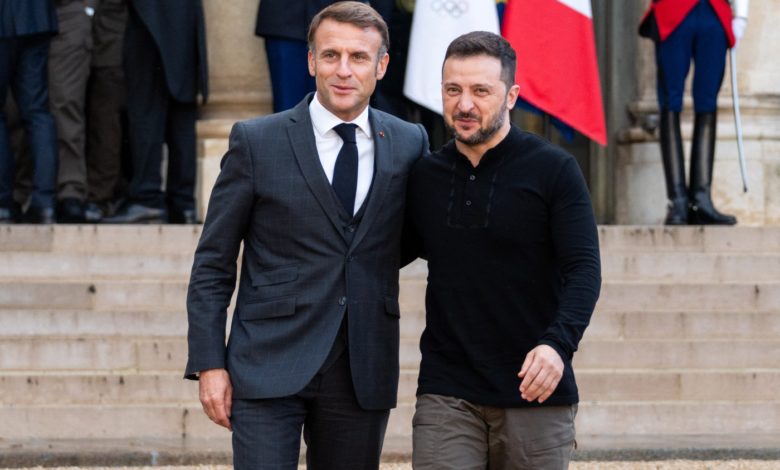
“The territorial issue is the most difficult,” Zelenskiy said in Paris at a joint press conference with French President Emmanuel Macron after a Ukrainian delegation led by former Defense Minister Rustem Umerov negotiated with a US delegation led by Secretary of State Marco Rubio and President Trump's special envoy Steve Witkoff in Miami, Florida, to amend the 28-point peace plan advanced by the US, a version of which initial displeases Kiev and its European allies.
According to Zelenski, at the negotiations in Miami the two delegations spent six and a half hours discussing only the territorial issue. The initial plan proposed by the US included Russia's demand that Ukraine cede to it the part of the Donbas region that the Russian army failed to occupy, which Kiev considers unacceptable. The other two key divergent issues between the US, on the one hand, and Ukraine and its European supporters, on the other, concern how the reconstruction of Ukraine will be financed and what security guarantees the West will offer to Kiev after the war, Zelensky said.
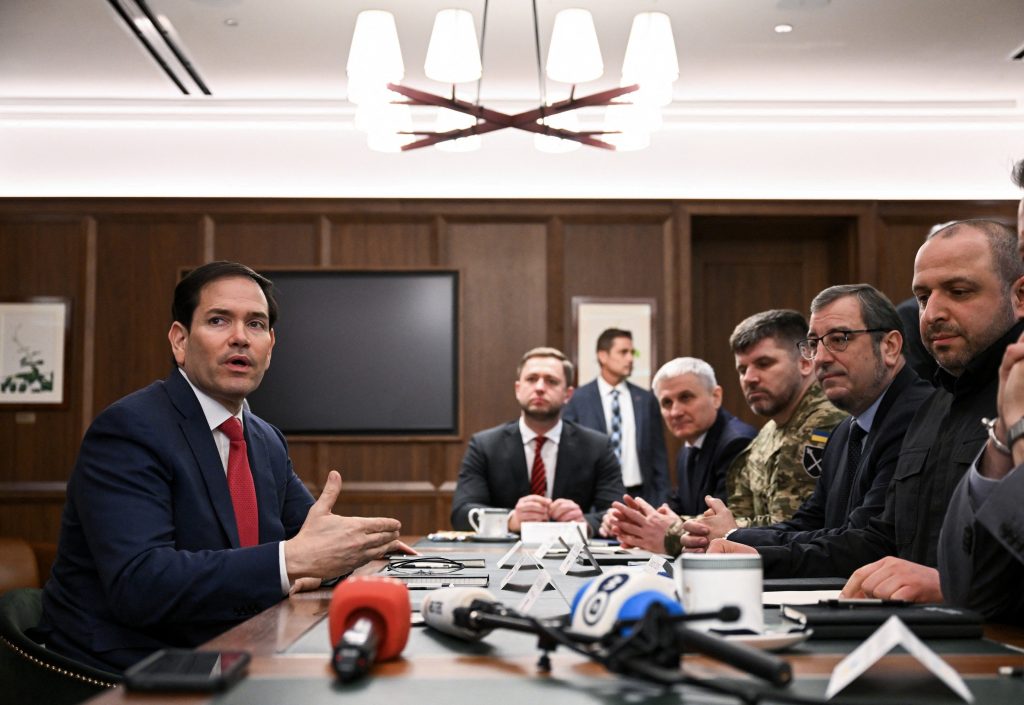 Behind the scenes of the “intense” US-Ukraine peace talks in Miami: Ukrainian negotiators firmly rejected Russia's most important claim / What's next
“The plan is now better”
He insisted that a European agreement is essential in the reconstruction issue, after Trump's initial peace plan, already revised in some points following the American-Ukrainian negotiations held a week ago in Geneva, proposed the partial investment for this purpose of frozen Russian assets in the West, with the US receiving half of the profits. Zelenski said that he does not consider such an approach to be “fair” to the Europeans and asked to find a solution that would satisfy them as well.
However, “thanks to our team of negotiators, the plan is now better,” Zelensky concluded about the document that the Americans and Ukrainians have been working on for the past two days and that will be presented to Russian President Vladimir Putin in Moscow on Tuesday by Trump's emissary, Steve Witkoff.
But “we hope to have a discussion with the US president on key issues that are quite difficult,” added Zelenski, who was supposed to have this discussion with Trump last week in Washington, but his visit to the US did not take place.
According to the Ukrainian chief negotiator, Rustem Umerov – who replaced Zelenskiy's main collaborator, former chief of staff Andriy Iermak, after the latter resigned following a huge corruption scandal – said that in “the two very productive days spent in the US (…) we made significant progress, although some points still require further adjustments”.
For his part, French President Emmanuel Macron insisted at the press conference alongside Zelenskiy that a peace plan between Russia and Ukraine can only be achieved with Kiev and the Europeans “at the negotiating table”.
“Today we do not have a finalized plan on territorial issues”, and “as regards the issues related to (Russian) frozen assets, security guarantees, (Ukraine's) accession to the EU and European sanctions (against Russia), this plan can only be finalized with the Europeans at the negotiating table. Therefore, we are still in a preliminary phase”, indicated Macron, echoing the frustration of European leaders, who see themselves distant by the US from the negotiations and are accused by Russia of doing everything possible to thwart peace efforts by making demands unacceptable to Moscow.
New consultations with European allies
During the meeting in Paris, Presidents Zelenski and Macron also held videoconference talks with the heads of state or government of the United Kingdom, Germany, Poland, Italy, Norway, Finland, Denmark and the Netherlands, as well as with NATO Secretary General Mark Rutte, European Commission President Ursula von der Leyen, and European Council President Antonio Costa.
The initial version of the plan proposed by the US mainly provides for the de facto cession to Russia of the entire Donbas region, with the transformation of the part of it not currently occupied by the Russian army into a demilitarized zone, the freezing of the rest of the front line, the imposition of strength limits of 600,000 soldiers for the Ukrainian army, Western security guarantees for Ukraine, but without NATO membership and without foreign troops on Ukrainian territory, as well as the use a hundred billion euros of Russian assets frozen in the West for the reconstruction of Ukraine, on the condition of an equivalent European contribution, while the US would obtain profits from participation in the reconstruction activities.
Ukraine and its European supporters demanded in their counterproposal that any negotiations start from the current front line and only with an armistice, the limitation of the Ukrainian army to 800,000 soldiers, the deployment of a contingent of foreign troops in Ukraine, although Russia has reiterated its opposition, the removal of Ukraine's commitment not to join NATO and the mention in its place only the lack of consensus of the Alliance states, as well as the request that Russia pay Ukraine all the damages caused by the war, and that its frozen assets in the West remain blocked until the full payment of such compensations.