The future Romanian language program for high school students is very similar to what I had to learn in Romanian as a high school student in the mid-70s

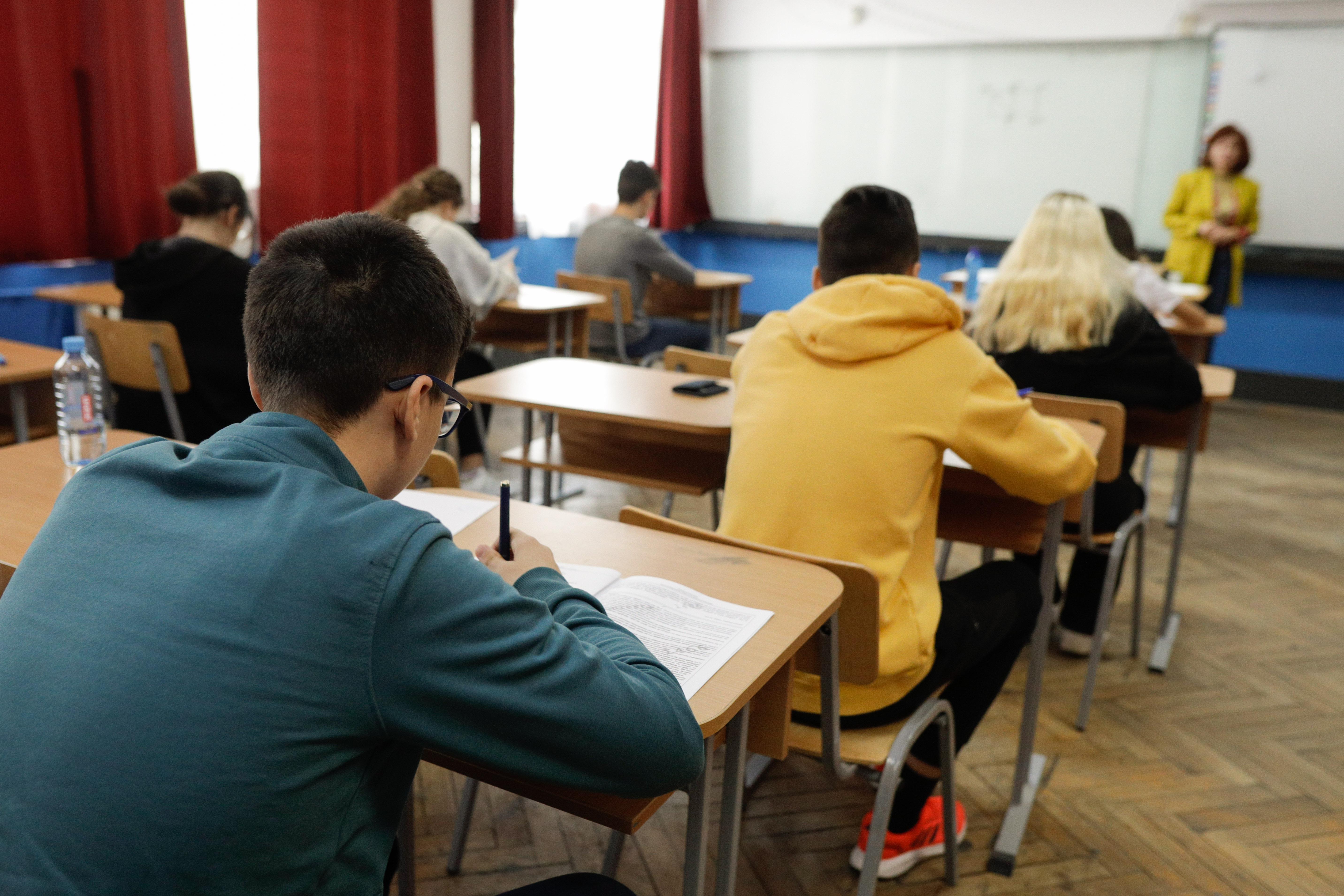
The renowned philologist Liviu Papadima, a professor at the University of Bucharest, draws attention to the new Romanian language and literature program proposed by the Ministry of Education for high school, saying that it brings the study of literature back three decades or maybe even more. In an opinion piece published today by HotNews, the literary critic and essayist says that what is sorely missing from the ninth-grade subject matter, for example, “is the student himself, with his needs and desires.”
“Kids, get your heads together! It's high school!”
The Ministry of Education has put the drafts of future programs on subjects for high school into public debate.
The wait for their appearance was intense, augmented by an unprecedented official measure: those who worked on the development of the programs were summoned to sign a confidentiality agreement, by which they obliged themselves not to reveal to anyone what was discussed in the working groups. As if he participated in the design of an ultra-secret military equipment and not a document that was going to be put before the eyes of fellow citizens in a few weeks anyway. Obviously, when you display a previously protected “final form”, the chances of retraction decrease significantly. That is, in short, “we pretend to debate”.
In fact, regarding the displayed Romanian curriculum, it should have been preceded, normally, by a consistent debate regarding the curriculum project for the entire four-year high school cycle. What would happen in the 10th, 11th and 12th grades remained, for the ignorant public, under the seal of mystery.
Possibly, it can be inferred from the mess that has now been thrown out for consultation.
The current project brings back, I do not hesitate to say, the study of literature in high school three decades ago. Maybe even more.
What I read in the current program project is very similar to what I had to learn as a high school student in Romanian, in the mid-70s of the last century or what I had to teach, as a trainee teacher, in the early 80s: on a backbone of literary history, elements of genre theory and biobibliographies of the “celebrities” of our culture are attached. This, obviously, starting with the 9th grade, the most awkward of all, a good conductor of the message “Kids, put your brains in your head! High school has started!”.
Sorry, I wasn't able even at 15 and I'm not able even at 68 to put my brains in my head. I still find it repugnant to believe that a model of a “good school” is military high schools, where rebellious teenagers learn to strangle their anarchic pussies in order to wear the soldier's uniform with honor. I have endless respect for the soldiers trained to face it on the battlefield, precisely so that because of them the rest of us “civilians” can keep the freedoms to which we are attached.
“Most of the 'recommended' authors in high school are the 'subject' of my first year Letters course”
I refrain from going into technical details regarding the (in)coherence of the current curriculum project. These things are, I think, to be discussed among specialists (if they are allowed to do so). I also refrain from making references to the “grammar” segment of the program. I'm not a linguist.
I limit myself to giving the reader an idea of what the student would have to learn in the 9th grade in literature (Romanian). And the most eloquent clue is represented by a section of study “recommendations” with which the program text ends: “Recommendations by authors: Ion Neculce, Anton Pann, Dinicu Golescu, I. Codru-Drăgușanu, Mihail Kogălniceanu, Costache Negruzzi, Dimitrie Bolintineanu, Vasile Alecsandri, Grigore Alexandrescu, Ion Ghica, Radu Ionescu, Nicolae Filimon, IL Caragiale, Ion Creangă, Ioan Slavici; Niccolò Machiavelli, Montesquieu, Molière, Alphonse de Lamartine, Stendhal”.
This is what 9th grade students in Romania will be forced to read and discuss.
I want to add one thing as blatantly as possible: most of the “recommended” authors, from Anton Pann to Nicolae Filimon, represent the “matter” of my first-year Literature course. A course that I usually start with the remark “if you ever have a free hour and a reading appetite that gives you a clue, I bet you won't rush to the library shelves, to Wikisource or any other site pirated, so that you can choose, for your enjoyment, any volume by Golescu, by Bolintineanu or by Radu Ionescu”.
I for one believe that a student of Letters is a person who has already discovered himself a special inclination towards the study of languages and literatures and who chose to train as a specialist in this field. As such, understanding how various literatures form and evolve is a mandatory part of his training. However, I do not think that such an obligation should also be transferred to pre-university education, which does not aim at specialized instruction, but at general education. The difference is enormous and it would be extremely timely to take it into account.
“What kind of 'book' would we like to be made?”
To put it bluntly – and with great regret in my heart: among the most formidable enemies of the teaching of the Romanian language and literature in high school were, often, university students.
At the time when those “revolutionary” programs were made, which will now be swept away from education, academics and renowned specialists took turns vying for the microphone to impose their own idiosyncrasies: Professor Theodor Hristea wanted the study of etymologies, Professor Matilda Caragiu-Marioțeanu insisted that the history of the Daco-Romanian, Aromanian, Istro-Romanian and Megleno-Romanian dialects be taught extensively, Professor Eugen Simion sent torpedo people to the working group to impose the monographic study – “life and work” – of Romanian writers, and there was also someone who was dead set on the inclusion in the program of “proto-Romanian” writers, who had not even written in Romanian, for the simple reason that it did not yet exist at that time, they had not even been born in the current territories of Romania but were meant to have passed sometime, in the course of their lives, through “Dacia Felix”.
Now times seem to have changed. The pressure no longer comes from those who, in essence, wanted to maintain the “status quo”, but from the “young wolves”, eager to make an entrance in the arena.
I don't know what makes them think that their position is even a correct one.
I have heard the statement so many times, “No more books are made these days!” that I was made lehamite. What kind of “book” would we like to be made? I was an award winner, I always did my homework diligently, even if it was forced, but… how can I say it? I studied “Ardelean School” for the day lesson, then for the thesis. Then for the baccalaureate exam, then for college admission, for the first year of Letters, for the bachelor's degree, for the final exam… Even today I don't know who wrote “Dialogue between uncle and nephew about writing the Romanian language” or something like that. Small? Major? ham?
“Are we fighting against digital culture and AI with Grigore Alexandrescu and Radu Ionescu?“
Apart from that, everywhere in “our” world (?!) the same concern is pressing, that today's young people have given up or are giving up to “read” – to go through a text from beginning to end, with attention and dedication, an activity exercised primarily in contact with literary writings. As such, the number one concern in the “nursery” classes for the study of literature is how to bring school reading closer to private reading – if it exists – in order to be able to stimulate it and even how to “give birth” to it, as a habit independent of school obligations. It is hard for me to imagine how skilled a teacher would have to be to achieve such a goal under the current curriculum design. Are we fighting against digital culture and AI with Grigore Alexandrescu and Radu Ionescu?
It is painful that this sovereignist recrudescence of “reforming the reform” in Romanian comes in a context in which the school is increasingly pressured to provide a “solution” to the problems we face in Romania today.
Who can defend us from the anti-democratic ideologies of our time? Of course, school. Who can protect us from the onslaught of manipulations through fake news campaigns in social networks? Education, who else? Who could save us from the tsunami of distrust in officials, in institutions, in any form of authority? I mean, all the education, of course. Who is to protect us from the brainwashing that the virtual environments force, economically or politically, on our throats? There is more to talk about, education!
But when it comes to how education could solve all these enormously pressing and difficult issues, here things get stuck, what was announced – for how many times? – with trumpets and trumpets as “reform” falls into a detestable conformism, dust and powder are chosen from the “QX Report”… Sorry, I lost my pen earlier. Maybe the other program projects are flawless, only the Romanian drew the non-winning lot. Well, that's how it is with marginal subjects!
“We serve the motherland!”
I'll stop here, so as not to sound pathetic. One last remark: I read line by line the draft of the new Romanian language program for the 9th grade, I found a lot of aberrations and, the saddest thing, I found a permanent absence in the lines of the program.
What is completely missing from this project is the student himself, with his needs and desires. The text is a mixture of “should” – “recommended”, in the current educational jargon, already ossified for decades. For lovers of military parades, I would compare the vision of this project to a march of young people who raise their hands to their foreheads chanting “Servim patria!”
My wife tells me that I will pay her dearly if I oppose the new guidelines: on the one hand, the academics who will not forgive my dissent, on the other, the sovereignists – including Romanian teachers! – who will boo me for my lack of patriotism (because that's what the “Romanian language and literature” is about, right?).
I replied that it doesn't (anymore) affect me if my colleagues slam the faculty gates in my face. I pushed past them enough to make my way to the classrooms. As for the sovereignists, my greatest fear is not of them, but of those who fear them.
This article was originally published in Contributors.