Polish lesson for Romania: “Don't buy too many tanks. A $400 drone destroys a $7 million tank”

Despite investing huge sums of money in armaments and increasing its army from 90,000 to 150,000 soldiers plus 70,000 reservists, Poland also made mistakes. Journalist Roman Imielski, one of the most respected Polish military analysts, explains what they are.
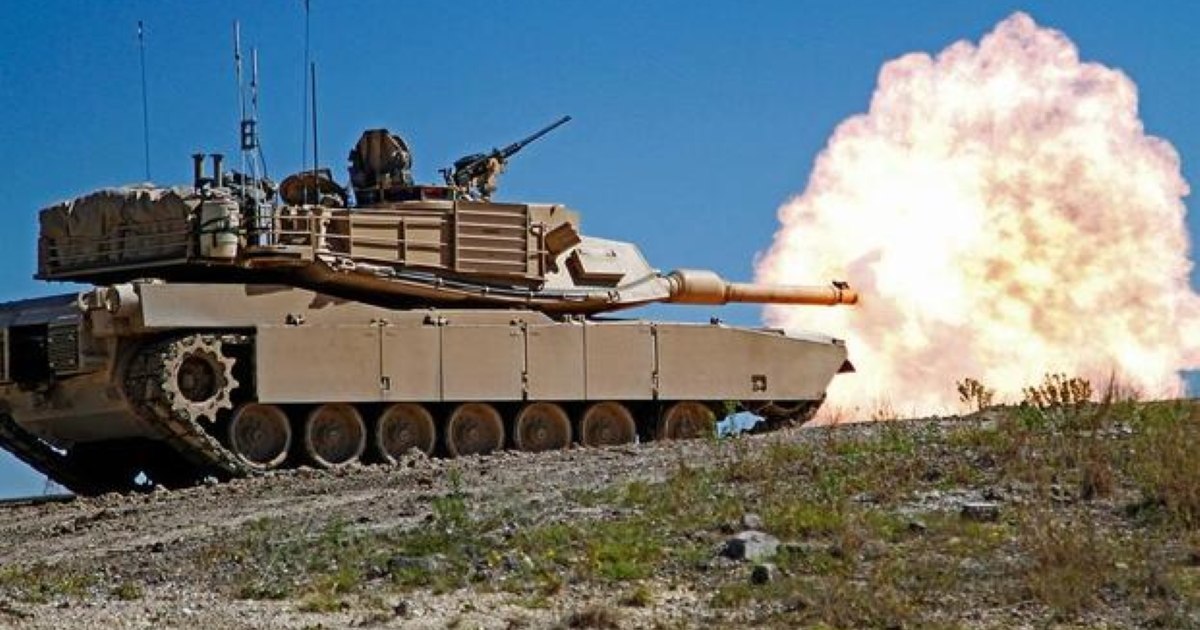
Poland has three types of tanks, one of which is the American Abrams. PHOTO: Defence.org
Romania can benefit from a loan of almost 17 billion euros, under advantageous conditions, through the SAFE program. CSAT members approved, on Tuesday, the Investment Plan in Romania's defense industry, developed under the SAFE Regulation, based on which Romania's request will be submitted to the European Commission.
In a total amount of almost 17 billion euros, these funds allocated to Romania will be allocated in a proportion of 75% for the purchase of military, public order and civil defense equipment. The 25% difference represents funds allocated to the dual infrastructure, specifically the two ends of the highway – Pașcani-Siret and Pașcani-Ungheni.
The Minister of Defense, Ionuț Moșteanu, stated that Romania would receive the second largest amount from the European Union through this program, after Poland, and the full list of projects to be financed is to be finalized together with the European Commission by the end of November 2025.
The SAFE program offers loans with 3% interest, with a repayment term of up to 40 years, with a 10-year grace period for principal repayment.
Roman Imielski – deputy editor-in-chief of the largest newspaper in Poland – Gazeta Wyborcza and one of the most respected military analysts, explained to “Adevărul” how Poland designed its armament strategy and what mistakes it made.
“Vladimir Putin was the architect of the Polish military strategy”
The truth: Many analysts, when we talk about how Romania should prepare for security challenges in Europe, say: “Look at Poland, it's a great example”, and I want to ask you: what was the starting point of Poland's military investments?
Roman Imielski: Of course, we are talking about security from the Polish perspective, and here the most important thing is NATO. We know that NATO countries have not invested a lot of money in security, Germany, for example, 1.2% of GDP, other countries maybe 1.5%. We, on the other hand, having borders with Ukraine, with Russia, with Belarus, had to prepare for a dark scenario.
Did the process start with the war in 2022 or before?
Before. The previous government made so many stupid mistakes, but when it comes to security, they invested some money in a very good way to improve our security. Of course, I'm a big supporter of investment in the military sector, because if you look at the history of our civilization, the military sector is a very innovative sector. We have some very good companies in Poland investing in, for example, drones. Even Israel bought drones from a Polish company. In addition, investment in defense creates new jobs. Of course, one of the most important aspects is security, because we live in a very uncertain world. We don't know what will happen in the future. We have a hybrid war with Lukashenko on our border. We have a hybrid war with Russia. Of course, Poland is not in the same situation as Slovakia, Germany, France or Italy, because Russian propaganda, Russian disinformation actions are not very effective in Poland, because our history is very complicated, and I can say that we know what Russia means to our country and to Western civilization. So yes.
So wasn't there a tough debate in society about whether to invest in defense and not in education, health or agriculture?
No, even leftists agreed with defense investment. This governing coalition is very interesting, because you have a leftist party and a conservative party. Even left-wing ministers say: “We have to spend these huge amounts of money on our security, on our military.”
Who was the architect of Poland's armament strategy?
To be honest — Vladimir Putin was the initiator of the strategy of arming Poland. He is the architect of this strategy, because of course, after 2014, when the Polish state and the Polish government were very deeply involved in trying to solve the Ukrainian crisis… Radosław Sikorski, who was the foreign minister then, as he is now, went to Kiev for negotiations with the Yanukovych camp and the opposition, etc. But Vladimir Putin is absolutely the key player in this.
We started planning and investing a lot of money in the military sector. Of course, we were having big problems with our companies at that time. So the first decisions were: we have to buy weapons from America, maybe from France, from Great Britain, even from Sweden, because they have a very good military sector. Vladimir Putin is the reason why we spend so much money in the Polish military sector.
How to get to an army of 150,000 professionals and 70,000 reservists
Since 2014 have you started to increase the numbers of the army?
Yes, after 2014 the army started to grow. I spent a lot of money on salaries. We had special programs, we started right then a special program for normal people who want to do military training, for example, for a month. The government paid for these trainings.
How big is the Polish army?
We have a big debate about numbers. We started in 2014 with an army of 90,000 professional soldiers. But I can say that we have about 150,000 people in the professional army. I predicted that in peacetime, we need 100,000 professional soldiers. But we have a special unit of about 70,000 people called the “Territory Defense” unit, which is for normal people, like me, like you, but who have military training, I don't know, once or twice a year. From my perspective, they are well trained people for any kind of operation.
And related to arms purchases, what was the strategy?
From my perspective — I'm very interested in military history and weaponry, I've been on the front lines in Ukraine 15 times after 2022 — I've made some stupid decisions, really. For example, we buy Abrams tanks from the United States but also tanks from Korea. And we still have the Leopard tanks from Germany. It's stupid to have so many types of tanks. It's crazy.
“We've taken too many tanks. A 7 million euro tank can be shot down with a $400 drone”
What is the biggest problem with the Polish military system?
Anti-missile system. I bought some Patriot systems, but not enough. Besides, we don't have special weapons to shoot down very small drones which is a big problem. You don't use Patriot systems against drones, because they are very expensive. You need smaller, not so expensive weapons to shoot down planes, drones and such.
Now, if I look at what is happening on the front in Ukraine, I think we don't need so many tanks. Because Robert Brovdy, head of drone units in the Ukrainian army, told NATO generals two months ago that a tank that costs $6-7 million can be destroyed with drones that cost $400. And it's true.
How do you see the anti-drone “wall” initiative coming from the European Commission?
It's a very good solution, of course, but everyone knows—I'm a big fan of the European Union, my newspaper is very pro-European—but everyone knows how decisions are made in Brussels and in the EU. We need very quick action. Poland has a big problem because we don't have a system to detect very small drones flying at low altitude. We will have such a system in 2026.
So have you found the drone defense solution?
This is just the first step. Because we don't have the system to destroy them. Yes, we have some Patriot missiles, but…they are not for drones.
So you think we won't have this European drone wall very soon…
I think we should learn from the Ukrainian army, because this is the first real war in Europe since 1945. I have been on the front line many times. I saw what was happening there. We must learn from the Ukrainian army. We have to change our mentality. Of course, we need to invest in fighter jets, because air superiority is essential. If you have 1,000-2,000 tanks they can be destroyed by an army of 2,000 very cheap drones. Before this war, the question did not arise like this. Airspace is crucial. Airspace means fighter jets, anti-missile systems, radars and, of course, drones.
Poland, the only country in the EU where TNT is manufactured
How is the armaments industry in Poland, the domestic industry? Have you started developing?
We started to develop. We have, as I said, very good private companies. They manufacture drones. You should know that Poland is the only country — crazy situation — in the EU that produces the explosive powder, TNT. Because the problem in ammunition production is that we can produce 1 million, 2 million shells per month in the EU, but we don't have TNT.
What would be the lessons that we must learn in Romania from Poland's experience with armaments?
Tanks – don't buy so many tanks. Invest in anti-missile and anti-drone systems, in drones, and train reservists. We are also trying to introduce solutions from Scandinavia to train our citizens on how to behave in situations like – maybe I don't want to use the word “war” – but catastrophes, emergency situations. We started this, but we have many problems. From my perspective, one of the key factors is to educate people very young, in elementary school, about what is fake, what is true, how to use social platforms, etc. This year is a very exciting year because it is the first program of its kind in elementary school introduced by the government. We forced the government to introduce this program. It is for 13-14 year olds, meaning 7th and 8th grade. But it's only one hour a month — not enough, but OK, it's a start.