The study also reveals important differences between social groups. Women more often than men declare the need to control and limit expenses – 36%. compared to 29 percent At the same time, men are more likely to say that they can save or invest.
Read also: This is the real unemployment rate. There is clear growth
The rest of the text below the video
Poles' ability to save. Older people and city dwellers have it better
The situation also varies depending on age. People over 55 years of age cope best, 36% of them estimates that their remuneration fully covers their needs. For comparison, in the 25-34 age group, only 25% give such an answer. younger respondents who often struggle with greater financial obligations or employment instability.
Read also: The container port in Świnoujście is to be built by 2029. Deputy Minister Marchewka refutes the accusations and protests
Place of residence also matters – Residents of small towns declare the greatest difficulties. As much as 17 percent people living in cities up to 20 thousand residents admit that they have problems with “making ends meet”while in medium and large cities this percentage is twice as low.
Postponing expenses is an everyday occurrence – where do these difficulties come from?
As the study shows, as much as 31 percent respondents estimate that the salary is only sufficient to cover current needs, without the possibility of saving funds. Next 32 percent admits that sometimes he has to limit expenses to close the monthly budget. He describes the most difficult situation 10 percent respondents who have real problems with financial liquidity. These data show that although part of society is doing relatively well, many Poles function on the verge of financial sustainability.
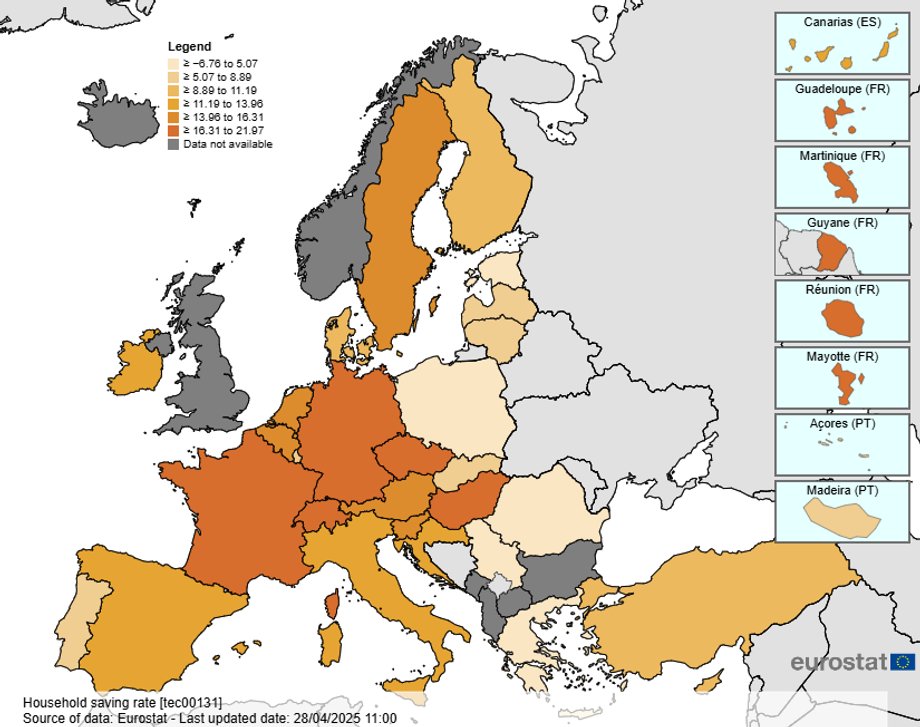
Savings rates in individual European countries
|
Eurostat
The rising cost of living makes it so Poles are increasingly forced to postpone planned expenses until later. The report shows that 38 percent respondents had to postpone a larger purchase several times in the last six months due to other, more urgent obligations. Another 14 percent it did it at least once. Only 30 percent respondents declare that they did not have to give up planned expenses at all — this is a relatively small group, considering the scale of price increases.
The generational differences are surprising: as much as 40 percent people over 55 did not postpone any expenseswhile among the youngest employees this percentage is only 15%. Differences are also visible between forms of employment: people working full-time had to give up expenses more often than those running a sole proprietorship. This may indicate greater financial flexibility of entrepreneurs or greater cost pressure on people employed under employee contracts.