After the announcement of the so-called peace plan for Ukraine, real political chaos reigned in the United States. Contradictory, often mutually exclusive information has begun to emerge from President Donald Trump's administration about the background to the development of the controversial 28-point US proposal.
Sources close to the White House spoke of rushed deliberations, a tense atmosphere and growing conflicts behind closed doors, while official spokesmen tried to reassure the public by insisting that the situation remained under full control.
This raises an important question: Are all of Trump's trusted associates really on the same team?
Or perhaps a ruthless game is being played behind closed doors in which not only the fate of Ukraine is at stake, but the future direction of all American policy. Politics is rarely only about ideas.
The European side suspects a behind-the-scenes fight for influence.
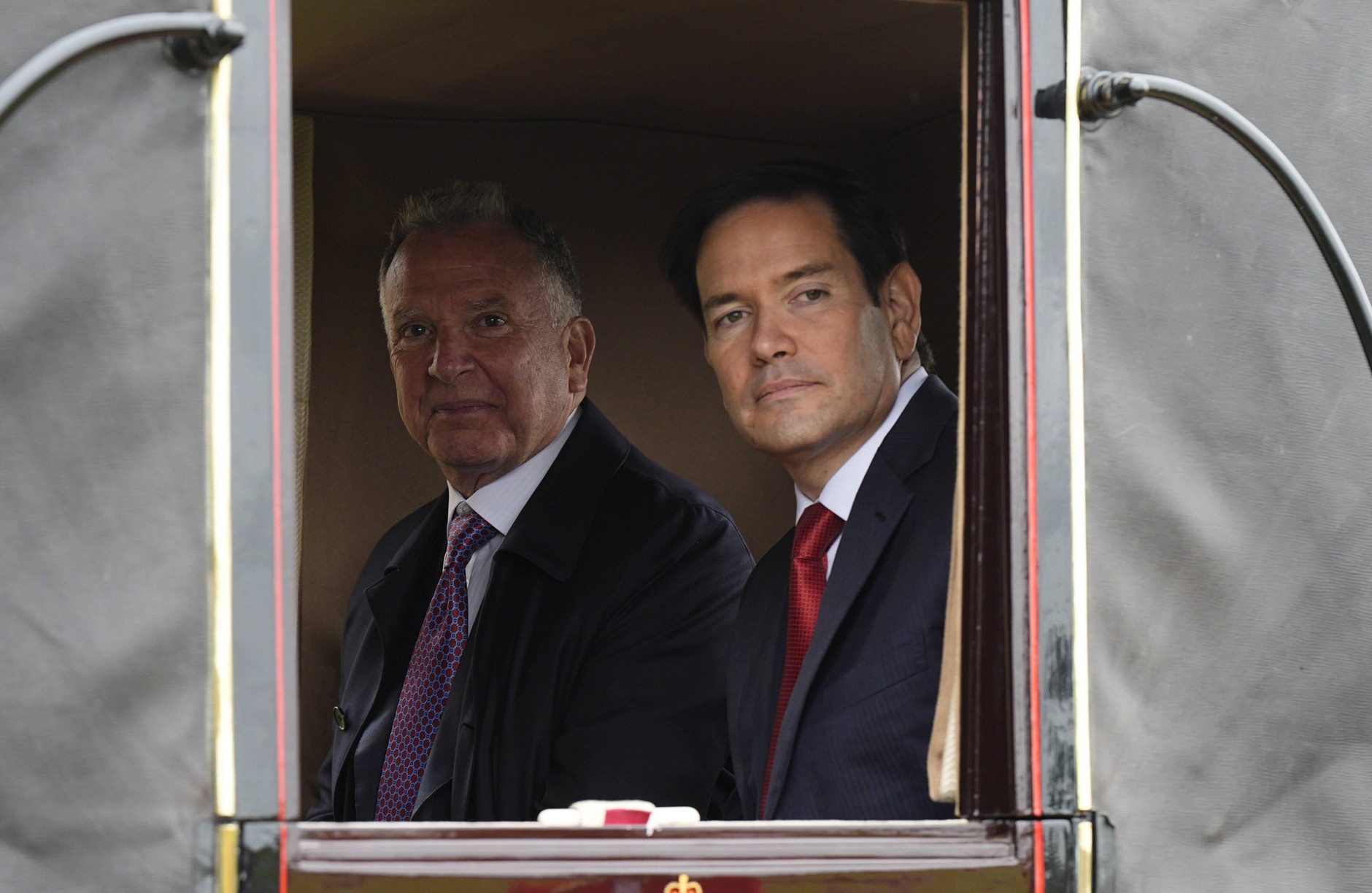
On one side is special envoy for the Middle East, Steve Witkoff, who was reported to have co-created the plan for Ukraine together with the Russian side. He is supported primarily by the Vice President of the United States, JD Vance. Their opponent is Marco Rubio, US Secretary of State and National Security Advisor.
The ideological differences are obvious: Witkoff has repeatedly drawn attention to himself in recent months with pro-Russia statements, not hiding his enthusiasm for his meetings with Kremlin dictator Vladimir Putin.
On the left, US special envoy for the Middle East Steve Witkoff, on the right US Secretary of State Marco Rubio. Windsor, UK, September 17, 2025Aaron Chown / PAP
Rubio, who has been considered a strong critic of the Russian president for years, takes a completely different position: when Trump allowed him to negotiate with Moscow, the planned summit with Putin in Budapest was canceled shortly thereafter.
'Russian wish list' sets Washington on fire
There are also signs of a simmering dispute in Rubio's public statements about Witkoff's Ukraine plan. Shortly after the document was released, the US Secretary of State did not fully endorse it, but classified it as a “list of potential ideas.”
Shortly after this, a real scandal broke out. During a news conference, a group of senators who had previously spoken with Secretary of State Marco Rubio said he had informed them that the 28-point plan was in fact a “Russian wish list.”
This caused such a strong wave of criticism that Rubio was forced to issue a public statement in which he argued that the plan had been developed by the American side, taking into account the proposals both from Russia and Ukraine. Despite these assurances, the credibility of his words still raises doubts, especially in the light of the senators' previous statements.
Vice President JD Vance also appears to be one of the key players in these internal tensions. He openly supports the Ukraine plan and firmly rejects any criticism of the 28 points, calling it unjustified.
The article continues below the video
Game of Thrones, American style
The dispute between Vance and Rubio does not have to be limited only to the current political course and the fight for influence in the White House. More and more signs suggest that something may be going on in the background much more serious gameplay — about the future leadership and possible succession of Donald Trump.
Vance is considered Trump's ideological “successor” – he is clearly more nationalistic and supports limiting US involvement in international affairs.
Rubio, on the other hand, although he has aligned himself with Trump's line, symbolizes a return to the “old school” of Republicans: he supports NATO and a tough policy towards Russia and China.
I’m Ashley Davis as an editor, I’m committed to upholding the highest standards of integrity and accuracy in every piece we publish. My work is driven by curiosity, a passion for truth, and a belief that journalism plays a crucial role in shaping public discourse. I strive to tell stories that not only inform but also inspire action and conversation.