Putin's oil in a sea trap. US sanctions are choking the black gold trade and turning global trade routes upside down. “A cause for concern”

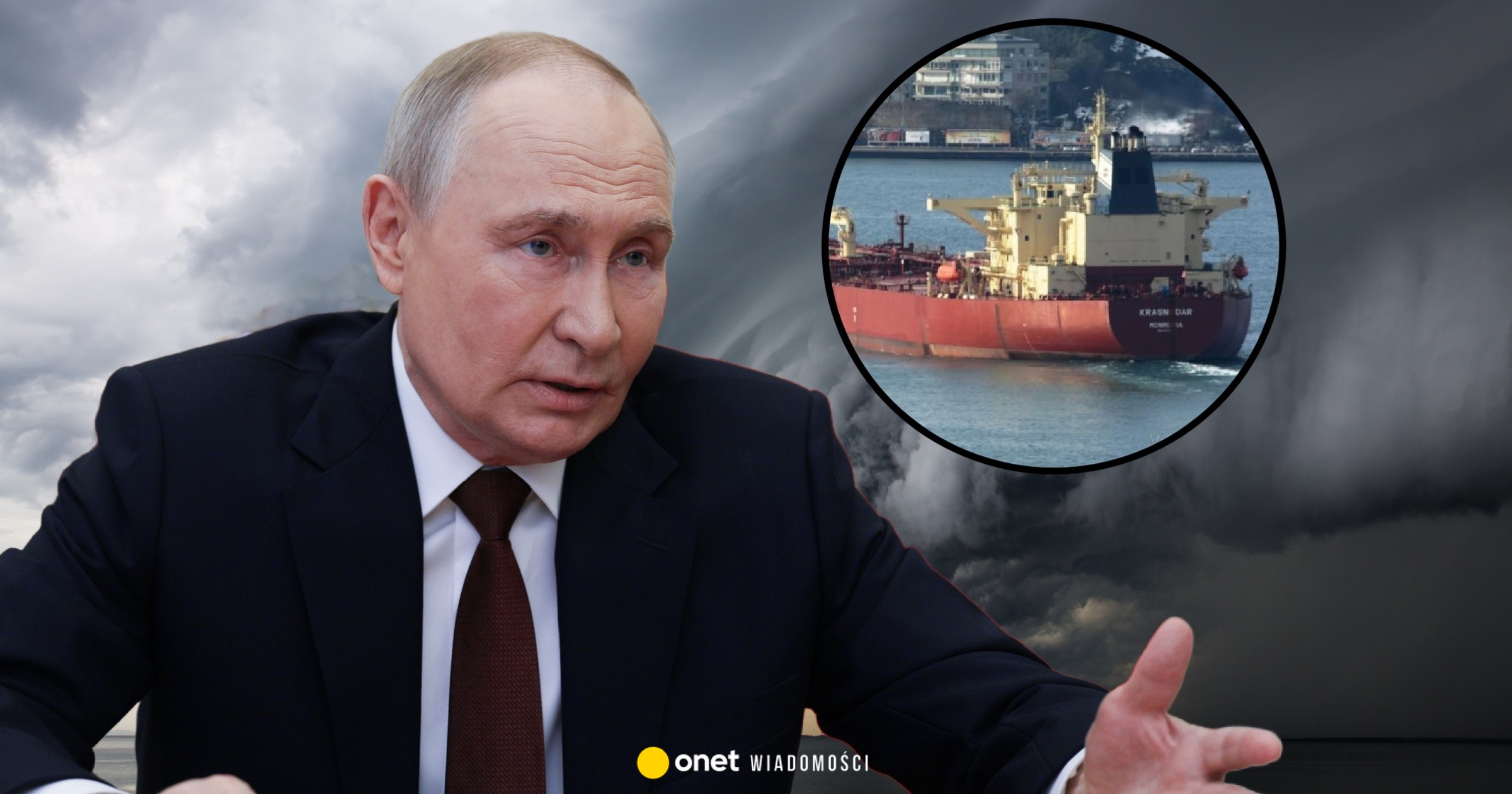
According to Bloomberg, the American sanctions that entered into force on Friday, November 21 may result in even 48 million barrels of Russian oil gets stuck at sea. In practice, this means dozens of tankers having to re-route and major disruptions to exports to Asia – all at a time of skyrocketing freight rates [czyli cen za przewóz].
Already last month, the United States imposed sanctions on Russia's two largest oil companies, Rosneft and Lukoil, hitting both their oil exports and access to international financial services. These measures, which officially came into force on November 21, are aimed at limiting Russia's oil revenues and increasing pressure on the Kremlin over the war in Ukraine.
The U.S. Treasury Department said this week that sanctions are already paying off, with demand falling and key Russian oil grades being sold at increasing discounts.
Indian refineries have started massively booking supplies from the Middle East to replace crude from Russia. Freight rates on this route are near the highest levels of the last five years. Traders are closely watching whether any buyers will take over the Rosneft and Lukoil cargoes that are already on their way.
— Russian exports are holding up for now, but oil is not getting where it should be, said Warren Patterson, head of commodity strategy at the international financial institution ING Groep NV.
If this bottleneck continues to grow, we will eventually see real declines in supply. And this will be a cause for concern for the markets
– adds the expert.
According to data from the analytical company Kpler, approximately 48 million barrels of Urals and ESPO crude oil are currently in transit or being loaded. About 50 tankers are heading towards China and India, while other ships do not yet have clear destinations or are sailing to smaller terminals – from the Baltic to the South China Sea.
Trading in a traffic jam
Ship traffic tracking data shows that Russia still maintains seaborne exports at around 3.4 million barrels per day. Oil benchmark prices have not yet reacted sharply, however not all loads will find buyers. Although China and India receive most of Russia's exports, both countries remain cautious for fear of secondary sanctions from the US.
In response to the sanctions, some tankers began to carry out the so-called U-turn maneuvers – Temporarily change course on the open sea to find new buyers or safer ports.
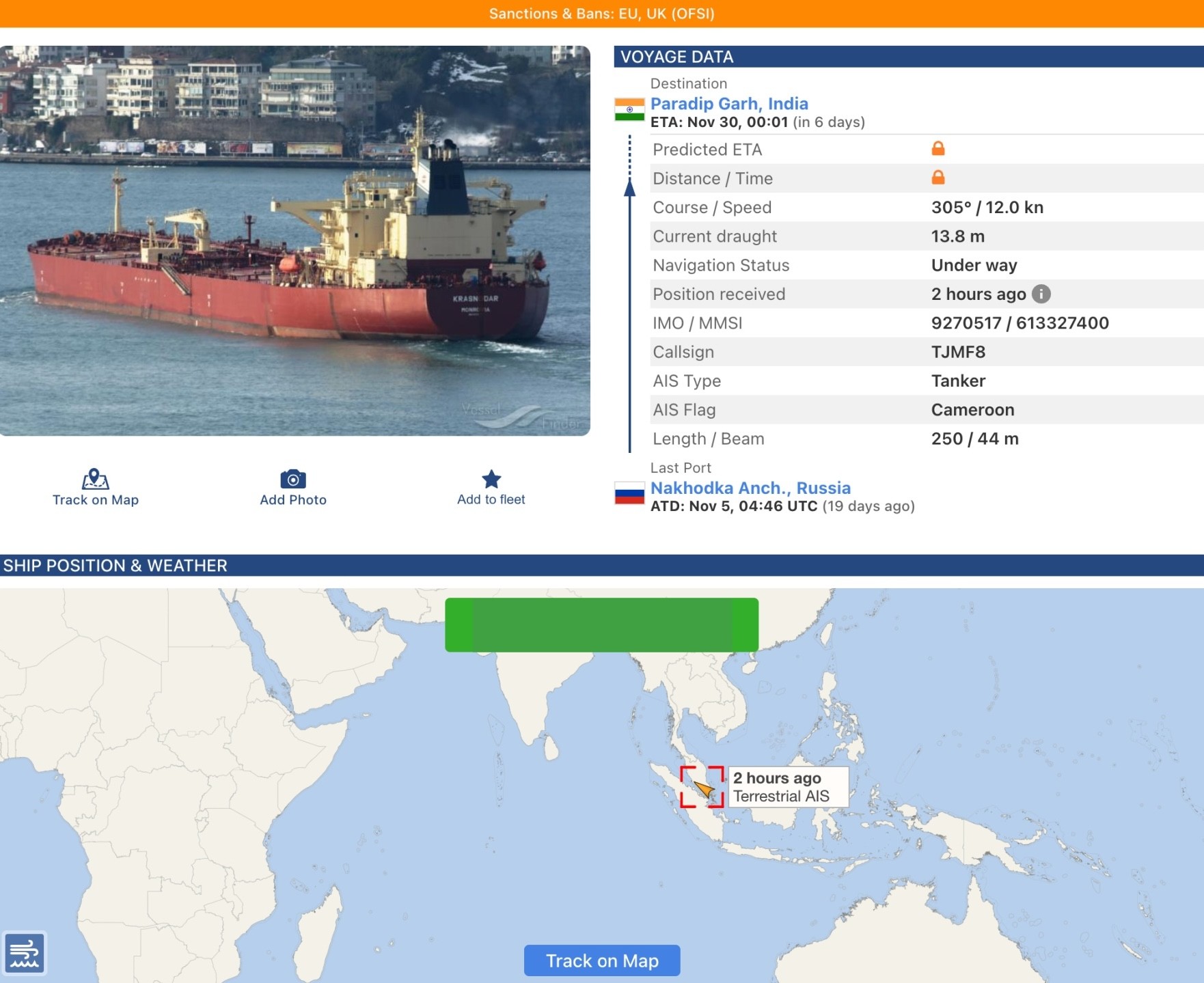
Screenshot of the Vessel Finder page with the current position of the CINDY tanker in October 2025.Vessel Finder / Vessel Finder
For example, the Spirit 2 ship, carrying 730,000 barrels of Urals oil from Rosneft, initially changed the route, and then he headed towards India again. The Furia tanker did a similar thing after passing through the Suez Canal.
Other units also face problems. Tanker Cindy, loaded with 770,000 barrels of ESPO oil (exported from the Far Eastern port of Kozmino), is currently drifting around Singapore and Malaysia.
The article continues below the video
In turn, Fortis, which transported 720,000 barrels of Urals crude from Rosneft, changed course from China to South Korea after a rare transshipment off the coast of India.
“It hurts, but it will only hurt for three to four months,” said Adam Lanning, senior tanker market analyst at the brokerage firm SSY.
Most likely, in the coming months, the market will adapt and find ways to import this oil without facing excessive scrutiny
– he informed.
The sanctions affect not only maritime transport, but also directly against Russian oil projects. The largest private oil company in Russia, Lukoil, announced the so-called force majeure at Iraq's West Qurna-2 oil field – one of the country's largest – after Western sanctions disrupted its operations.
American restrictions are also increasingly affecting oil exports from Russia to India. Bloomberg stated that India's largest refiners expect that deliveries will drop to almost zero. However, the management said that the latest restrictions introduced by Washington make further imports of Russian oil virtually impossible.