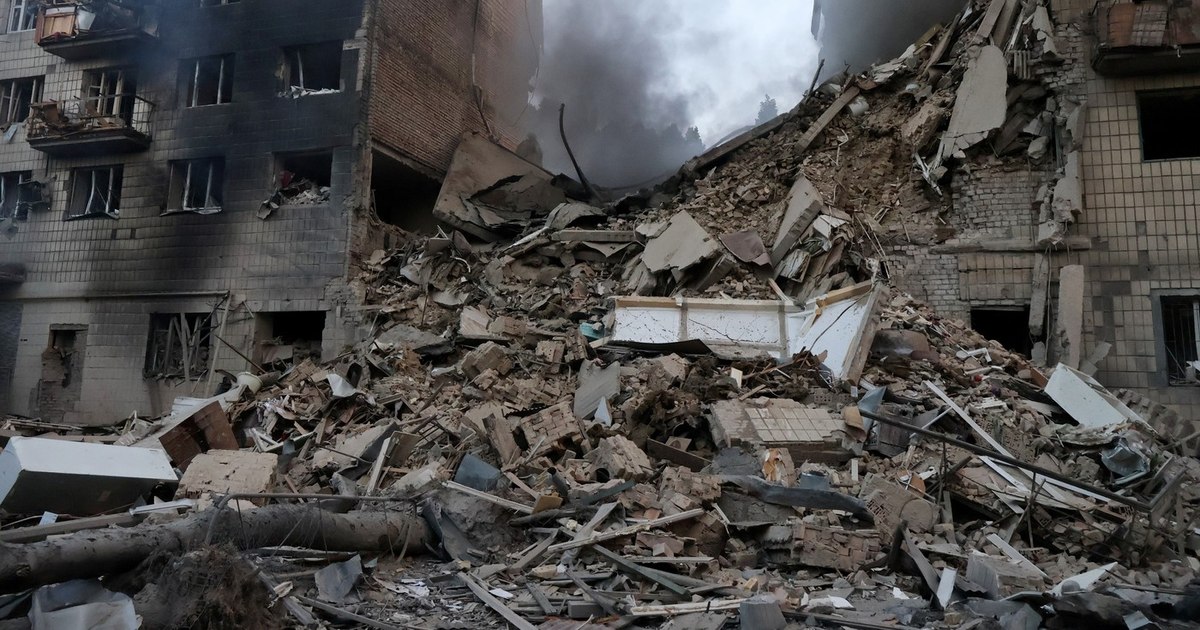
What concessions would Ukraine and Russia be ready to make for peace: “The new plan is intentionally maximalist to create space for future negotiations”


Security expert Marius Ghincea, from ETH Zurich University, explains, for “Adevărul”, how the peace process between Ukraine and Russia could be boosted and what would be the compromises the two combatants should make. In his opinion, the plan presented by the American publication Axios will not be accepted by either the Ukrainians or the Russians, but it could be a starting point for future negotiations.
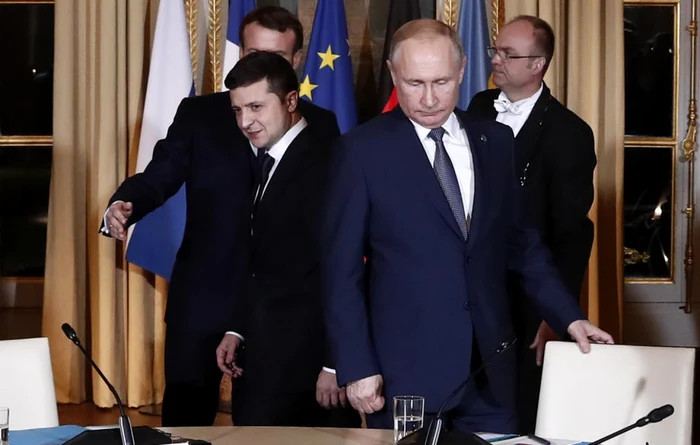
Zelenski and Putin at the Normandy summit in Paris in 2019. PHOTO: EPA-EFE
The light at the end of the tunnel is not yet visible in Ukraine, but things are moving, albeit more slowly than President Donald Trump would like. The American leader wants to go down in history as the man who made Russia and Ukraine fall to peace, and he is acting accordingly. Axios has published the full draft of the Trump administration's 28-point peace plan.
Far from being perfect, the plan still comes with some novelties and also contains security guarantees, and for the first time the United States would agree to get involved directly and give assurances about Ukraine's sovereignty. Instead, under the same plan, Ukraine would have to give up part of its territory, limit the size of its armed forces and enshrine in the Constitution a commitment never to join NATO.
Details of the entire peace plan as presented in the US press can be seen HERE.
For now, Kiev has reacted cautiously, with President Volodymyr Zelenskiy avoiding outright rejection of the plan and saying he is open to peace talks. The leader from Kiev also stated that Ukraine is in one of the most difficult moments in its history and complained that the pressure on Kiev has reached its most intense level so far.
At the same time, Zelensky added that Ukraine will have to make a terrible choice given that the alternatives are either the loss of dignity or the loss of American support. Even so, he said his country would negotiate and would not give any reason to say Ukraine is refusing peace talks.
And more recently, on the evening of Friday, November 21. Vladimir Putin confirmed that he had received the peace plan, after other Russian officials had previously said otherwise. He made the announcement during a meeting of the Security Council, according to Sky News.
Ukraine is still at a disadvantage
In an analysis for “Adevărul”, security expert Marius Ghincea, researcher at ETH Zurich University, believes that the peace plan is a maximalist one from the American perspective, and neither Ukraine nor the Russian Federation will fully accept it. However, this plan could be the basis for starting more serious negotiations in the future, the expert believes.
“Right now the plan seems to be quite maximalist from the American perspective, where Donald Trump is trying to get or rather extract resources and privileges from brokering such a peace plan. At the same time it leads to some dilemmas for both the Russians and the Ukrainians, especially the Ukrainians. Because the Ukrainians have to pay a much higher price than the Russians have to pay.”says Ghincea.
Ukrainians are by far the most disadvantaged. At the same time, although for the first time the United States of America is willing to provide security guarantees to Kiev, they are not very clear or convincing, says Marius Ghincea.
“There are several weaknesses, and the Ukrainians are clearly at a disadvantage. For example, the plan requires the Ukrainians to limit the number of troops to 600,000, which is less than Ukraine has now. In return, they receive security guarantees from the US. And this is a bilateral guarantee, separate from NATO, from a guarantee given by the Americans. But there is also a problem here. And the problem with this guarantee, like any other guarantee, it's not very clear, it's not very sure that the American guarantee would be very credible. Why would we think that if the United States is not willing to pay or allocate resources to Ukraine, they will be willing to do so in case Russia attacks again. So we have a fundamental credibility problem here“, adds Ghincea.
A plan favorable to the United States, but unfavorable to the Ukrainians
He also identifies other gaps and ambiguities in the plan. Basically, the Americans would be the big winners, assuming that the plan would be accepted by the Ukrainians and the Russians in this form, and Ukraine would obviously be the big loser.
“At the same time, I would say that there are still some problems with the resources that the Americans are basically asking in exchange. Because it basically turns the United States into an extractive actor that benefits directly from the reconstruction of Ukraine without contributing much. Except for this promise, this guarantee, that in case of conflict they will come to defend Ukraine. But, as I said, this guarantee also suffers from credibility problems. At the same time, the peace plan includes the provision that the Russian Federation would benefit from certain energy resources of Ukraine. And here we are talking about the Zaporizhzhia nuclear power plant. Here, the Russians would benefit from 50% of the production. This raises great questions regarding the energy security of Ukraine.”explains Ghincea.
On the other hand, although on the whole the Russian Federation is advantaged by this peace plan, there are also points with which Moscow cannot agree.
“The reference to the use of frozen Russian reserves in Western banks, either to rebuild Ukraine or to invest for the benefit of the United States is another weak point of this peace plan. I do not think that the Russian Federation will ever accept, as a law, that those resources of the Russians are used for the reconstruction of Ukraine, or that they are used by America for its own investment benefits. So these are maximalist positions that neither the Ukrainians, nor the Russians, I think they will accept“, says Ghincea.
Regarding the issue of guarantees, they are not only clear for the Ukrainians, but will certainly be rejected by the Russian Federation, Marius Ghincea believes.
Guarantees for Ukraine appear for the first time, but they are not clear
“The fact that the Americans will have some planes somewhere in Poland, on NATO territory, I don't think is much of a guarantee. What would stop the Russians would be American troops, tens of thousands of American soldiers stationed in Ukraine. So the credibility problems are structural, because you can't trust Trump, especially since he changes his positions from day to day. The only credible way would be for the Americans to send a few tens of thousands of soldiers on the Ukrainian territory. And if the Russians attack, that also means that the Americans are willing to fight with the Russians, as no other American president, not even Joe Biden, agreed that the United States would go to war with the Russian Federation.” points out Ghincea.
In order for the peace plan to become more realistic and to be the basis of future serious peace negotiations, it will be necessary for both sides, both Russia and Ukraine, to make some concessions.
“I think this plan is intentionally maximalist to create room for maneuver, for negotiation, for compromise. I don't think the Ukrainians will accept the economic positions of the Americans, nor will the Russians. At the same time, the Ukrainians will want something more than a promise on paper that the Americans will come to defend them. They will want something to make this promise credible. The Russians, on the other hand, will want the Ukrainians to have no security guarantees and have a significantly greater reduction in the number of soldiers”, Ghincea also shows.
What concessions could the Ukrainians and Russians make
Marius Ghincea explains where he thinks the two combatants would be willing to drop their claims and negotiate.
On the other hand, I think that when concessions are made, the Ukrainians would be willing to give up the territory they lost anyway. I think they would be willing to accept that there have to be some limitations on military capabilities, but only if they get credible security guarantees in return, which include the Europeans.” is the opinion of Marius Ghincea.
The Russians, on the other hand, might accept some concessions. However, it would not be very big concessions, but enough to force his opponent in a delicate situation to consider that he can conclude an armistice.
“The Russians could possibly accept a freeze of the front line to what it is now or will be at that time, stop calling for regime change in Ukraine, stop calling for a limitation of Ukrainian military forces. And I think the Russian Federation would be willing to even accept even Ukraine's entry into the European Union and its tie to the US, but without the existence of very strong security guarantees. In other words, the Russians would not oppose entry Ukraine in the European Union, but they will certainly say no to Ukraine's entry into NATO. In this regard, we can be sure that the Russian Federation will never accept this in any form, and Ukraine's entry into NATO is unthinkable in Moscow.” claims Marius Ghincea.
Regarding the moment when these Russian-Ukrainian negotiations will become really serious and enter the last hundred meters, Marius Ghincea believes that everything also depends on the situation on the ground.
If recently the president of Finland, Alexander Stubb, stated that the negotiations could become serious in February 2026, when serious steps could be taken, Marius Ghincea is a bit more reserved. Most likely, he says, Ukraine and Russia will start negotiating in earnest from the spring of 2026 and will last depending on what happens in the theater of war.