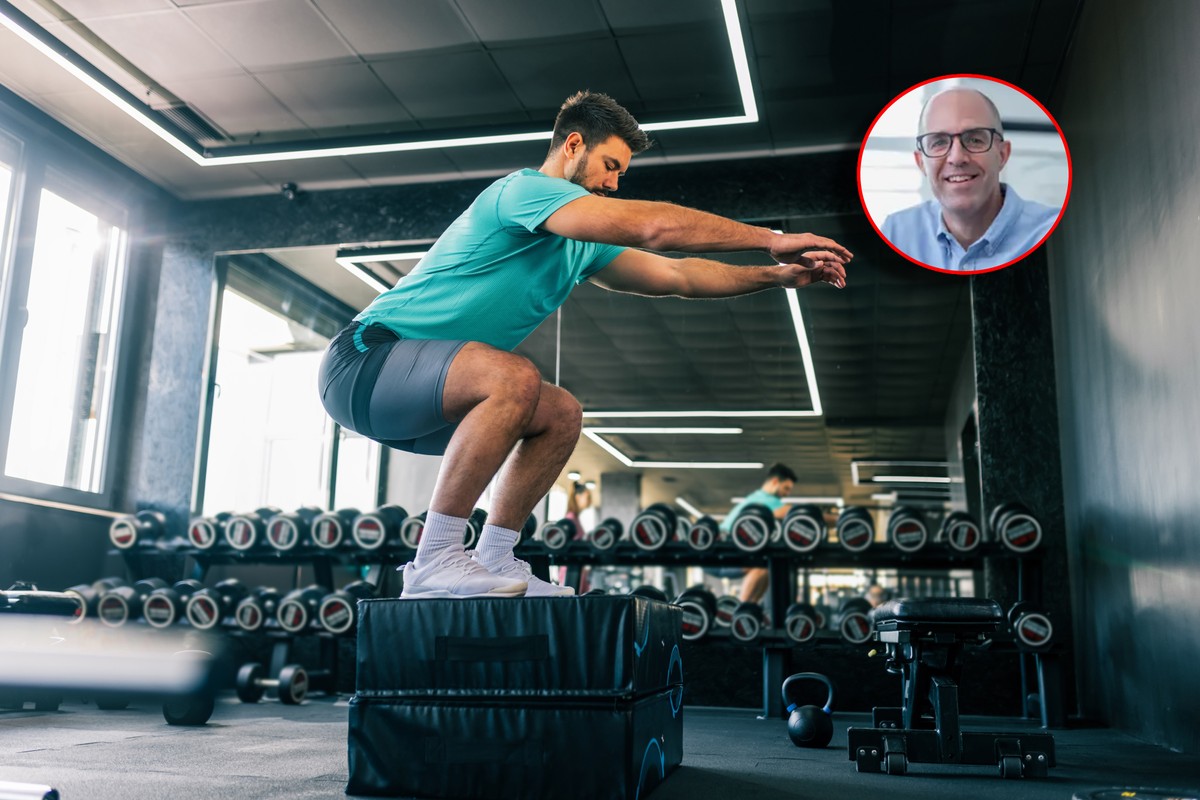
Dr. Kevin Sprouse, owner of Podium Sports Medicine and medical advisor at Eternal Longevity Clinic, has been working with elite athletes for over a decade, helping them achieve peak performance.
He told Business Insider that the same science can help anyone live longer and healthier lives – just by focusing on metrics like VO2 max and lactate threshold, which are key to performance and fitness.
His recipe for best results – even with a tight schedule – is a combination of strength training, easy cardio and intervals.
Read also in BUSINESS INSIDER
“Each of these workouts stimulates the body in a different way, and together they create a complete, balanced plan,” says Sprouse.
Zone 2 builds endurance and a healthy heart
The basis of longevity is the ability to maintain calm, steady effort for an extended period of time.
The key here is cardio in zone 2 – i.e. 60-70% effort. maximum possibilities, at a pace at which you can still carry on a conversation without getting out of breath.
Training in zone 2 helps increase your VO2 max, a measure of how efficiently your body uses oxygen – one of the most important indicators of heart health and overall fitness, and closely linked to longevity.
“You need to have a solid base in zone 2 to build the mechanism that will allow you to become more and more fit,” Sprouse explains.
If you're short on time, try to spend about 50%. of your training time was zone 2 cardio.
If you can exercise more, aim for the ratio: 80 percent. — zone 2 / 20 percent — higher intensity.
Read also: From vibrating belts to currents in the suit. How gullibility drives the fitness industry
Interval training raises the lactate threshold
Short, intense bursts of exercise engage the heart and muscles differently, Sprouse says.
They help increase the lactate threshold – the point at which fatigue occurs.
To put it simply: if VO2 max is an engine, then your lactate threshold determines how long you can keep the pedal to the metal.
When you reach this threshold, your body begins to run out of oxygen and draws on the glycogen stores in your muscles. Your arms and legs become heavier and it becomes more and more difficult to maintain your pace.
“This is the moment when the countdown begins to see how long you can sustain the effort,” Sprouse says. — Lactate threshold is a true measure of fitness at any given time – he adds.
To get the best results, it is worth varying the intervals:
- Try 30 seconds of maximum effort, then rest and repeat.
- On your next workout, choose 3-5 minutes at a hard pace or even 10 minutes at a racing pace.
Strength training for muscles and endurance
Cardio alone is not enough. Strength training strengthens muscles, stabilizes blood sugar levels and prevents injuries – all of which are crucial for longevity.
— To improve your VO2 max, you need to have adequate muscle mass. Less fat means higher VO2 max, explains Sprouse. “All these elements come together into one indicator that allows you to see where you are in the population,” he adds.
You don't need hours spent at the gym every day. 2-3 workouts a week are enough, depending on your schedule.
With the right plan, you can do an effective strength workout in 30 minutes and still make progress.
To be more effective, focus on compound exercises—like squats, deadlifts, and presses—that engage multiple muscle groups at once.
Don't forget about nutrition and regeneration
The best athletes in the world show that regeneration is as important as the training itself.
— What professionals do better than all of us is rest says Sprouse.
If you don't sleep well or eat properly, it may be harder for you to achieve your goals – even if you train perfectly.
Try to provide your body with the right amount of protein, carbohydrates and calories, while avoiding excess simple sugars and highly processed products.
— Progress is achieved partly through training and partly through nutrition. If you only focus on one of them, you're only using half of your potential, Sprouse concludes.
The above text is a translation from American edition of Business Insider