Russians carry out precision strikes on Ukraine's rail network: 'Directly targeting locomotives'

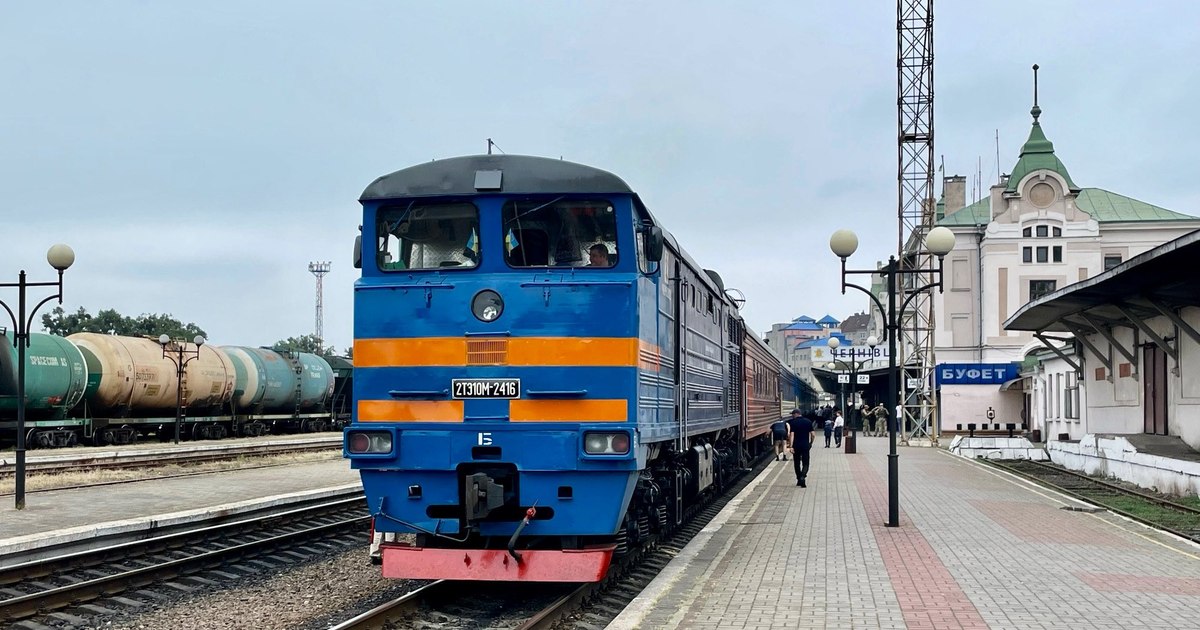
Russia is targeting Ukraine's rail infrastructure in targeted attacks that have increased in intensity in an attempt to cripple a critical transport and logistics system, The Guardian reports.
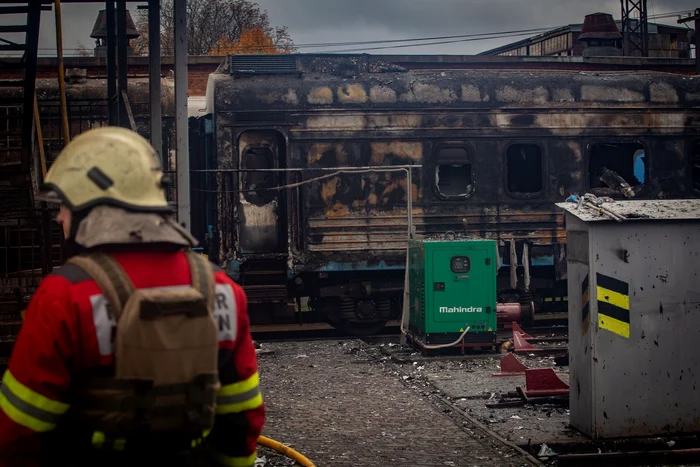
PHOTO profimedia
The number of Russian attacks on the railway network and trains has tripled in the last three months, and the damage caused since the beginning of the year has reached one billion dollars, said Deputy Prime Minister for Infrastructure Oleksi Kuleba, who said that since the beginning of the year there have been 800 attacks and 3,000 targets have been hit.
These attacks show an escalation, but also a pattern: The Russians are targeting trains, and they seem to be hunting train drivers in particular, he said.
For Ukraine – a large country at war – rail routes are vital: 63% of freight transport takes place by rail, as well as 37% of passenger traffic. The military aid received from the allies often arrives by rail.
Then, with no civilian airport operational since the invasion began, most people entering or leaving the country, including visiting foreign leaders, travel by train.
“It's not just about the number of attacks, it's also about how the Russian forces are doing it. Now, as they have high-precision Shahed drones, they are directly targeting the locomotives,” explained Oleksandr Pertsovski, head of the state-owned Ukrzaliznitia railway company.
Ukraine has begun to take steps to defend its rail network, equipping trains with jamming systems, while forming dedicated teams to ensure the defense of rail personnel.
The Guardian recalls the rcu drone attack on the train station in Lozova, Kharkiv region, at the beginning of the year.
“It was night and everyone was sleeping,” says Tetiana Tkacenko, the head of the station. “Woke up to a huge explosion. I live very close by. It happened at 2.44am. There were five trains in the station. The first of them, a suburban train, was due to leave in two hours. It was clear they held the station. They planned to hit here. And they succeeded.
But why this station?
“Lozova is an important railway junction,” she explains. “From here you can go in four directions: to Dnipro, Sloviansk, Poltava and Kharkiv.”
The railway is also used for military operations, but also for the evacuation of the wounded from the eastern front.
“The danger is very high,” emphasizes Tkacenko. “The Russians are hitting right where people are congregating and they want to destroy the tracks and the locomotives; ground the power lines.”
Russia's goals
“The main goal is to save lives. In case of an alert, we take shelter in bunkers. If a train is on the route, we take it to the nearest station so that people can evacuate,” reports Oleksandr Podvarceanski, in charge of railway maintenance in the Lozova area.
The Deputy Prime Minister for Infrastructure, these attacks have three major objectives: the destruction of logistics in the south to block the access of goods to the ports; disruption of rail transport near the front, in regions such as Chernihiv and Sumî; and the “complete destruction” of Donbas, the country's industrial heartland.
While tracks can be repaired relatively quickly – even in a single day – locomotives and trains require more complicated repairs.
Serhi Beskrestnov, a Ukrainian expert in the field of drones, explained to the AP that trains are vulnerable targets, as they move at low speed, on predictable routes.
“If the Russians keep hitting diesel and electric locomotives, there will come a time when the tracks will be intact, but we won't have anything to run on them,” he said.