Iceland considers collapsing Atlantic ocean currents an 'existential threat' and begins preparations for possible climate crisis

Iceland's government has classified the potential collapse of a major Atlantic ocean current system as an “existential threat” and has begun drafting a national disaster response plan.
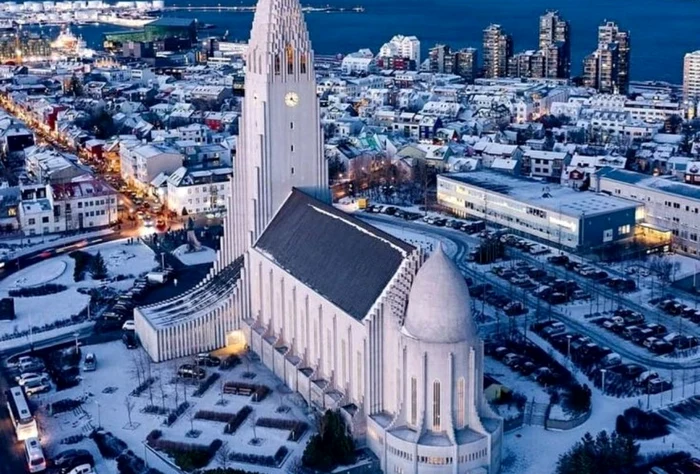
Reykjavík, Iceland/PHOTO:X
The system called the Atlantic Meridional Overturning Circulation (AMOC) – which also includes the well-known Gulf Stream – acts as a huge ocean “conveyor belt”, moving warm water from the tropics to the North Atlantic. This natural mechanism keeps winters milder in northwestern Europe and the northeastern United States and influences global-scale weather patterns, including the tropical rainfall regime.
But scientists warn that accelerated climate warming and the melting of Arctic glaciers – particularly the Greenland ice sheet – could introduce large amounts of cold freshwater into the Atlantic, destabilizing the system. A complete shutdown of the AMOC could cause a “modern mini ice age”, with much colder winter temperatures and heavy snowfall in northern Europe.
AMOC has also collapsed in the past, most recently before the last ice age, about 12,000 years ago.
“It is a direct threat to national resilience and security,” said Iceland's Environment and Climate Minister Johann Pall Johannsson. “This is the first time a specific climate phenomenon has been brought before the National Security Council as a potential existential threat.”
The decision means that Icelandic ministries will be on alert and coordinate response actions. The government is considering new policies and research programs in parallel with the development of a national emergency preparedness plan.
Among the risks assessed are energy and food security, infrastructure and international transport.
However, the impact of a collapse of the AMOC would go far beyond the borders of Northern Europe. Power outages could disrupt rainfall patterns that millions of farmers in Africa, India and South America depend on, experts say. At the same time, it could accelerate the warming of Antarctica, where the ice sheet is already threatened by climate change.
Scientists warn that the risk is underestimated and that, amid continued rising global temperatures, AMOC collapse could become inevitable in the coming decades.
In October, the Nordic Council of Ministers funded a workshop – Nordic Tipping Week – where 60 experts analyzed the social and economic effects of such a scenario. “There are many studies on when the collapse might occur, but much less on how society will be affected,” said Aleksi Nummelin, an oceanographer at the Finnish Meteorological Institute.
On Monday, more than 30 universities and international organizations launched a new call to accelerate the melting of glaciers and ice sheets globally.
Environment ministries in other Nordic countries – including Ireland, Norway and Britain – confirmed to Reuters that they are funding further research and assessing whether the collapse of the AMOC should be included in national climate security strategies.
In Ireland, the weather service has informed the Prime Minister and a parliamentary committee of possible risks.
In Norway, authorities say they are “analyzing the issue through further research” before deciding on an official risk classification.
The UK considers a sudden collapse unlikely this century, but has allocated more than £81 million to study climate systems on the brink of the point of irreversibility.
“Science is moving very quickly, and time for action is running out. The tipping point may be much closer than we think.” warned oceanographer and climatologist Stefan Rahmstorf, from the Potsdam Institute for Climate Impact Research (Germany).
In Iceland, authorities say they cannot wait for scientific certainty. “The formation of sea ice can affect shipping, and extreme weather events can endanger agriculture and fisheries – the pillars of our economy and food security,” said Minister Johannsson. “We cannot afford to wait for definitive research before acting.”
How global warming affects ocean currents
The researchers explain that the melting of the Arctic glaciers could lead to the collapse of the AMOC system, which regulates the circulation of water in the Atlantic. The current transports warm surface water from the tropics to the northern Atlantic Ocean, where it releases heat, cools, becomes denser, and descends to the depths, being transported back south.
This process – often described as the “ocean conveyor belt” – ensures thermal balance between the hemispheres. But as more ice melts in Greenland, the flow of fresh water dilutes the salinity and density of ocean water, slowing the process.
Without this system, much of northern Europe could go into sharp cooling even as the rest of the world continues to warm.