“Serious migration pressure.” The EU presented a list of countries exempt from the relocation of migrants

2025-11-11 17:12, updated 2025-11-11 18:43
publication
2025-11-11 17:12
update
2025-11-11 18:43
Bulgaria, the Czech Republic, Estonia, Croatia, Austria and Poland are struggling with a serious migration situation and will be able to apply for full or partial relief from the relocation of migrants for the coming year under the EU's asylum and migration pact, the European Commission said on Tuesday.
Each of these countries, as reported by the Commission, may refer this matter to the EU Council (which brings together all member states). The decision will have to be taken by the EU Council in a qualified majority vote. If this happens, the exclusion will apply for one year.
The asylum and migration pact provides for the choice of one of three options to express solidarity with countries struggling with migration pressure in the EU. These are:
- accepting migrants,
- making a financial contribution,
- operational support.
That is why the Commissioner for Migration, Magnus Brunner, emphasized on Tuesday at a press conference in Brussels that the mechanism is flexible. – Member States may also choose alternative measures to relocation. This means that the relocation is not binding, he said.
When asked about Poland, he replied that it is a country struggling with a serious migration problem. – This is because Poland, as I mentioned earlier, accepted a large number of beneficiaries of temporary protection from Ukraine. Thanks to our decision today, Poland can ask the Council (EU) for full or partial exclusion from the solidarity pool, and the Council will decide on this matter, explained the commissioner.
Prime Minister: Poland will not accept migrants under the migration pact
Poland will not accept migrants under the migration pact, Prime Minister Donald Tusk wrote on Tuesday on X. He commented on the decision of the European Commission, which announced on November 11 that, among other things, Poland will be able to apply for an exemption from the relocation of migrants for the coming year.
“As I said, Poland will not accept migrants under the Migration Pact. Nor will it pay for it. That's already a decision. We do it, we don't talk!” – the head of government wrote on the X platform.
The EC is starting the migration management cycle. Preparations for the Migration Pact
On Tuesday, the EC announced the launch of the first so-called annual migration management cycle, which is intended to be a key element in the implementation of the EU Pact on Migration and Asylum. This pact is to enter into full force from June 2026.
The aim of the cycle is to ensure a coherent approach to migration management throughout the Union, as well as to prepare the so-called an annual solidarity pool to support Member States under migratory pressure (within this pool, countries will choose between relocation, financial contribution or operational support).
The Commission also presented the first European Annual Report on Asylum and Migration, which presents the situation in the field of migration, asylum and the reception of refugees in the period from July 2024 to June 2025. The document shows that the migration situation in the EU has improved – the number of illegal border crossings has decreased by 35%, which the EC attributes to deeper cooperation with partner countries.
Instrumentalization and drones: Poland recognized as a country at risk of migratory pressure
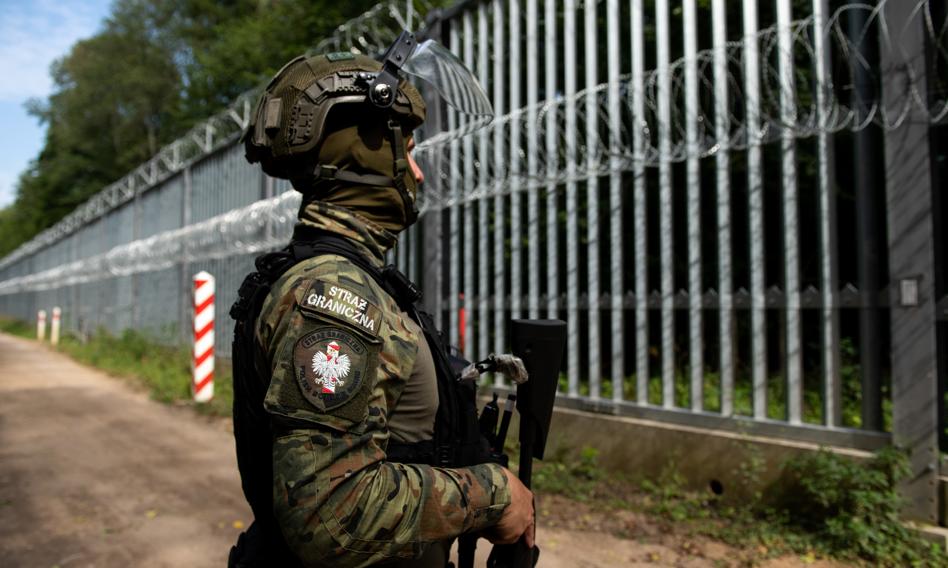
At the same time, EU officials do not hide the fact that some countries are struggling with challenges: pressure due to unauthorized movements of migrants within the EU, the need to continue supporting refugees from Ukraine, as well as the instrumentalization of migration by Russia and Belarus at the EU's external borders. Cooperation in the return and readmission of people who have not obtained the right of residence is also a challenge.
Based on the data collected in the report, the Commission assessed the level of migratory pressure in individual Member States.
It was pointed out that Greece and Cyprus remain under particular pressure due to above-average numbers of arrivals over the last year. Spain and Italy are also struggling with high numbers of migrants, especially after search and rescue operations at sea. These four countries will be able to benefit from the future EU solidarity pool when the pact enters into force.
In turn, Belgium, Bulgaria, Germany, Estonia, Ireland, France, Croatia, Latvia, Lithuania, the Netherlands, Poland and Finland were recognized as countries at risk of migratory pressure – due to high numbers of arrivals or the risk of using migration as a weapon.
In response to growing hybrid threats and increasingly frequent incidents using drones at borders, the Commission also announced the launch of a tender worth EUR 250 million for the purchase of equipment for detecting and neutralizing drones.
How has the EU migration policy changed under the influence of Poland?
1. Priority of protecting external borders.
2. Preventing the abuse of the right to asylum.
3. Policy of forced returns to third countries.
4. The external dimension of migration based on readmission.
5. Fight against smugglers.— Maciek Duszczyk (@MaciekDuszczyk) October 31, 2025
New assessment of the migration situation every year
The EC's proposal will go to the EU Council, which will decide on its adoption, specifying the final size of the pool and how each member state will make its “fair contribution”. Once the decision is adopted by the Council, solidarity contributions from individual countries will become public and legally binding.
The Commission announced that the migration situation across the EU will be assessed annually to ensure a constant balance between the challenges and responsibilities of individual countries.
Łukasz Osiński from Brussels
luo/ zm/ jann/