German pensions outperform Polish ones. We have the data [KWOTY]

Economic advisors in Germany recommend increasing the retirement age, which would help stabilize the social system. More and more seniors in this country complain about their standard of living after finishing their professional careers. Sound familiar? Basically all of Europe is facing this.
It's just that a poor pension in country And there is one conclusion: such a comparison is not the best for our country.
Read also in BUSINESS INSIDER
The October publication of the Destatis office, the equivalent of the Polish Central Statistical Office, shows that the median net income of retirees is EUR 1,990 (nearly PLN 8.5 thousand) and is lower than the income of the general population, which is approximately EUR 2,300 (i.e. already close to PLN 10,000). We emphasize: this is net income, i.e. “on-hand”.
To put it another way: half of retirees in Germany have at least EUR 1,990 at their disposal per month.
For comparison: in Poland the average pension in 2025 was approximately PLN 4,000. PLN gross, i.e. slightly above PLN 3.4 thousand. PLN per hand. This is approximately 800 euros. In turn, the median is even lower, in the range of 3.4-3.6 thousand. zloty. That's another 80 euros less.
The disproportions are gigantic
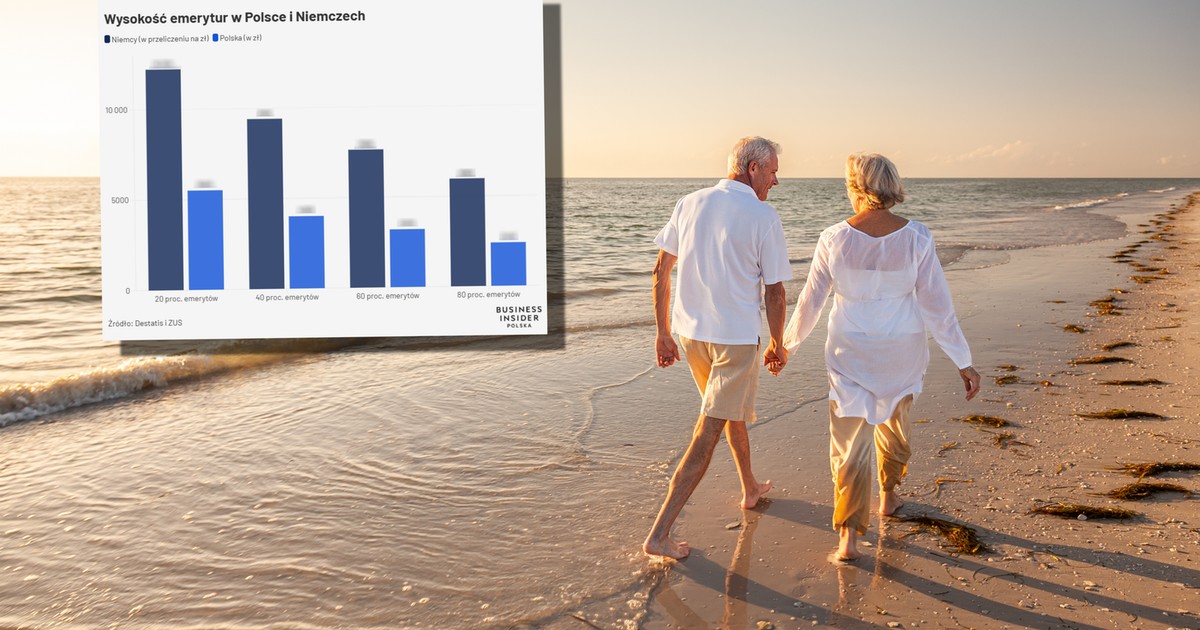
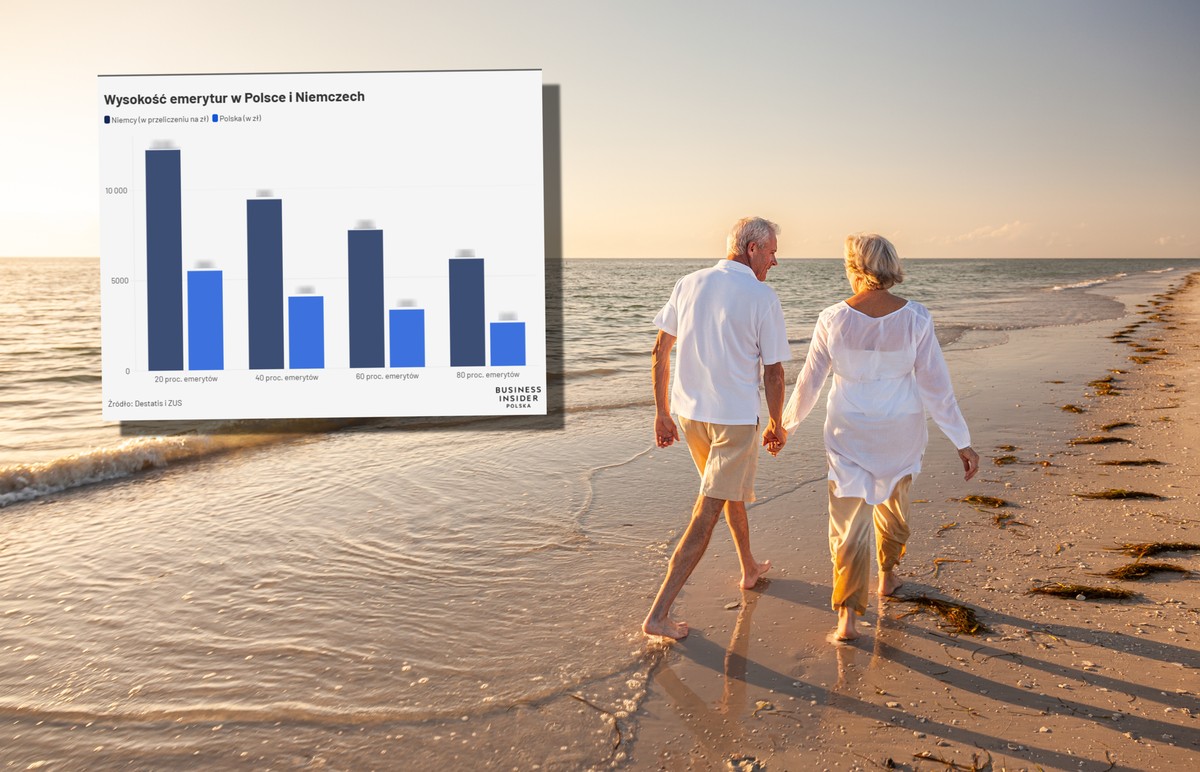
Destatis reports that 20 percent the poorest German pensioners have to survive from first to first on 1,400 euros a month. That's less than 6,000. zloty. On hand.
For comparison: in Poland, only a few percent of the richest seniors can boast of such benefits. However, the numbers do not tell everything, because you need to remember about the cost of living, which in the case of Germany is incomparably higher than in Poland.
The German statistics office divided local seniors into five income groups, 20% each. each. And so 20 percent the richest retirees in this country have an income of at least EUR 2,869 net per month. This is the equivalent of 12 thousand. PLN at today's euro exchange rate.
40 percent is above the limit of EUR 2,200, 60 percent. — above EUR 1,793, and 80 percent retirees live on at least 1,400 euros a month. What does it look like in Poland? We estimated similar collections based on data published by ZUS. The income thresholds are presented in the chart below.
The Germans have the same problem as us
Our western neighbors have demographic problems similar to those in Poland. Society is aging, although not as quickly as in Poland.
See also: It's worse than the worst-case scenario assumed. This is how Poland is dying out
“In recent years, the number of retired people aged 65 and older, as well as their income, has increased. In 2021, 15.9 million people belonged to this group (today it is approximately 16.5 million). Their average monthly income at that time was approximately EUR 1,820 and increased by 9% until 2024,” we read in the release.
Interestingly, in Germany you can see income from capital. Rarely do seniors decide to work after reaching retirement age. Rather, it focuses on income from capital, e.g. interest on investments. On average, only one in fifty German retirees works.
Destatis data clearly shows that households with retirees derive most of their income from pension benefits, but some also comes from other sources. “In households consisting exclusively of retirees, pensions accounted for an average of 92 percent. income. 5 percent income came from assets, 2 percent from employmentand 1 percent from transfers such as basic income for the elderly,” we read.
Another similarity is the so-called pension gap. Taking pension income into account only, women in Germany have on average much lower incomes than men. Just like it is in Poland.
“Women aged 65 and over who received a pension or disability pension achieved an average gross monthly income of approximately EUR 1,720. For men, this amount was approximately EUR 2,320. Women's retirement incomes were therefore on average more than a quarter lower than men's: the so-called The gender pension gap amounted to 25.8 percent,” reports the German statistics office.
In Poland, the gap is even larger, because the difference is 1.5 thousand. PLN (4.9 thousand PLN average for men and PLN 3.4 thousand average for women). That's over 30 percent.
It is worth emphasizing, however, that in Germany – unlike in Poland – the retirement age is the same for women and men and is 67 years old (it is currently being extended and will end in 2031).
Germany also has a well-developed system of benefits for the poorest retirees. According to statistics, by the end of 2024, as many as 730,000 seniors had to benefit from state support. It is available to people who are over 65 years of age and are unable to support themselves from their own means.