Giants are giving up large investments in Poland. “The climate is getting worse”


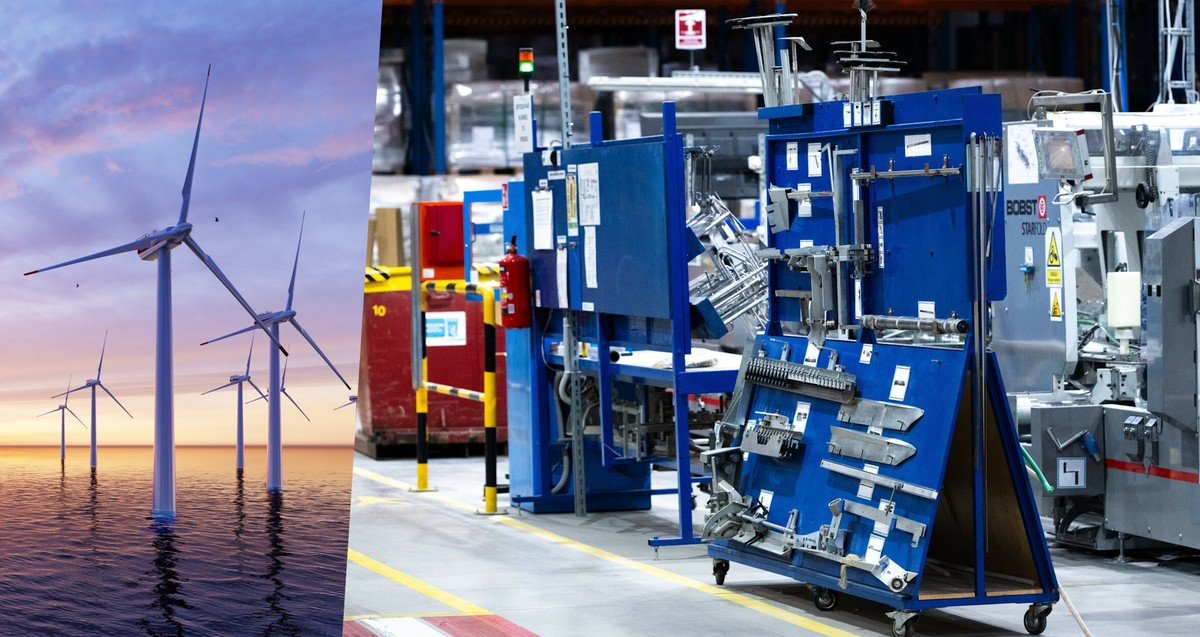
German Bosch was to build a heat pump factory in Lower Silesia worth PLN 1.2 billion. However, in September he withdrew from this idea due to “growing political and economic uncertainty in Europe”. A month later, a similar decision was announced by the Danish Vestas regarding a wind turbine blade factory near Szczecin – over a thousand people were to work at the plant. Reason? European demand turned out to be lower than expected.
In total, investments in Poland constitute approximately 17%. GDP, and they should constitute 25 percent. This is PLN 300-350 billion a year that is missing, points out Kamil Sobolewski, chief economist of Employers of Poland.
The problems also affected important players in such flagship production branches in Poland as household appliances. Beko, which dismissed employees in the first half of the year, is followed by LG Electronics, which announced the dismissal of nearly 200 employees from the refrigerator production department at a factory near Wrocław. The automotive industry is also having problems – the last report of the Polish Economic Institute indicated the decreasing role of the sector and a decline in the value of exports by 8.7%. (to the level of EUR 52.2 billion). Car production in Poland between January and September 2025 decreased by as much as 58%. At the same time, Toyota announced a large investment in the Czech Republic.
Is Poland no longer a good place to invest for large foreign companies? Experts point out the advantages, but also some quite new problems that the largest companies are afraid of.
The chief economist of Employers of Poland, Kamil Sobolewski, warns against the silent outflow of foreign investments from Poland. Thinks, that high-profile cases of withdrawal of foreign investments from Poland are the tip of the iceberg.
— It rarely happens that the assessment of Poland as a country not good enough for investment appears after the decision has been made and investment plans have been announced, and before the investment has been implemented. There are more situations in which we lost the competition for investments with other countries and investment plans were never announced than there are investments that were stopped in the final stages, he comments.
We are losing hugely
— Investments in Poland constitute 17 percent. GDP, and they should constitute 25 percent. This is PLN 300-350 billion a year that is missing. For comparison, the nuclear power plant in Lubiatów will cost PLN 200 billion over 15 years. At the current rate, we will accumulate an investment deficit equal to the entire GDP in 12 years. These are power plants, factories, machines, devices, robots and technologies that would create our prosperity in a decade. This is wasted potential – adds Sobolewski.
And it highlights three key areas that most often discourage investors: labor market regulations, energy availability and prices, and regulatory uncertainty.
— Serious investors are asking about the availability of energy after 2030, when coal is expected to disappear and nuclear power will be gone for a long time. We are perceived as a place where there is a potential risk of blackouts, warns Sobolewski. It also draws attention to changes in migration policy. — A negative game changer that has accelerated the perception of the Polish labor market abroad is the change in migration policy. For political reasons, the government's policy has become noticeably tougher, he says.
— Companies that have to rely on menial labor—not because it's the only part of their business, but because it's an unavoidable part—find that the unavailability of workers is a huge barrier. This has built up a lot over the last two years – he adds.
The problem of regulatory uncertainty is confirmed by attorney Robert Piskor, partner at the law firm Hantke Piskor i Wspólnicy. — Foreign investors increasingly point to the lack of regulatory stability, excessive variability of regulations and the overload of the justice system, he admits.
The problems do not concern only Poland
However, our interlocutors admit that investment cancellations are often related to the general economic situation and uncertainty at the European level. And they don't have to mean only Polish problems.
— Existing withdrawals from investment decisions are not directly related to the Polish situation. They usually concern factories that were supposed to produce mainly for export, and this is not guaranteed due to the poor economic situation on the target markets, especially Western Europe. Other operators outside the production sphere (trade, services) simply could not cope due to the hyper-competitive nature of the Polish market – says Wojciech Konecki, vice-president of the National Chamber of Commerce and president of the Applia Association of Employers of Household Appliances Manufacturers.
— The climate around investor decisions is deteriorating. The matter is complicated by the uncertainty necessary for investing, resulting from the fight between the giants (USA and China) dominating the sphere of digitalization and AI, the ownership of rare earth metals, automation and robotics, as well as the production of semiconductors. The issue of access to cheap energy sources and employees is also important, he says.
— Investments in Poland are not at an acceptable level, but they are still holding strong, considering the fact that we have been a frontline country for three years – says Wojciech Konecki.
The rest of the article below the video:
A country with many advantages
According to the deputy head of the Polish Chamber of Commerce, despite the difficult situation on global markets, Poland can still boast of numerous advantages that help it win over the competition. – It is the level of technical education of young people, the proximity of large European markets, a good network of sub-suppliers and the entrepreneurship of Poles – he mentions.
Kamil Sobolewski also draws attention to the unique feature of the Polish market. — On the one hand, we do have a demographic crisis, but… on the other hand, the number of people with higher education is increasing and will continue to increase. In the current generation of 55-65-year-olds, only 17 percent has higher education, and in the generation of 25-35-year-olds it is 43 percent. – explains Kamil Sobolewski, pointing to Poland's main advantage in the competition for foreign investments.
— We are a country with a stable financial sector, extensive transport and energy infrastructure and access to highly qualified staff. It is these factors that make many global companies continue to develop their research and development, logistics and production centers in Poland – says
Investments yes, but not all
Kamil Sobolewski points out that not every inflow of foreign capital is beneficial for Poland. — A foreign investment may consist in a foreign company paying PLN 1 billion in capital to its daughter in Poland, renting a hall and packing it with goods purchased from the parent company. This will make it difficult for Polish companies to compete on the domestic market, he warns.
— A foreign investment is good when this money helps build productive assets, thanks to which production and work efficiency increase significantly, and with them earnings. This should mean that people acquire competences that they can use regardless of the existence of this company in Poland – sums up the economist.