To strengthen its forces, the Ukrainian army also recruits enemy soldiers. They are Russians, but they fight for Kiev – they share the goal of overthrowing Putin.
The number of Russians actually serving in Ukrainian uniforms is not publicly known. The armed forces of Ukraine do not disclose this data. They are known to have fought in battles such as the one at Bakhmut – and attacked Russian territory.
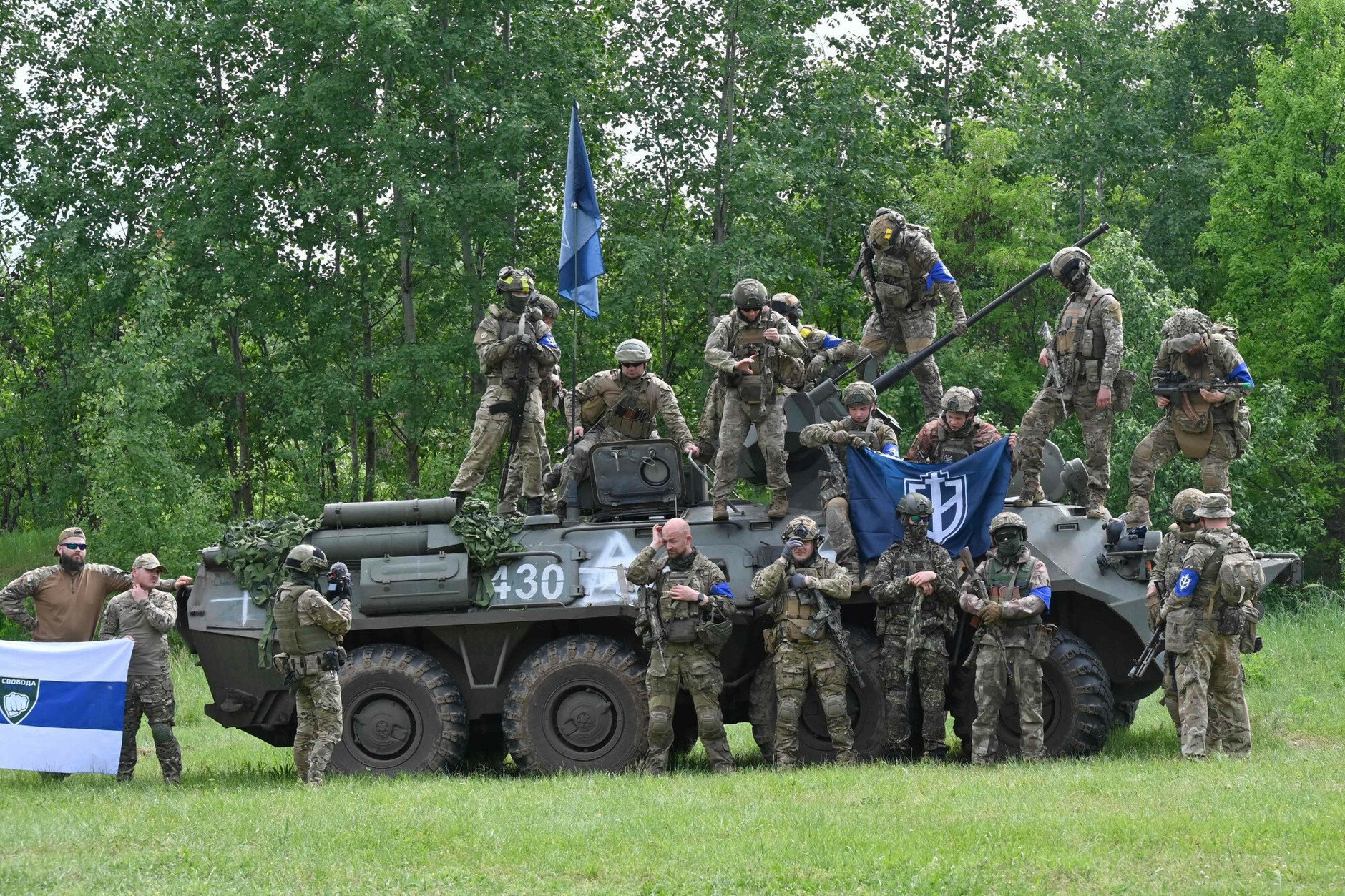
However, the Ukrainian army is very distrustful of these soldiers – for fear of Russian espionage. These formations are called the “Freedom of Russia” Legion, the Siberian Battalion and the Russian Volunteer Corps.
35-year-old Anatoly comes from a small town in the European part of Russia. After the war began, he joined the “Freedom of Russia” legion.
— Actually, I have never been interested in Ukraine. After the annexation of Crimea, I served in the Russian army – I was neither in favor of it [działaniami Kremla]nor against, honestly, I didn't care. Politics played no role then. It was Alexei Navalny's corruption investigations that opened my eyes. So I didn't go to war for Ukraine, but for Russia — it sounds paradoxical, but it was my attempt to change something in Russia – describes the 35-year-old.
After nine months of fighting, Anatoly gave up and fled to Germany, where he underwent the Dublin procedure [służy do określenia, które państwo członkowskie UE jest odpowiedzialne za rozpatrzenie wniosku o azyl]. Now he is waiting for a decision on his asylum status.
— After mobilization began in Russia (September 2022 – editor's note), I left the country. For a while I lived in Tbilisi, where many houses had signs saying “Fuck Russians!” (“Fuck the Russians”) or “Russians go home!” (“Russians go home!”). I felt like an enemy everywhere – and I wanted to show how far I was willing to go for my beliefs – describes the man.
— I turned to the Legion “Freedom of Russia”. They asked me to go to Istanbul, where the Ukrainian secret services interrogated me. For example, I was asked: “Would you be capable of betrayal?” In my situation it sounded absurd. Regardless of my motives for taking this step, many of my compatriots would consider my behavior a betrayal. After two hours, the interrogation was over. I passed the exam, Anatoly continues and adds:
First I needed a Ukrainian visa. I was sent a letter from a Ukrainian aid organization that made it seem like I worked there. Three months later I received my visa. Then I went to Ukraine via Moldova.
Soldiers of the Legion “Freedom of Russia” (illustrative photo)SERGEY BOBOK/AFP/East News / East News
As he says, on the Ukrainian side, the military secret services took him to the training camp of the “Freedom of Russia” Legion. He expected hundreds of fighters there, but there were only a few dozen. Many of them are Russians who lived in Ukraine before the invasion. The most radical were those who, like Anatoly, came to Ukraine later. They wanted to immediately cross the border and overthrow Putin's regime.
After three and a half months of training, there was disappointment. There were problems with supplies, payments, command structure.
— I came to fight for democracy, but I found myself in chaos. At the beginning we had an incompetent commander: a Russian who grew up in Ukraine. During the operation in the Sumy region, we were unable to complete our mission because of him. Our commander panicked so much that he ordered us to withdraw before we could take any action – we withdrew, leaving some foreign equipment in enemy territory, says Anatoly.
After this unsuccessful operation, the unit received a Ukrainian commander. At first everything went well, but over time, especially after drinking alcohol, he repeatedly said that several generations of Russians should be eliminated.
— The mood deteriorated and one of the comrades was arrested for criticism. Then I realized that I wanted to escape from here. We had no documents, returning was impossible. The dismissal procedure took months, says the 35-year-old.
— During my stay in Ukraine, I never met an opponent. Instead, many promotional videos were made for the military secret services. Overall, I had the impression that the “Freedom of Russia” Legion is more of a PR structure than a real combat unit that could bring about real changes on the battlefield, he sums up.
Oleg: “I felt obliged to Ukraine”
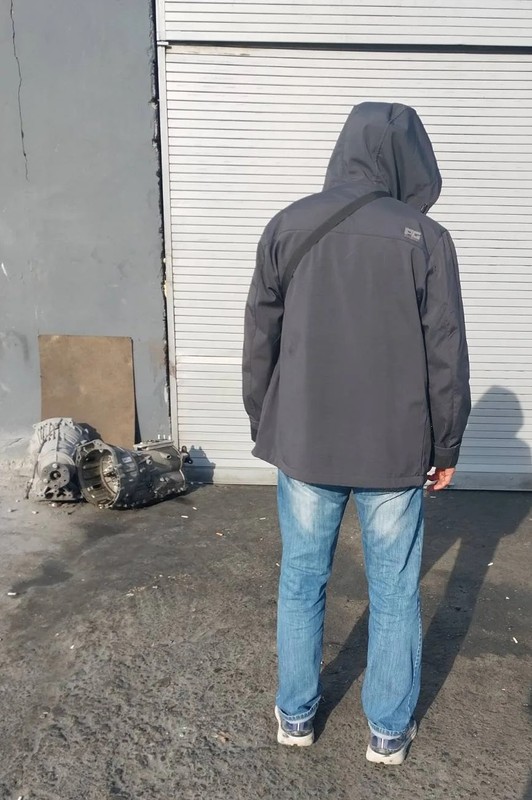
Oleg, a man around 50 years old, from a city in central Russia, joined the Siberian Battalion after the war began. After being wounded, he left Ukraine and is currently staying in one of the post-Soviet countries, where he is waiting for a French visa.
OlegDie Welt
— I have been afraid of this war since 2014. After the annexation of Crimea, I protested, was beaten and insulted. When troops were on the border in 2021, I set my alarm every morning for fear of falling asleep and missing the start of the war. On February 24, 2022, the day came: the war began. I exchanged money, sold my property, took part in protests, was arrested – and on the same day I fled Russia, Oleg describes.
A friend from Kiev who had joined the army suggested the man join too.
— Out of a sense of moral obligation, I agreed. Rejected several times due to my age, I was finally referred by the Civic Council (an association of Russian emigrants that recruited volunteers for Russian formations within the Ukrainian army) – this is how I ended up in the Siberian Battalion – he continues and adds:
I actually wanted to help, not fight – as a driver, for example. However, at the front, I realized how great the personnel shortage was in the Ukrainian army. Instead of a driver, I became an infantry soldier.
Before the first operation near Avdiivka, the commander told Oleg: “You are Russians until the first battle – then brothers.” After the mission was completed, he changed his tune.
— We didn't escape, but I was afraid of death. The whistle of the grenades, the thunder of the explosions – I trembled throughout the entire battle. This fear prompted me to terminate the contract, Oleg describes.
He made the decision after he was seriously injured during an operation in the Belgorod region.
— The explosion injured me just 100 meters from the border, on the Ukrainian side. After three months of rehabilitation, I terminated the contract. I wanted to stay in Ukraine and help, I felt obliged, but I was refused, he says.
— I didn't kill anyone during my stay in Ukraine. But I saw my compatriots primarily as occupiers. This was not a moral contradiction for me, even during my mission in Russia. We considered them liberation actions – liberation from Putin's fascism, Oleg sums up.
Anna: “I would do the same”
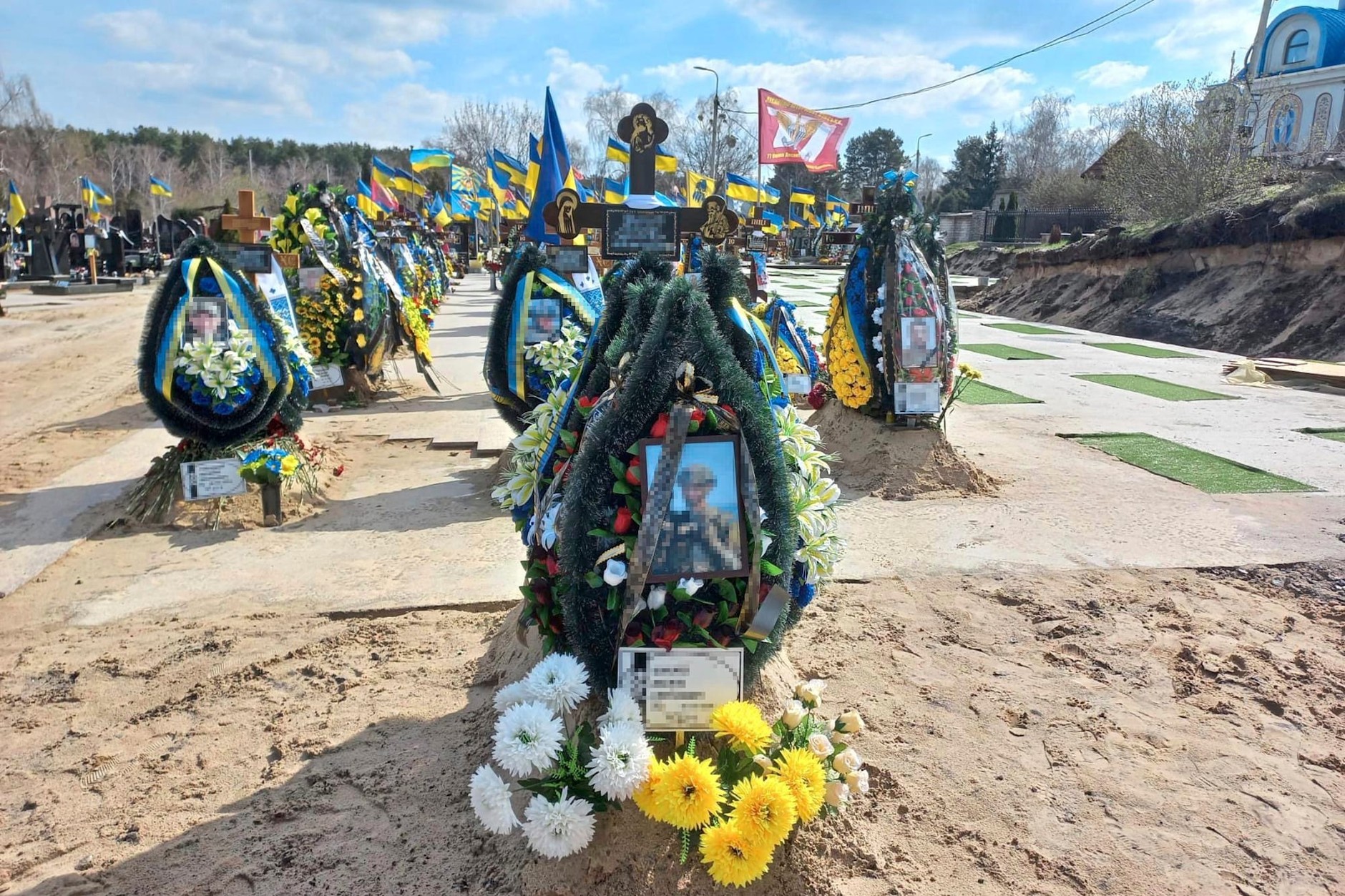
After the full-scale invasion began, 54-year-old Anna and her 33-year-old son Andrei fled Russia – she to Germany, he to France. A year later, he fought in the Siberian Battalion – and died in August 2025.
— Just before the New Year 2024, my son called me: he was in Poland and wanted to go to Ukraine soon to fight. Today it hurts, but I didn't stop it then – I knew that if I were a young man, I would have done the same – says Anna.
As the woman says, her son fought for half a year – near Volcano and on Kos (the spit) of Kinburn. During the first action he was slightly wounded, during the second action he died. Anna was informed about this by his comrades in arms, including the Russians.
— Then came a painful period of uncertainty. Many visits to offices were necessary to identify my son's body. However, I was in Germany and could not enter the country because of my Russian passport. If there hadn't been a man among the fallen who was in a relationship with a Ukrainian soldier, I probably wouldn't be able to bury my son to this day. It was she who led to the identification, says the woman.
— The body was transferred from the occupied territory. I couldn't publish any information on the Internet because Russia might not agree to it. After handing over the body, I had difficulty obtaining a Ukrainian visa through a lawyer and went to the funeral, she reports.
The grave of Anna's sonDie Welt
To this day, my son's command has never once contacted me – neither responded to my messages nor expressed sympathy. None of them showed up at the funeral in Kiev.
— To this day I have not received his personal belongings. Not to mention compensation – which is due to the families of the fallen – the woman ends the story.
I’m Ashley Davis as an editor, I’m committed to upholding the highest standards of integrity and accuracy in every piece we publish. My work is driven by curiosity, a passion for truth, and a belief that journalism plays a crucial role in shaping public discourse. I strive to tell stories that not only inform but also inspire action and conversation.