With such an accumulation of similar events in a short period of time, it is easy to be tempted to generalize. After all, only seven weeks passed from September 8, when the protests in Nepal began, culminating in the burning of the parliament building and the change of government, to October 25, when a 30-day state of emergency was introduced in the capital of Peru, Lima. Anti-government demonstrations called mainly by the youngest voters – often using the same social media platforms and using the same symbolism, inspired by Japanese comics – took place in Madagascar, Paraguay and Morocco.
Looking at them from a distance, you can see the similarities. The age of the demonstrators and their political fuel agree: opposition to corruption, frustration caused by the lack of development opportunities and blocked social development channels, as well as the belief that political elites no longer represent anyone's interests except their own. Finally, what many social movements and even political parties lack: coherent symbolism. The skull in a straw hat (in the photo) was taken from the manga and anime “One Piece”. In the series, popular in the 1990s, the flag with this symbol was waved by pirates who opposed the oppressive and corrupt authorities.
The article continues below the video
What beliefs do they have about their Generation Z?
Why do young people not feel represented by the political elites?
What protests took place in Nepal?
What changes in power have occurred in Nepal since the protests?
Privileges to a fault
So theoretically everything is correct. So much so that some publicists make comparisons with the Arab Spring of 2011. Such an analogy is intended to defend itself thanks to the vehicles of anti-authoritarian social opposition. Back then – although those revolutions were geographically limited – people mobilized against tyrants using Twitter and Facebook. Today they do it on Discord, Reddit, Twitch and TikTok.
At that time, it was not only a political innovation, but also a sign of the times. Although Mark Zuckerberg himself denied that Facebook had in any way contributed to the political and political changes in the Maghreb or the Middle East, it was impossible to deny that something had changed then. Perhaps something civilizational. The world was discovering new methods of communication, and suppressing traditional media had no effect. Because what could not be broadcast on television could be shown to millions of people on the Internet. No censorship, no editing, no equipment worth millions.
Today the situation may be similar. Young people again, again on the Internet, again in places that they understand much better than older generations. Again, similar demands and changes of a cross-border nature, spreading to other countries. However, there is a fundamental difference between what happened in 2011 and this year's wave of protests. And it's not even about the result, because we know that the Arab Spring did not bring the desired democratization, on the contrary – it allowed entities to enter the scene and created structures that consolidated power that had little to do with democracy.
Of course, no one knows what the end of the Generation Z protests will be. The difference, however, is fundamental and concerns what to do with your country once you take control of it.
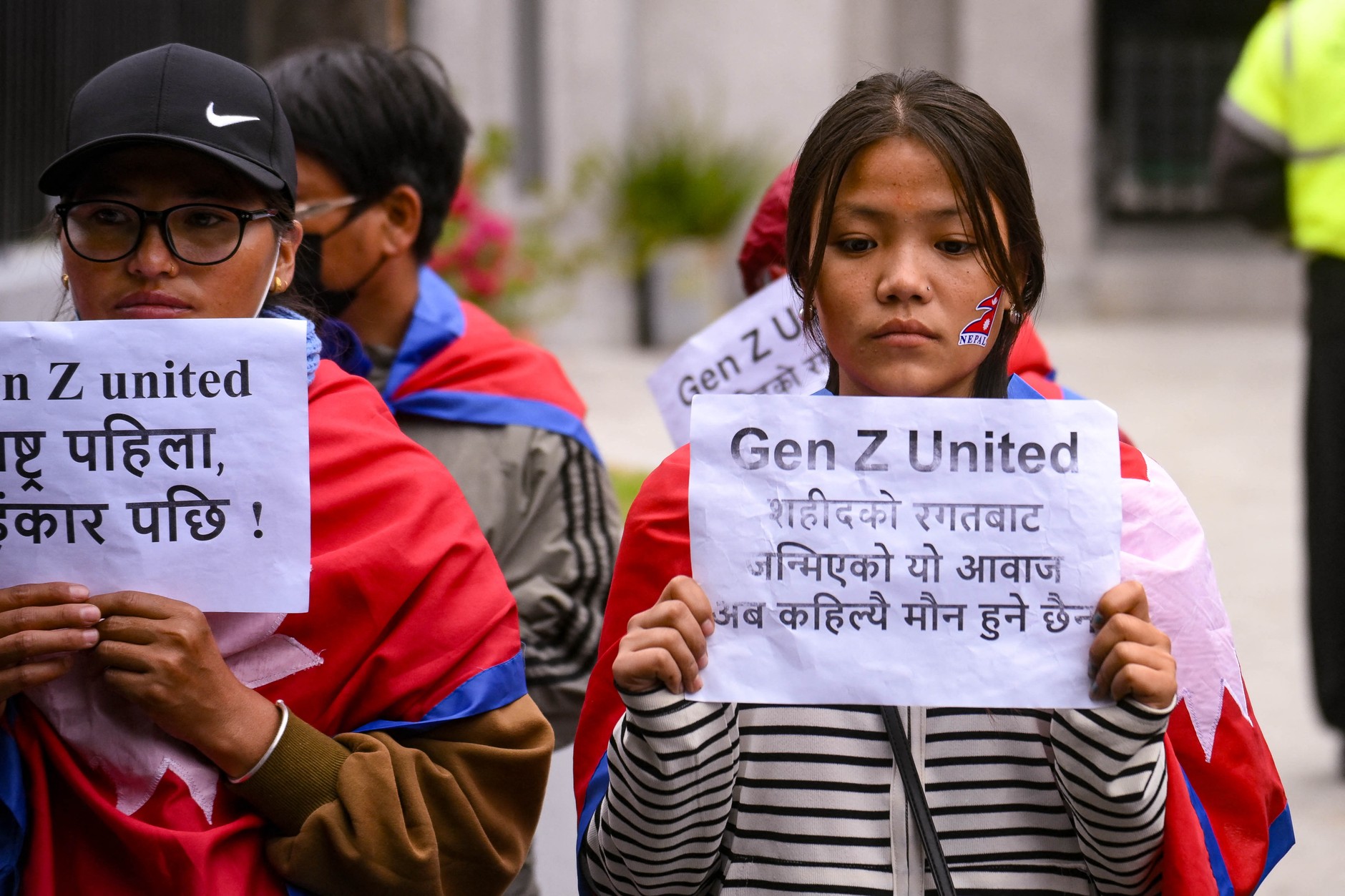
Generation Z protests in NepalSAFAL PRAKASH SHRESTHA / NurPhoto / AFP
In Nepal, it began with opposition to ostentatious privilege. While – according to data from the World Bank – one fifth of young Nepalis are unemployed, nine out of ten employed work illegally or in the gray zone, and every year half a million people under 24 years of age enter the labor market without any special opportunities for permanent employment and social advancement, politicians' children, without a trace of shame, published photos on Instagram in front of Christmas trees made of boxes with the Louis Vuitton logo.
Several online activists independently began to call on people to take to the streets, although they did so without any strategy. No dates, times or addresses were given. It can even be said that the overthrow of the government was successful because Nepal is a compact country, all political life takes place in Kathmandu, which has a population of just over 850,000. inhabitants. It's easy to get there, mobilize and organize. It turned out that social frustration was enormous, as tens of thousands of people quickly appeared on the streets. Initially, they encountered resistance from the uniformed services. Blood was shed.
Ramesh Lekhak, then Minister of Interior, one of the most hated politicians in Nepal, instructed police officers to deal with the crowd as brutally as possible. However, the young people did not give up, bringing part of the coercive apparatus to their side.
Then it went quickly. The government tried to suppress the protests by publishing a decree disabling 27 of the largest social media platforms in Nepal, including Facebook and Instagram. The crowd became radicalized, the parliament building and the residence of Prime Minister KP Sharma Oli, who was evacuated by helicopter, were set on fire. Finally, as in a movie about the transfer of all democracy to the digital world, the new head of government was 73-year-old veteran of the anti-corruption movement, Sushila Karki, elected to this position using… a poll on the Discord platform.
The story about online voting sounds attractive, but it does not tell the whole truth – Karki could become prime minister because the crowd nominated her, but later the army had to give her permission. In the fight for power, the decisive voice is therefore not given to young people at keyboards, but to men with guns in their hands.
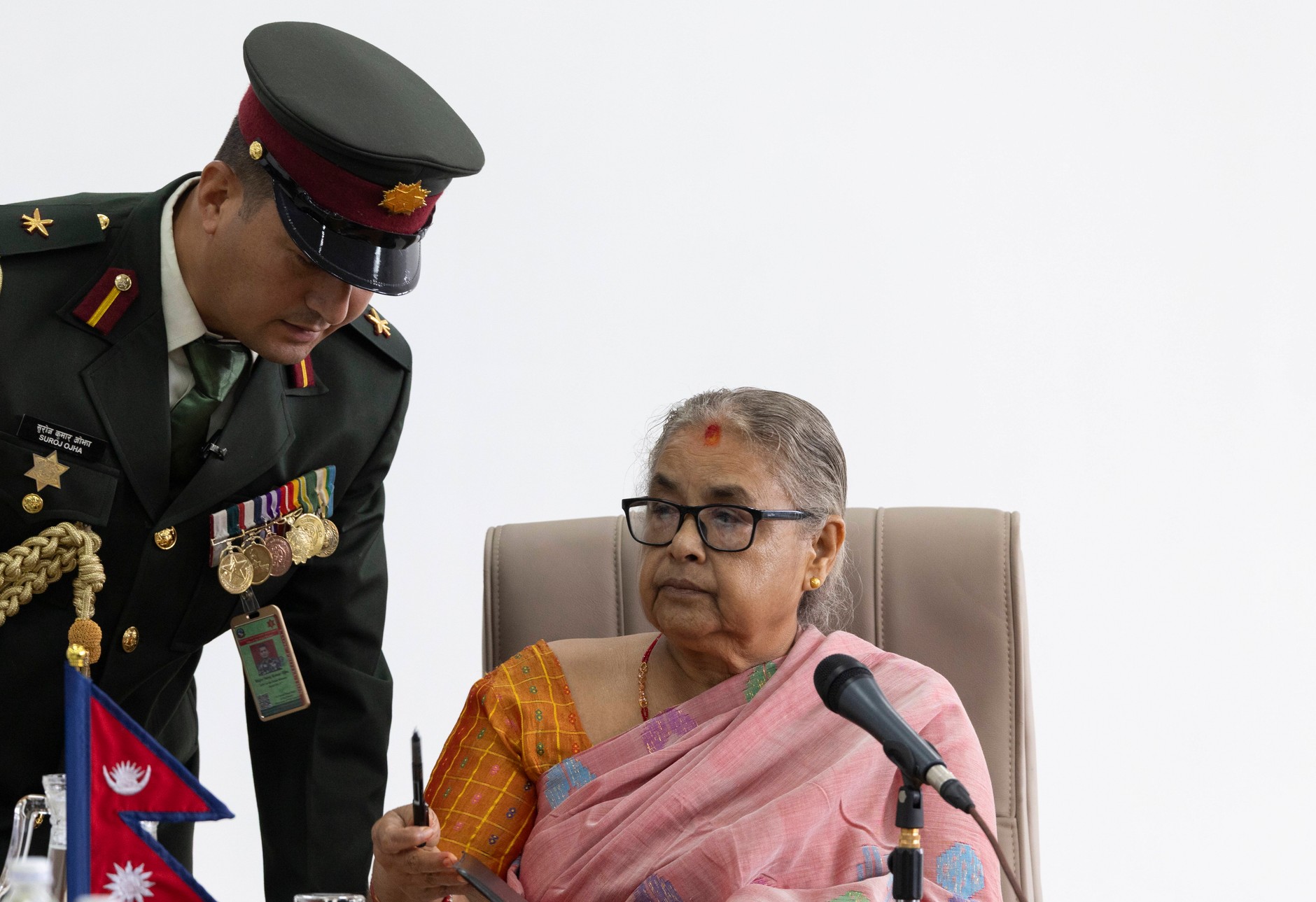
Sushil KarkiNarendra Shrestha / PAP
Poor as in Madagascar
In Madagascar, President Andry Rajoelina decided to escape on October 10, in a plane belonging, as Andrew Mueller from the online magazine Monocle reported, to the French armed forces. He probably fled to Dubai.
Here, too, young people took to the streets, motivated by the disastrous economic situation and lack of prospects for the future. Daria Jankiel from the European Council on Foreign Affairs (ECFR) calculates that 80 percent Madagascar's inhabitants live at or below the poverty line, and 1.3 million are chronically undernourished. As much as 70 percent are convinced that things in the country are going in the wrong direction. The young president promised to improve the situation, call new elections within two years and improve the quality of democracy. Little came of it, so protests began, first brutally suppressed, then too large to be stopped. According to Amnesty International, 22 people were killed and over 100 were injured. Rajoelina had nothing left to defend and fled.
In Paraguay, protests were not as numerous as in other countries – here in the capital, Asunción, hundreds rather than thousands of people took to the streets. However, other structural factors held true. Corruption (according to Transparency International, one of the highest in all of South America), blocked development channels, an economy based on nepotism and redistribution of wealth upwards, as befits kleptocratic regimes, not downwards.
Exactly the same slogans were used on banners by young people in Sri Lanka and Morocco. In Peru, this has been compounded by the fear of organized crime, as the country, once a stronghold of the Latin American middle class, cannot cope with the influx of criminal syndicates from Ecuador and Venezuela. Lima is one of the transfer centers for Venezuelan migrants who are sent further south by the increasingly powerful Tren de Aragua cartel, to Chile. These similarities can be enumerated for a long time, which should not surprise anyone, because not only the populations are similar, but above all, the systemic conditions and structural factors in all countries through which the so-called Generation Z revolution
Left to their own devices
This phenomenon was aptly summed up by Paraguayan political scientist Leonardo Berniga in an interview with Deutsche Welle. He pointed out that the youngest generation simply does not feel represented by the political elites. This diagnosis, however, does not explain much, because in fact, all those who took to the streets, from Kathmandu to Lima and from Rabat to Colombo, have something much more serious in common.

Weekly Review
Generation Z, i.e. people born in the late 1990s and at the beginning of the next century, is a generation that did not catch the civilization leap at the time of Fukuyama's end of history, a generation of blocked opportunities. These people are not necessarily convinced of the unshakable superiority of liberal democracy over any other system – and not because they have authoritarian or fascist tendencies. On the contrary, many of the politicians they want to overthrow are members of far-right parties. However, they will not die for democracy as an idea, because they have not experienced the benefits, especially economic ones, of living within it.
In short, Zetki is a generation that, from a political point of view, has received little from the world — at least that's what they believe. Their world is a world of climate catastrophe, expensive housing, uncertainty on the labor market and education, which was supposed to be a tool for social advancement, but turned into an unfulfilled promise. It's hard to blame them for wanting to burn this world down, literally and figuratively, and for not being attached to the principles that were inviolable for their grandparents and parents after World War II.
It is for this reason that the protests of Generation Z should neither be generalized nor compared to the events of recent decades. Yes, the initial conditions are the same, the common flag gives the illusion of global unity, but apart from superficial factors, there is little in common between these people. Their main ideological axis is opposition – not so much to specific politicians, but to politics understood as a sphere of life, practiced professionally. Zetki focus their anger on specific people, but this is only a matter of a given historical moment.
These and not other men rule us, so we will blame them for our bad financial situation and lack of prospects for the future. If it had been anyone else, we would have burned down his residence and forced him to flee the country. Personalities are secondary, what matters is dissatisfaction with the current situation and the desire for radical changes.
Nothing to offer
Of course, it is not a coincidence that the protests began in relatively poor countries with huge social inequalities. In such places, it is always easier for a violent social revolt because the political system is less consolidated, corruption is more visible, and those who take to the streets simply have less to lose, so they are capable of more risky behavior. However, it would be a mistake to downplay these movements and limit them only to the global South. They signal that a certain model of statehood is exhausting itself, perhaps even completely exhausted. Democracy combined with a free market economy no longer offers a vision of the future in which the youngest voters see themselves.
This system simply doesn't work, it doesn't produce results. The problem is that it doesn't bring them in the United States, France, Spain or Great Britain either. Therefore, it is only a matter of time before some variants of this generational mobilization appear also in much richer countries.
And maybe there would be nothing wrong with it, were it not for the fact that these demonstrations do not bring much, apart from the destruction of the old order. Young people knock over a table, but then they have no idea how to rearrange the furniture. This is already visible in Nepal, a month after the overthrow of the government.
“The Guardian” and “The New York Times” published reports about frustrated young people who chose a new prime minister via the Internet, and nothing really changed in the country. Also because it couldn't change. After all, no one can fight the plague of corruption in four weeks. This is not how you do politics. Provided that we are talking about politics understood in a traditional way, within the institutional framework and, above all, based on representation.
Young people want change and it seems that they also demand a change in what politics as a concept means. That's why they are impatient. However, if the social contract were to be redefined, it would require either a truly revolutionary moment or many years of negotiations between the state and its citizens. So it is possible that Generation Z will protest endlessly.