During the peace talks held in Berlin on December 15, leaders discussed extending Ukraine protection similar to that provided by NATO to its members after a ceasefire. However, Russia rejected the ceasefire proposal, and on the eve of the key EU summit, doubts remain about real security guarantees and the fate of frozen Russian assets.
German Chancellor Friedrich Merz stated that after a possible ceasefire with Russia, Ukraine could receive security guarantees comparable to Article 5 of the North Atlantic Treaty.
At the same time, he emphasized that although the recent diplomatic talks in Berlin constitute an important step forward, key decisions still remain unresolved.
Proposals for an “Article 5-style” guarantee collide with Russian opposition and European doubts. What will happen in Brussels may change the balance of power around Ukraine.
In an interview given on Tuesday, December 16, Merz noted that talks with European partners and the United States have significantly brought closer the answer to the question of how to guarantee Ukraine's security after the end of active hostilities – even without formal NATO membership.
As he said, the last round of talks in Berlin brought “clear progress”, especially when it comes to Washington's readiness to participate jointly with Europe in post-war security guarantees for Kiev.
“We even talked about security guarantees along the lines of Article 5,” Merz said, referring to NATO's collective defense clause.
He explained that such guarantees could include, among others: securing the demilitarized zone between the warring parties and readiness for a military response in the event of renewed aggression by Russia. He noted, however, that we are only talking about solutions applicable after the ceasefire, and not during the ongoing fighting.
“We're not at that stage yet,” he admitted.
Asked about Russian President Vladimir Putin's opposition to the presence of foreign troops on Ukrainian territory, Merz dismissed Moscow's objections.
Putin said no to many things. At some point he will have to say yes if this war is to end
— he said, adding that Ukraine will need real protection in the post-war period.
Still, skepticism about this concept persists. Analysts in the United States warn that such solutions would be necessary far from the actual force of NATO Article 5 — they would lack a binding legal basis and long-term credibility.
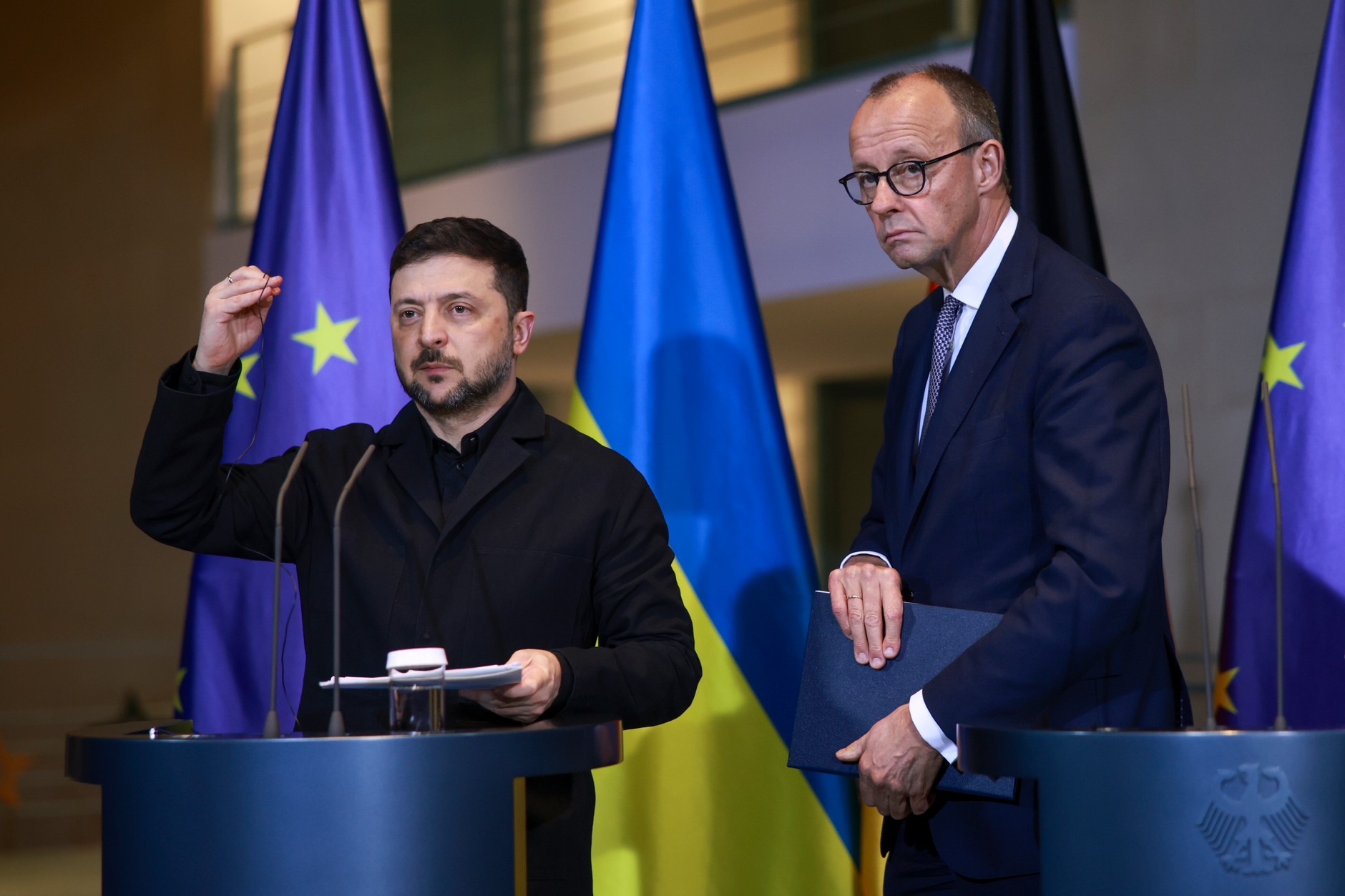
Ukrainian President Volodymyr Zelensky and German Chancellor Friedrich Merz attend a press conference at the Federal Chancellery in Berlin, Germany, December 15, 2025.PAP
One of the Washington defense think tanks emphasized that general security guarantees after the war may prove unstable and difficult to enforce, especially if their effectiveness depended on the changing political will of Western capitals.
In turn, Russian Deputy Foreign Minister Sergei Ryabkov repeated in an interview with ABC News on Monday that Russia “will under no circumstances sign, agree to or even accept any presence of NATO troops on the territory of Ukraine.”
Enough trust without security
Merz also referred to the extremely sensitive issue of possible territorial concessions from Kiev. As he noted, Ukrainian President Volodymyr Zelensky has shown readiness to accept the current front line – referred to by Merz as the “line of contact” – as a basis for concluding a ceasefire.
This would mean de facto recognition of the Russian occupation of these areas, but not a formal, legal renunciation of the territory, which would be contrary to the Ukrainian constitution.
— Decisions regarding the territory must be made exclusively by Ukraine itself, he stressed.
Merz added that Kiev is seeking strong security guarantees precisely to avoid repeating the mistakes of the Minsk agreements.
At that time, Russia was trusted. We know how it ended
– he pointed out.
Meanwhile, the Kremlin quickly rejected Merz's proposal for a Christmas truce. Kremlin spokesman Dmitry Peskov stated on Tuesday, December 16, that Moscow would not agree to a temporary ceasefire, arguing that it would give Ukraine time to regroup its forces.
— We want peace. We do not want a truce just so that Ukraine can catch its breath and prepare for further war, Peskov said.
Decision of the week in the EU
Whether Ukraine can continue to finance the war effort — while avoiding painful cuts in public spending that could undermine public morale and the country's defense capabilities — could be decided as early as this week in Brussels.
European Union leaders will meet on Thursday, December 18, at the European Commission summit, which aims to break the political deadlock regarding the use of frozen Russian state assets for Ukraine, including through a potential reparations loan.
Merz described this plan as a key tool to put pressure on Moscow. He noted that the first stage – the permanent immobilization of Russian assets in Europe – has already been agreed, which prevents Russia from accessing these funds before the end of the war. The interest generated by these assets is already transferred to Ukraine.
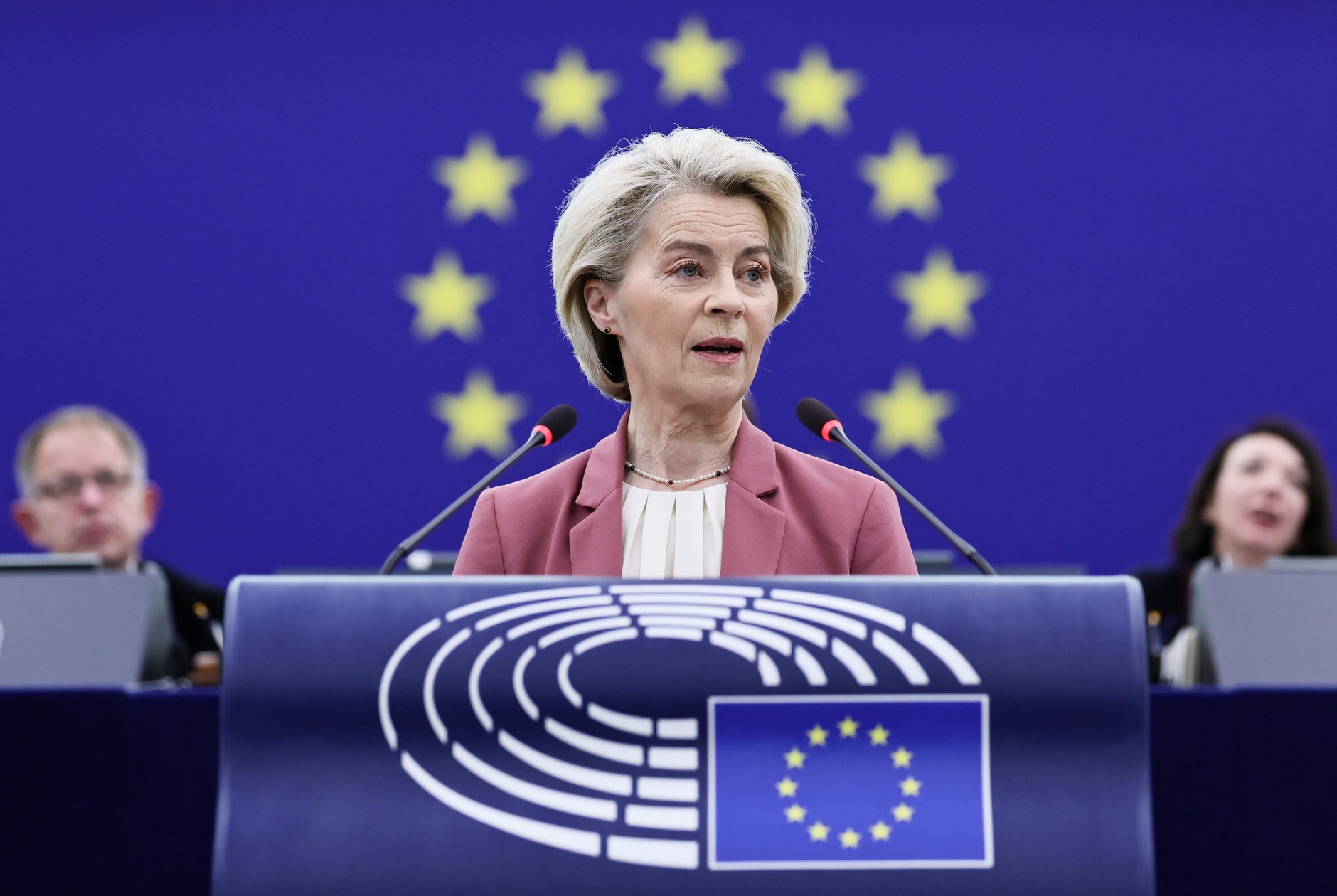
President of the European Commission Ursula von der Leyen speaks during a debate on the preparations for the meeting of the European Council on 18-19 December 2025 at the European Parliament, Strasbourg, France, 17 December 2025.PAP
The second stage, the direct use of assets, for example in the form of secured loans, still faces political resistance.
“From a legal point of view, it can be solved,” Merz said, while admitting that there are political concerns, especially from Belgium, that will have to be overcome.
Fifty-fifty that we will succeed
Merz replied briefly when asked about the chances of reaching an agreement:
America less confident
Merz assessed that Washington's evolving approach to Europe is a turning point that requires strategic adjustment from Germany.
He said that US Vice President JD Vance's comments during the Munich Security Conference earlier this year contributed to accelerating changes in German defense policy, including increased military spending and a change in strategic posture.
“We had to react,” he admitted.
At the same time, Merz emphasized that he was trying to convince Washington that The United States also needs partners.
— If you look solely at U.S. economic data, it's not hard to imagine that Americans will come back at some point and say, “Maybe let's talk again about things that are beneficial to both of us,” he concluded.
I’m Ashley Davis as an editor, I’m committed to upholding the highest standards of integrity and accuracy in every piece we publish. My work is driven by curiosity, a passion for truth, and a belief that journalism plays a crucial role in shaping public discourse. I strive to tell stories that not only inform but also inspire action and conversation.