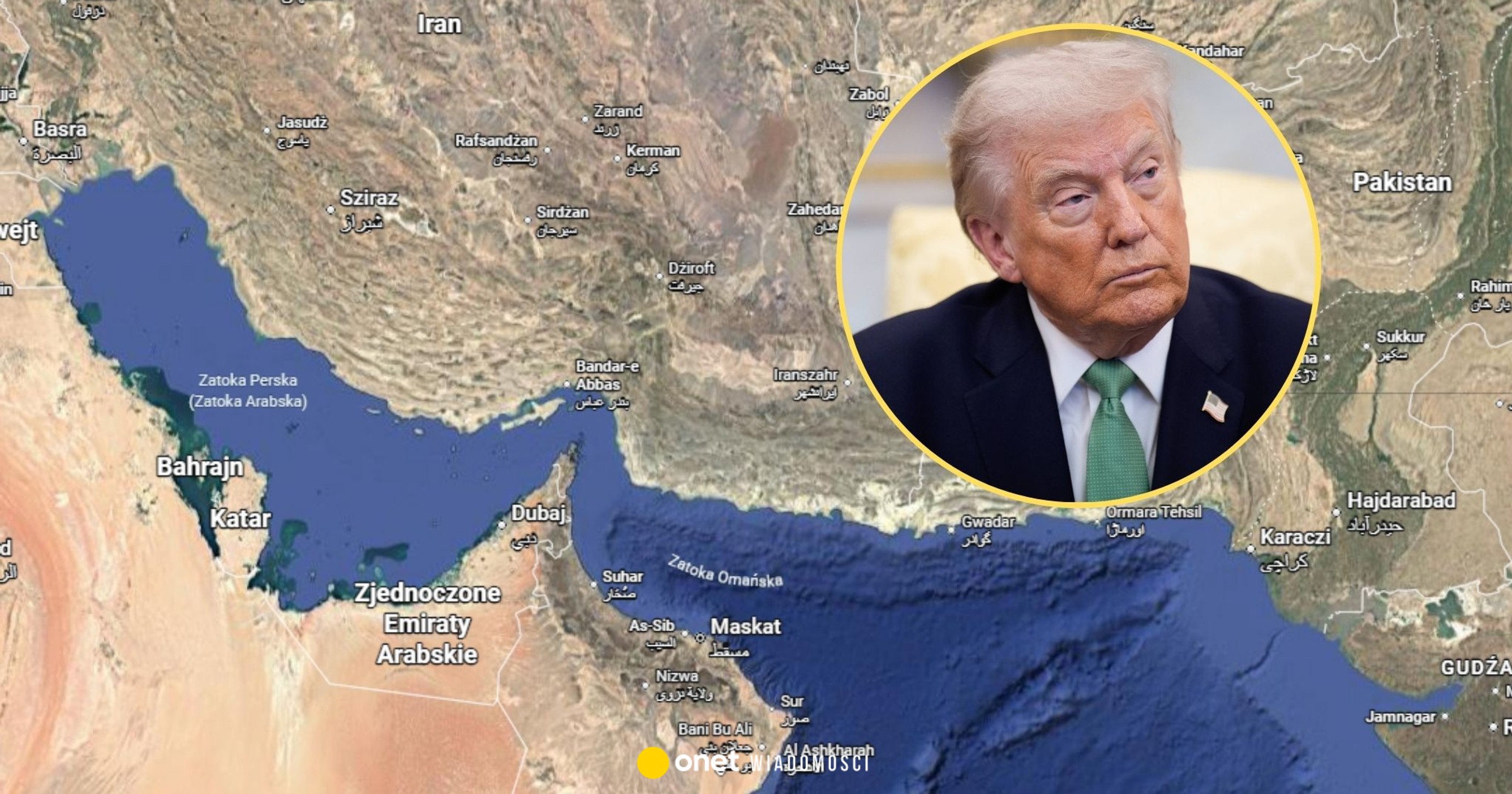
China is projecting its naval power beyond its shores. Fujian, the most advanced aircraft carrier, entered service


China has put into service the Fujian aircraft carrier, the first fully designed and built in the country, according to the Xinhua news agency.
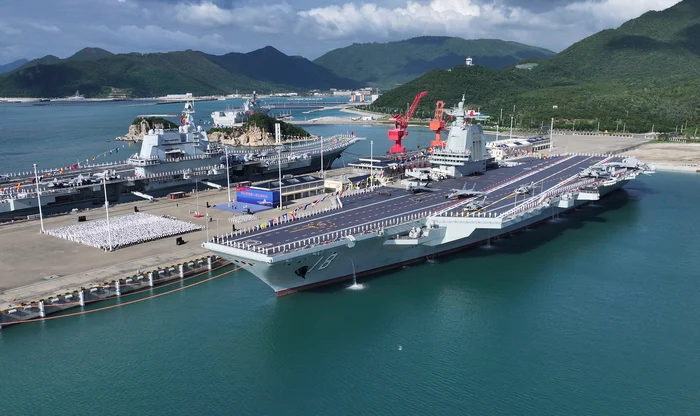
The Fujian aircraft carrier entered service PHOTO profimedia
The Fujian is China's third aircraft carrier and perhaps the clearest example yet of the massive military reform and expansion ordered by Xi Jinping, who aims to build a modernized force by 2035 and a “world-class” one by mid-century.
China has the world's largest navy, with more than 370 surface ships and submarines, according to Pentagon estimates, although the US still operates the most aircraft carriers of any country.
According to experts, the new aircraft carrier will help the world's largest navy expand its power beyond its own waters.
Named Fujian – after the Chinese province closest to Taiwan – the aircraft carrier received its flag on Wednesday in a ceremony on Hainan Island, attended by President Xi.
More modern and more powerful than China's other two aircraft carriers, Fujian is equipped with electromagnetic catapults that allow the launch of several types of aircraft, with heavier armament and greater range. The only aircraft carrier in the world to have such equipment was the US Navy's Gerald R. Ford.
China's other two aircraft carriers – the Liaoning, purchased in 2000 from Ukraine, and the Shandong, the first built in China, based on a Soviet model – have inclined launch pads, which do not allow for as efficient take-offs with as large loads of weapons and fuel.
Fujian has been conducting sea trials for several months and fielded J-35 “stealth” fighter jets, the new carrier version, as well as the KJ-600 early warning aircraft, in addition to the J-15, China's standard fighter jets.
A projection of power beyond its waters
“The aircraft carriers are central to the Chinese leadership's vision of China as a great power with a navy” that can project power far from its coasts, explained Greg Poling, director of the Asia Maritime Transparency Initiative at the Center for Strategic and International Studies.
“An aircraft carrier doesn't really help her in the First Island Chain, instead she's critical to that competition, if that's what she wants, with the Americans in the broader Indo-Pacific region,” Poling said.
China's increasingly advanced military and its ability to “project power globally” is one of the reasons why the Pentagon, in its latest report to Congress, continued to call it “the only US competitor with the intent and, increasingly, the ability to reshape the international order.”
It is Beijing's right to “transform its navy into a strategic navy commensurate with China's national strength,” said Song Zhongping, a Hong Kong-based military affairs expert.
“Chinese aircraft carriers can not only operate close to home, but must operate in distant oceans and seas to carry out various training and support missions,” Song said. “China is a great power and our external interests are all over the globe; we need to be globally present.”
News that the Fujian had entered service was met with some concern in neighboring Japan. Minoru Kihara, a former defense minister and chief cabinet secretary in Prime Minister Sanae Takaichi's new government, said the news underscores the fact that China is “rapidly consolidating its military power without transparency.”
“We believe that China's military intends to develop its operational capability at sea and in the air by strengthening sea power,” he told reporters, stressing that Japan is watching China's military activity and will “respond calmly but decisively” if necessary.
An important leap for China
Beijing is already “conducting more complex aircraft carrier exercises beyond its shores in the Western Pacific,” said Nick Childs, a senior fellow at the London-based International Institute for Strategic Studies. “The new ship's features will allow it to provide a more comprehensive capability and operate more effectively in a wider range of scenarios.”
The scenario raising concern in foreign capitals is a possible Chinese blockade or invasion of Taiwan, a democratically self-governing island that China claims as its own territory and that leader Xi Jinping has not ruled out annexing by force.
Although the island is off China's coast, if China had the ability to position a group or groups of aircraft carriers around the Second Island Chain — between Taiwan and the US Pacific Fleet headquarters in Hawaii — that could delay possible US military assistance in the event of a Chinese attack.
“They want those aircraft carriers to play a role in expanding the strategic perimeter further away from China, but one of the important things an aircraft carrier can do is extend China's reach to surveil air, sea and underwater activities,” said Brian Hart, deputy director of CSIS's China Power Project.
The most advanced J-35 stealth fighter jet, as well as the J-15T heavy fighter jet, were also launched from Fujian, giving the new carrier “full-deck operational capability,” according to the Chinese navy.
The ability to carry its own reconnaissance aircraft means that, unlike the first two carriers, it will not operate blindly when out of range of ground support, giving it the ability to operate its most advanced aircraft over long distances, including in the second island chain.
“The Fujian aircraft carrier represents a significant leap forward for China in terms of its aircraft carrier capabilities compared to the first two,” Hart said.
Still, Hart noted that China's navy lags behind the U.S. in several important respects.
It has only three aircraft carriers, compared to the US Navy's 11. Additionally, while China's aircraft carriers are conventionally powered, the US's are nuclear-powered, meaning they can operate almost indefinitely without needing refueling – increasing their range. The Ford-class aircraft carrier, of which only one is currently in service but more are being built, is larger, can carry more aircraft on the flight deck and has a third elevator, meaning it can carry more aircraft from the lower deck hangars in a shorter time.
China also lags the US in cruisers and guided-missile destroyers, which are critical in providing air and submarine defense as well as support for larger naval groups.