An insurgent shocks the political class. How socialist immigrant Zohran Mamdani won the New York City mayor's office and what it means for the US


The young Democratic politician won the New York election with a message focused on reducing the cost of living and New Yorkers' access to public services, delivered to a diverse coalition of voters that energized young people and immigrants. The victory came despite Donald Trump, doubts from many in the Democratic Party and opposition from business leaders in the world's financial capital, write the New York Times and Reuters.
Zohran Mamdani, a 34-year-old Democrat member of the New York legislature who has become an electrifying voice for locals unhappy with the high cost of living and the old guard of politicians, became the city's 111th mayor on Tuesday.
His victory, which drew votes from across the city, from the gentrified areas of Brooklyn to the working-class immigrant enclaves of Queens, triumphantly completed one of the most remarkable political upheavals in New York history and brings a socialist Democrat to the mayor's office of America's iconic city.
Mamdani defeated former Gov. Andrew Cuomo for a second term after defeating him in the summer primary, with New Yorkers overwhelmingly rejecting the man who was once the state's most powerful figure for the second time in five months.
Curtis Sliwa, the Republican candidate, came in an insignificant third place.
Mamdani's victory is a victory for the progressive left over the political establishment, Donald Trump's conservatives, and moderates in the Democratic Party at a time when many Americans, including New Yorkers, are complaining about the high cost of living.
Whether Mamdani's success can be multiplied nationally for the Democrats is now hard to say, and much will also depend on how the new premier will manage the city's problems and carry out the ambitious social policies he promised in the campaign.
What is certain is that Mamdani also seems to have inspired left-wing politicians in Europe, from France, Germany or the European Parliament, who have traveled to the US in recent months to establish ties with the new star of progressivism.
Very high turnout
In his victory speech in Brooklyn, Mamdani told supporters they had toppled a political dynasty and empowered cooks, deliverymen and taxi drivers who had been marginalized in one of the world's most expensive cities.
“In the last 12 months, you have dared to aspire to something better,” Mamdani said. “Tonight, against all odds, we did it. The future is in our hands,” he said.
Turnout exceeded two million voters, the highest turnout in a city municipal election since 1969.

Mamdani won with over 50% of the vote, but Cumo also did well with over 41% of the vote. Endorsed by Trump, it garnered many votes in the exact areas where the president performed in New York in the 2024 presidential election.
Some of the voters explained what made them vote: optimism.
“I feel a sense of hope,” Michelle McSweeney, a 44-year-old woman from Brooklyn, told the New York Times. “I don't think I've felt this way since Barack Obama,” she explained.
Many young voters said they were attracted to Mamdani's age and energy as much as his populist ideas.
But some New Yorkers have said they find it hard to believe Mamdani, who as a member of the Albany Legislature has introduced only three relatively minor bills in four years, is ready to lead the nation's largest city.
A thin resume
Mamdani, a state Assembly member from Queens, entered the race a year ago as a protest candidate with a thin resume and virtually no municipal visibility.
But his focus on cost of living and access to public services, deft campaigning on social media and his displayed optimism drew a record turnout among young voters and immigrant groups, propelling him ahead of more seasoned rivals.
Mamdani will be New York City's youngest mayor since the 19th century, the first Muslim mayor, and the first South Asian mayor.
Born in Uganda to parents of Indian descent, he would also be the first naturalized immigrant to serve as mayor since Abraham Beame in the 1970s.
Party heavyweights were in no rush to support Mamdani. It was a sign of the rift in the Democratic Party, which is unsure of its path to an eventual victory over Republicans in next year's midterm elections and ultimately the next presidential election.
Alongside the young politician were Bernie Sanders and Alexandria Ocasio-Cortez, in turn, prominent members of the left wing of the party.
But several leaders, starting with Senate Majority Leader Chuck Schumer, himself a New Yorker, did not call for a vote for that candidate.
Former President Barack Obama made his opinion known late, but chose to endorse Mamdani, whom he called the other day to congratulate him on his campaign.
A complicated plan to implement
In the campaign, Mamdani was an insurgent against the political and business establishment of the city, the financial capital of the world.
He proposed raising taxes on the wealthy, free public buses and free childcare for all renters, a rent freeze for rent-stabilized apartments and reform of the Police Department, which he has harshly criticized.
It won't be simple.
He will face profound challenges when he takes office on January 1. Gov. Kathy Hochul and Albany lawmakers have control over the funds needed to fund his plans.
Furthermore, many Jewish New Yorkers and business leaders do not trust him at all.
The candidate said the costs of his proposals would be covered by new taxes on companies and millionaires, which he said would generate $9 billion — though some voices, such as the libertarian Cato Institute, say his calculations are incorrect.
Important: He would need the support of the state legislature and Gov. Kathy Hochul to implement the new taxes.
She supported him but said she was against raising taxes. However, Hochul said he wants to support the daycare project, which is by far the most expensive item on the agenda at $5 billion.
The Mamdani-Trump match
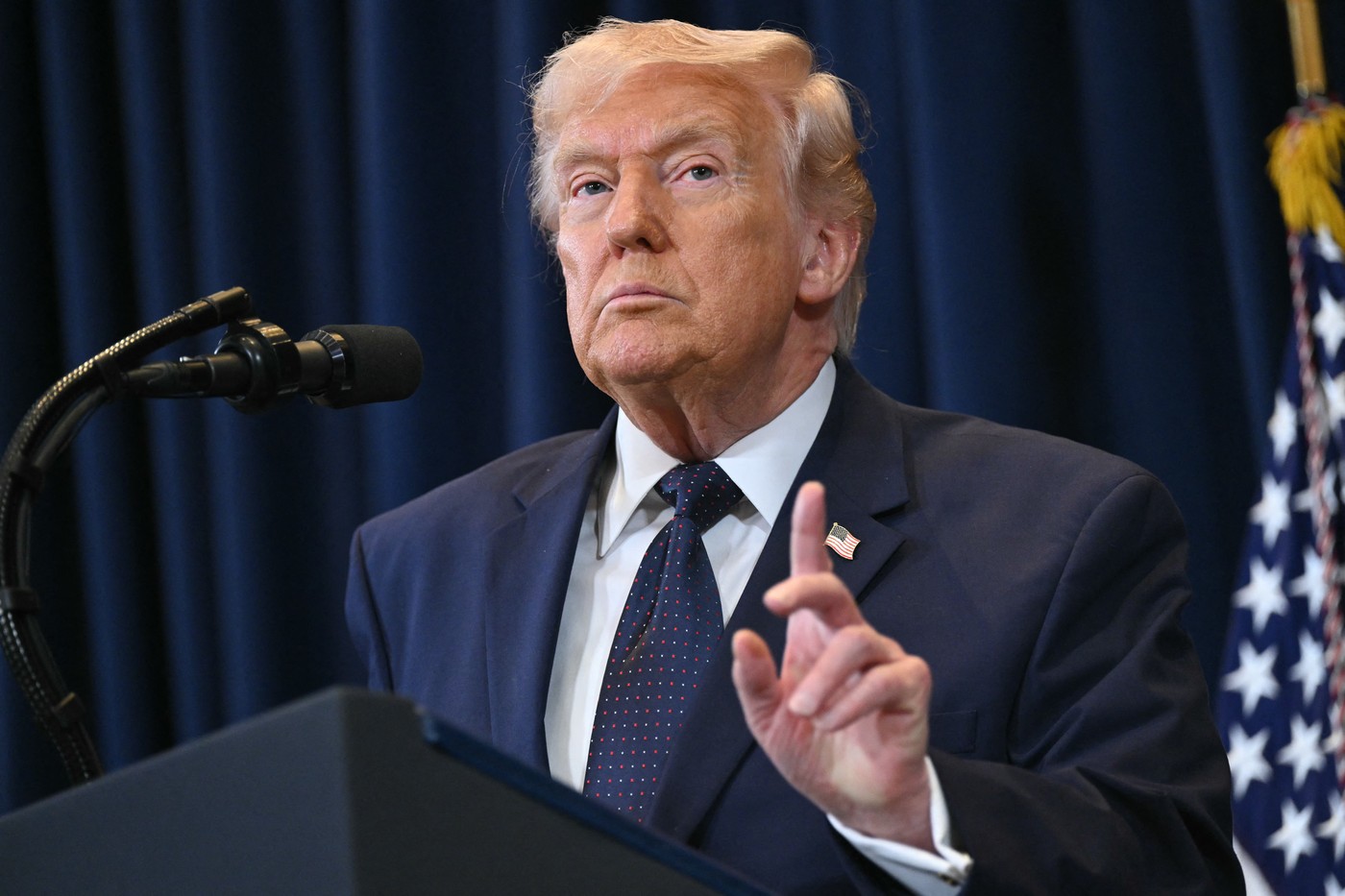
In the opposite camp is also President Trump, who categorized Mamdani as a “communist”.
The president officially endorsed Cuomo on the eve of the election.
Trump has also threatened to make New York the next target in his fight against American cities, possibly cutting federal funding and mobilizing the National Guard if Mamdani pursues policies he doesn't like.
On stage, Mamdani confronted Trump directly, suggesting that the president's hometown could serve as a model for opposition to the White House administration's policies.
“Listen to me, Mr. President Trump, when I say this: To get past any one of us, you're going to have to get past all of us,” he said.
A coalition of voters
Mamdani has mobilized a coalition of ethnic and religious groups that have rarely received so much attention from a municipal candidate.
He has made getting his economic message to the city's hundreds of thousands of Muslims a major part of his campaign, visiting more than 50 mosques, some of them multiple times, and holding phone campaigns in Urdu, Arabic and Bengali, among other languages.
He campaigned on the night shift, stopping at LaGuardia Airport to meet with the city's taxi drivers — many of them Muslims of South Asian descent, like himself — for whom he went on hunger strike to get debt relief in 2021.
He explained the inflation in viral clips of the city's halal food carts and gave interviews from popular restaurants in the city, such as Kabab King.
Last but not least, he maintained his commitment to the Palestinian cause, while New Yorkers generally came to sympathize with the Palestinians more than the Israelis.
Mamdani's pro-Palestinian stance was another break with the Democratic Party establishment.
He sparked outrage during the primary campaign when he refused to condemn the phrase “globalize the intifada”. But after Jewish New Yorkers expressed displeasure, telling him they felt insecure when they heard the term, he said he discouraged others from using it.
A letter signed by more than 1,100 rabbis quoted Mamdani, condemning the “political normalization” of anti-Zionism. Pre-election polls, however, showed Jewish voters largely split between Mamdani and Cuomo.
Tense weeks
The final weeks of the campaign were tense, marked by accusations of anti-Semitism and Islamophobia.
Mamdani accused Cuomo of selling out the city, its transit system and its housing stock to big-money donors. He made repeated calls to other issues of Cuomo, who left the governorship in the wake of sexual harassment allegations.
For his part, Cuomo tried to portray Mamdani as a far-left radical who would endanger the finances and security of New Yorkers.
The tone of Cuomo and his allies turned noticeably threatening in the final weeks of the campaign as he tried to appeal to conservative voters with messages that speculated on fear of Mamdani's Muslim faith and foreign origins.
Andrew Cuomo laughed along with a radio host who said Mamdani would applaud another 9/11-style attack.
Curtis Sliwa, the Republican candidate, falsely accused him of supporting “global jihad.” And Mayor Eric Adams, who suspended his re-election campaign and endorsed Cuomo, said the city risks falling into “Islamic extremism” if he is elected.
The future of the Democratic Party?
Mamdani reached out to disaffected voters at a time when confidence in the Democratic Party among its own members is at an all-time low.
Mamdani's success in liberal New York isn't necessarily a recipe for success nationally. And congressional Democrats appear concerned about the implications of his rise, amid lingering tensions between moderates and progressives within the party.
Democratic strategists, the BBC writes, said the problem Mamdani poses for the party's establishment is that Trump and Republicans already label Democrats, no matter how moderate, as socialists.
And this tactic is believed to have had some effect on Cuban and Venezuelan voters in the 2024 elections.
Representative Josh Gottheimer, a moderate Democrat from New Jersey, told the Washington Post that he believes Mamdani has “extremist views” that run counter to those of the Democratic Party, and that he fears Republicans will use Mamdani's example in their political attacks.