“Secret architect” of the Third Reich. Who was “Nazi number two”


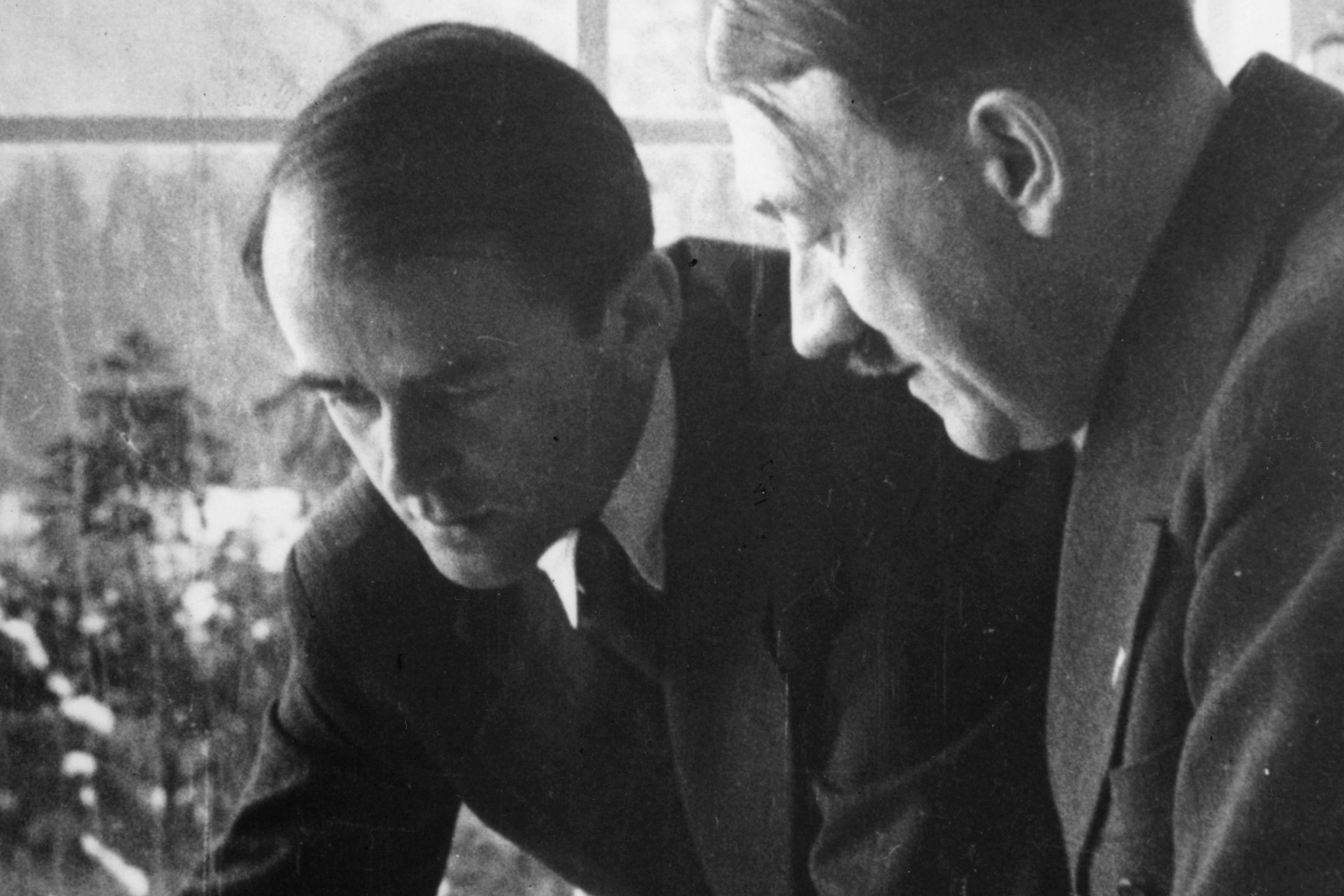
Albert Speer was the only Nazi leader to express anything like remorse at Nuremberg. For the rest of his life, he was to portray himself as a “decent National Socialist”. How much of this myth remains 43 years after his death?
“Like Faust, I would sell my soul for great construction. Now I have found my Mephistopheles” – this is how Speer recalled the beginnings of his career in the Nazi apparatus. A career awaited him as “the first architect of the Third Reich”, and then – already during the war – as a minister, even “second after Hitler”.
He avoided a hanging or life imprisonment before the Allied tribunal, although his “confession of guilt” at that time (like many later ones) was quite general. There is no doubt that he wanted to be considered a “decent Nazi”, or at least one who could at least accept the weight of his actions.
He was neither a bloodthirsty anti-Semite nor a power-sick creature like Goering, Rosenberg or Streicher. He was certainly one of the most intelligent people in the Reich authorities. This was enough to earn him some sympathy among the observers of the Nuremberg trials. Historians were yet to deal with the myth of the “decent Nazi”.
Career alongside the Führer
His grandfather and father were architects, so Albert Speer followed in their footsteps. In the 1920s he studied in Karlsruhe, then in Munich, and finally in Berlin. In 1928, he became one of the youngest assistants at his university, but he could not count on any orders – the crisis that swept through the Weimar Republic also meant stagnation in the construction industry.
Speer stayed away from politics until the day when, at the suggestion of his students, he came across one of Hitler's speeches. The impulse worked: a month later, the architect joined the Nazi Party. “I didn't really feel like a member of a political party; I didn't choose the NSDAP, but I stood with Hitler,” he later wrote.
However, he was still primarily an architect with no prospects. When Speer was already determined to leave Berlin with his wife, he was offered the reconstruction of the party's headquarters in the capital. When Hitler came to power, his career, which had previously been stagnant, began to take off at lightning speed.
Speer had barely finished renovating the building of the Ministry of Propaganda when he was commissioned to prepare the party congress in Nuremberg. Soon Hitler told him: “I was looking for an architect to whom I could one day entrust my construction plans. I saw someone like that in you.” Soon Paul Troost died and his position – Hitler's “court architect” – fell to Speer.
On the great construction sites of the Greater Reich
He designed a nearly 400-meter-long grandstand at the Nuremberg Zeppelinfeld, inspired by the Pergamene altar. NSDAP party congresses – mass orgies of admiration for Hitler – were to be held here for years. It was Speer who invented night parades – so that the fat bellies of party functionaries would not be visible in the dark. It was he who also came up with the idea of 130 spotlights shooting into the sky, creating the famous “cathedral of light” – the impression was enormous.
All this perfectly suited the gigantic passions of the new German authorities. The architect was included in the circle of Hitler's closest collaborators. The new building of the Reich Chancellery was put into use two days ahead of schedule – the Führer was delighted. At the same time, he was preparing much greater challenges for Speer.
The numbers speak for themselves. The new Olympic stadium was to have a capacity of 400,000 seats. The plan to rebuild Berlin into the “capital of the world” included, among others: the construction of an over 100-meter triumphal arch and a colossal Volkshalle – Assembly Hall, under whose dome “several St. Peter's basilicas” could fit.
“To surpass Paris and Vienna! To restore the sense of confidence to every German!” – Hitler crowed about his grand construction plans. Above all, however, as Speer accurately emphasized years later, the aim was to strengthen the Führer's own sense of confidence. This architecture was “a faithful reflection of tyranny.”
And yet – as Speer mentions casually – these great Nazi projects used slave labor of prisoners even before the war began. A state-owned company with a euphemistic name: German Earth and Stone Company (abbreviated as DEST) simply directed the repressed to those camps where they could be tortured to death by work in quarries or brickyards – including: Mauthausen, Sachsenhausen or Neuengamme… Certainly Speer's hands were not clean even then.
Minister of Total War and Slave Labor
In 1942, the Minister of Armament and Munitions, Fritz Todt, died in a plane crash. In his place, Hitler immediately appoints Speer (who was supposed to be on the same plane as Todt). He also heads the Todt Organization – the one that is in practice responsible for the entire German construction industry.
The powers Speer received from Hitler turned out to be unexpectedly so broad that the architect effectively became number two in the state hierarchy. His organizational skills could not be denied: he centralized the entire economy, shifting it to war production tracks. Since there was a shortage of labor, Speer, with Hitler's support, used hundreds of thousands of forced laborers, camp prisoners and prisoners of war.
“I feel co-responsible for the unfortunate policy regarding workers. I constantly agreed to mass deportations from other countries to Germany,” he wrote years later in his memoirs.
Elsewhere he states that when he visited the Mittelwerk underground weapons factory in 1943 and saw the terrible working environment of prisoners, he immediately demanded improved food and sanitary conditions: “Remembering it even now gives me a feeling of deep embarrassment and personal guilt.”
Fear, failure, responsibility
Speer certainly saw what was happening to the German economy and war machine as the Allies tightened their grip. He later claimed that he had seen sight in the face of the inevitable fall of the Reich. He began to sabotage Hitler's increasingly irrational orders – especially the one issued on the eve of defeat, to leave “scorched earth” on the Allied path. At Nuremberg, he was to confess that he wanted to assassinate Hitler using poison gas.
However, he met Hitler once again just after his last birthday, that is, days before the fall of Berlin. He managed to take a walk near the destroyed Reich Chancellery. Then he got to Flensburg and was finally arrested by the Allies. This was Speer's first step on the road to the Nuremberg court.
When the trial started, all the accused immediately declared themselves innocent. However, Speer soon noted in his court files: “Shared responsibility for such horrific crimes exists even in a dictatorship system.” In the most general sense, he did not whiten his face – this aroused surprise among the other defendants and a kind of sympathy among the observers. “He gave the impression of being the most straightforward, he didn't try to shirk,” noted trial observer William L. Shirer.
The mitigating circumstances appealed to most of the judges. Speer was sentenced “only” to 20 years in prison – for war crimes and crimes against humanity (the charges mainly concerned the use of forced laborers in industry). He was sent to prison in Spandau. He was to spend most of his sentence reading books – he read a lot and at the same time wrote down his memories.
Confessed, redeemed, unsaid
After leaving prison, he published two books. He donated a large portion of his fees anonymously to Jewish charities. He did not hide from journalists and historians. “If I didn't see it, it was because I didn't want to see it,” he admitted. Again, no details. He denied ever having had a hand in the persecution of Jews or knowing about the Holocaust during the war.
But the myth of the “decent Nazi” could not be defended. In the 1980s, it turned out that Speer, as the general construction inspector for the transformation of the capital of the Reich – this was the title Hitler gave him – was responsible for the deportations of several tens of thousands of Berlin Jews.
After leaving prison, Speer also claimed that he had committed a sin of omission – i.e., having heard “something” about what was happening in Auschwitz, he never asked Hitler and Himmler for details.
Meanwhile, two of the architect's biographers claim that he heard about the Holocaust in the fall of 1943 in Poznań – from… Himmler! “This nation must disappear from the face of the earth!” — the Reichsführer SS then pontificated on the “Jewish question.” If Speer was in Poznań at that time, and there are many indications that he was, he could not have not heard Himmler.
More than just a cog in a machine
Yet he claimed he didn't know. For many thousands of Germans who closed their eyes to the suffering of Jews or – even worse – participated in the Holocaust, Speer's position was an extremely convenient line of defense. If – they asked – the second person after Hitler knew nothing, “how could I know?”
A few years ago, The Daily Telegraph provided indirect evidence that Speer simply had to know. His signatures are said to be on documents that ordered the expansion of the activities of the camp at Auschwitz-Birkenau – from then on (1943) this camp was to be the central point on the map of the Holocaust. Two of Speer's close associates allegedly witnessed the gassing of Jews during their visit to Auschwitz. Could he himself have been unaware of what was happening in the extermination camps?
“We considered the norm in our new conditions what had previously aroused our objections. We suppressed our doubts (…). Looking back from a distance of decades, I am surprised at the thoughtlessness of those years,” Speer wrote in his memoirs.
He died on September 1, 1981 of a stroke. What remains of Speer the artist, as Michael Burleigh writes, are “remains of third-rate architecture.” For historians, he will certainly remain one of the most ambiguous figures in Hitler's entourage. The most important question: did he reveal more or was he silent?
He will probably no longer be considered a “good Nazi”.