Norway has discovered that electric buses produced by the Chinese Yutong can be stopped remotely. Bucharest buys trolleybuses from the same company

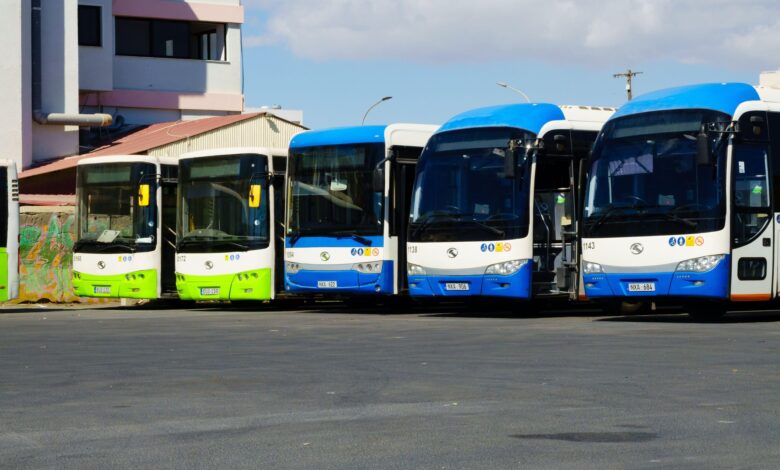
Oslo-based public transport company Ruter has secretly tested the safety of its own electric buses in China. The bottom line is that they can be turned on and off remotely by the Chinese manufacturer Yutong, reports NRK, Norway's public broadcaster, citing daily Aftenposten.
- The information appeared a few months after the interim mayor of the Capital, Stelian Bujduveanu, announced that he had signed a contract for the delivery of 22 new trolleybuses from Yutong, with a length of 12 meters and a transport capacity of at least 93 passengers;
- It should be stated, however, that the technologies used by electric buses and trolleybuses are different, and that the aspects reported in Norway are not necessarily valid for the means of public transport that will be put into operation in Bucharest.
Oslo's public transport company notified Norway's Ministry of Transport and Communications of the findings. According to Aftenposten, the test was carried out this summer, when two of Oslo's public transport company's buses were taken for testing to Sandvika, the main transport hub near the Norwegian capital.
One of them was an electric bus made in Europe. The other was an electric bus from the Chinese company Yutong. Ruter took the buses apart and examined them in a room where the signals were isolated. There they discovered that Chinese electric buses can be remotely taken over by the manufacturer.
According to the public transport company, the manufacturer has remote access on each bus to software update functionality, diagnostics, and the battery and power supply control system.
“Therefore, the bus could theoretically be stopped or rendered unusable by the manufacturer,” the company said in a statement.
Yutong's electric buses are causing concern in Norway
“We have informed national and local authorities and are working together to establish clear cyber security requirements in future purchases,” said Bernt Reitan Jenssen, CEO of Ruter. He believes that the expertise required is at such a technologically advanced level that it would be too complicated for the public transport company or local authorities to handle the problem alone.
“We need to involve all competent authorities dealing with cyber security, join forces and rely on top expertise. Maybe not only at the national level, but also at the international level,” he stressed.
Jon-Ivar Nygard, Norway's transport minister, said the authorities would carry out thorough assessments of the risks associated with bus transport from countries with which Norway has no security policy cooperation.
“We are currently working on this. Together with actors like Ruter and others involved in public transport, we will ensure that this sector is less exposed to risks,” he said, adding that there are regulations requiring companies to carry out risk assessments when purchasing. And Ruter did the same.
More than 1,000 Chinese electric buses run in Norway
Jenssen also said there was little likelihood that providers would stop the buses because nobody would have anything to gain in such a situation. “But that doesn't mean we shouldn't take it very seriously,” emphasized the managing director of the Oslo-based public transport company.
He also pointed out that the buses cannot actually be remotely controlled while in operation, only switched on or off if someone takes control of them.
A study conducted earlier this fall by Norway's Public Roads Administration revealed that there are approximately 1,350 Chinese buses registered in the country. About 850 of these are Yutong brand.
At the time, a Norwegian security expert sounded the alarm about what public broadcaster NRK described as “Norwegian naivety”.
“I cannot understand why politicians refuse to listen to the repeated annual warnings of the security authorities,” said Stale Ulriksen of the Norwegian Naval Academy after the report was published.
Bucharest City Hall buys Chinese trolleybuses
In June 2025, the Capital City Hall announced the signing of the contract for the purchase of 22 Yutong trolleybuses, through European funds from the National Recovery and Resilience Plan (PNRR), writes greencommunity.ro
The contract, worth 70.4 million lei (without VAT), was awarded to Anadolu Automobil Rom SRL, Yutong's official representative in Romania.
The trolleybuses, with a length of 12 meters and a capacity of over 90 passengers, are equipped with:
- autonomy of at least 20 km, thanks to an electrical energy storage system (SRSEE),
- air conditioning,
- three-phase short-circuited rotor synchronous motor, inverter driven and controlled by a microprocessor system, for performance and energy efficiency,
- CAN digital communication network for system monitoring,
- full 6 year warranty.
The first units would be delivered in April-May 2026.