“We would trade the most advanced soybean technology to China.” Strong warning if the US decides to do with Nvidia's Blackwell chip as Trump has suggested


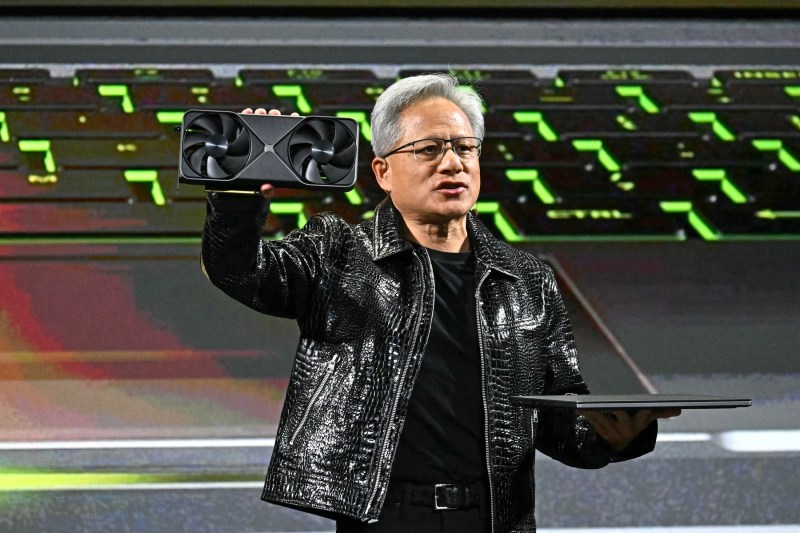
Nvidia CEO Jensen Huang shows off a Blackwell GeForce RTX 50 series GPU and an RTX 5000-equipped laptop while speaking at the Consumer Electronics Show (CES) in Las Vegas, Nevada on January 6, 2025. PHOTO: Patrick T. Fallon/AFP/Profimedia
If the Trump administration allows technology giant Nvidia to sell to China a version of its most powerful artificial intelligence (AI) processor, as the White House leader suggested on Wednesday, then it risks significantly reducing America's AI advantage, experts polled by Reuters warned.
Such a decision could also effectively mean the end of US export restrictions on the chips, which were put in place in 2022 for Washington to ensure Beijing's military would not benefit from American technology and to slow the development of China's AI efforts.
“If we decide to export the B30A, it would dramatically reduce the main advantage the US currently has over China in AI,” said Tim Fist, co-author of a recently completed analysis of the impact of Beijing being allowed to use the B30A chip, a downgraded version of Nvidia's next-generation Blackwell chip.
US Senate Democratic Leader Chuck Schumer and 11 Democratic senators on Wednesday urged Trump not to lift restrictions on AI chips and US technology in the run-up to a trade deal.
Trump considers talking to Xi about 'super-duper' chip
US President Donald Trump said on Wednesday that he is considering discussing Nvidia's “super-duper” Blackwell chip with Chinese President Xi Jinping at their meeting on Thursday. The White House leader's claims were similar to those made in August, when he suggested that he might allow China to purchase a version, reduced in performance by 30% or 50%, of the most powerful processor made by Nvidia.
But, Tim Fist pointed out, the B30A is a version of Nvidia's best chip in a different package: China could buy twice as many and get the same result, probably at the same price.
A spokesman for Nvidia declined to comment.
In the article published Saturday, Fist and the research co-authors analyzed nine scenarios covering a range of export strategies the Trump administration could adopt regarding a low-power Blackwell chip.
Best and worst case scenarios
In the best-case scenario, where no powerful chips are exported to China next year, the US would have 30 times the AI computing power of China.
In the worst-case scenario, where the US allows the export of B30A chips and comparable chips from other US companies, Beijing has a chance of surpassing the US in terms of AI computing power, which the Chinese will achieve in 2026.
Even in an average scenario, where a small amount of chips are exported, the US advantage is reduced to just four times China's computing power, according to the analysis.
“If significant amounts are allowed to be exported, that's a huge change,” said Fist, director of emerging technology policy at the Institute for Progress, a Washington-based think tank. “It basically ends the export control regime we have today,” he said.
Chris McGuire, a national security and technology expert who worked at the US State Department until last summer, agrees with this warning.
“If this processor is allowed to be commercialized, there will be virtually no export controls on AI chips,” McGuire said. “The reason we have a big advantage in AI is because we have big advantages in computing power and chips. If we give up that advantage, at best we'll be equal. At worst, we'll be left behind,” he said.
“We would trade our most advanced technology to China to purchase soybeans,” McGuire said.
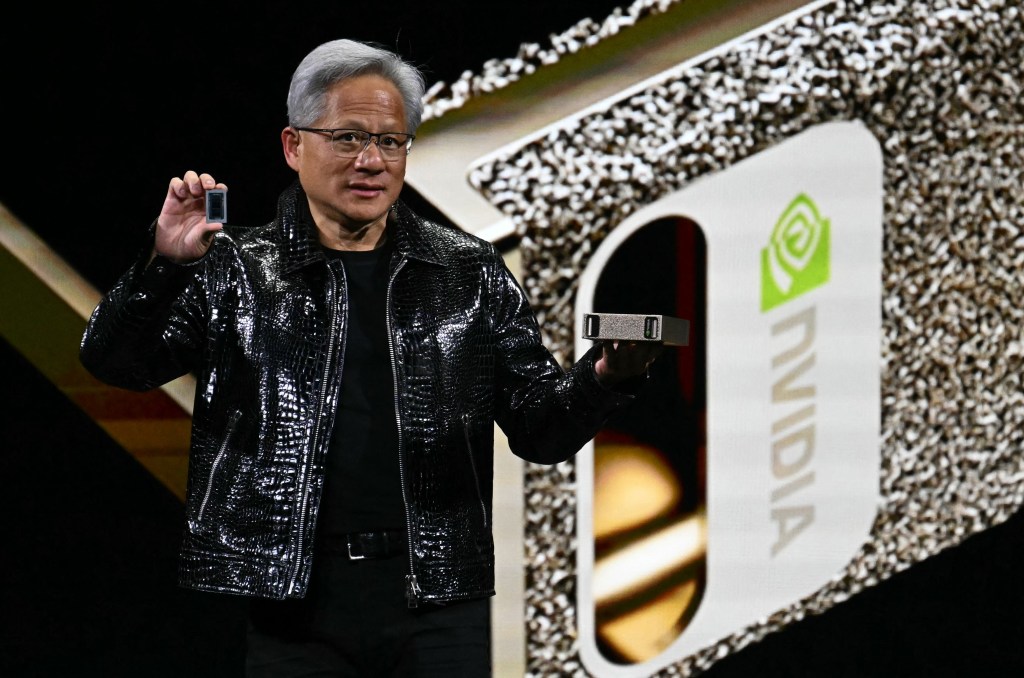 Nvidia sets a new all-time record on the stock market and makes its CEO one of the richest people in the world