A joint investigation by journalists from LRT, 15min, Eesti Ekspress and Neka Personiga revealed the activities of the network of the Fast Bunkering company, which conducts ship bunkering operations at sea in the region of Lithuania, Latvia and Estonia.
Read also: Personnel changes at Orlen. This is what the extraordinary general meeting decided
Cooperation of Lithuania, Latvia and Estonia with Russia. Here's what journalists found
This company – according to the arrangements – between June 2024 and March 2025, it carried out 286 ship-to-ship fuel transhipment operations, supplying 177 tankers carrying crude oil and petroleum products.
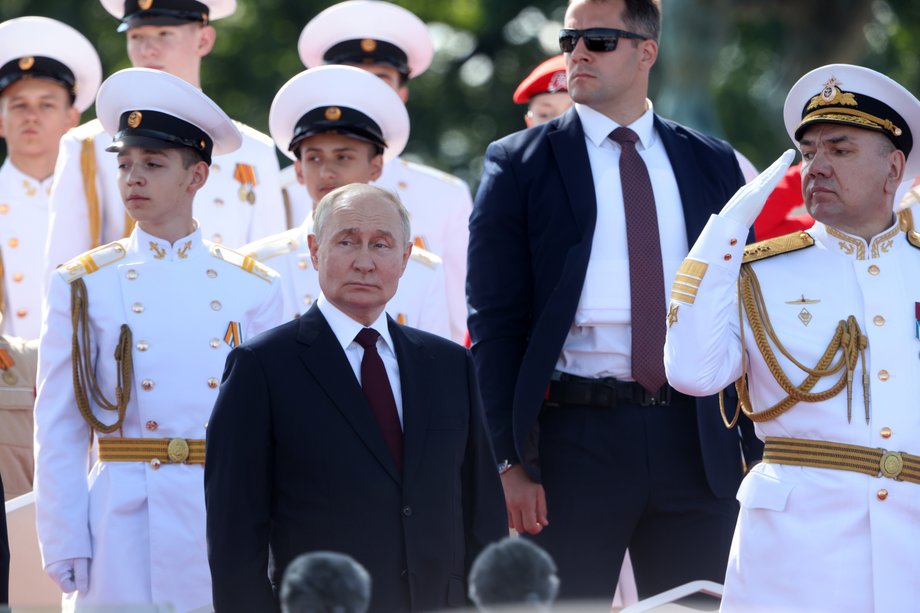
Russian President Vladimir Putin during the Navy Day military parade, July 28, 2024, in Saint Petersburg, Russia
|
Contributor / Contributor / Getty Images
Of this number, at least 159 vessels called at Russian ports just before or after bunkering operations. Journalists point out that some of them belonged to or were associated with the so-called shadow fleet – a network of tankers used by Russia to bypass international sanctions on oil exports.
Read also: Israel: Benjamin Netanyahu ordered an attack on the Gaza Strip
Analyst Anatoly Kravtsev from the Kiev School of Economics, quoted in the report, found that among the units served, there were at least 20 ships with clear signs of belonging to the Russian transport network.
Although – as LRT points out – none of the tankers was formally on the sanctions list at the time of refueling, some of them were later included in it. Reporters emphasize that Fast Bunkering's activities show how difficult it remains to effectively enforce maritime sanctions against Russia.

On July 24, 2025, Putin visited the main Sevmash military shipyard in Russia, celebrating the upcoming Russian Navy Day
|
Contributor / Contributor / Getty Images
“The threat is growing. Russia sees this secret fleet as an effective weapon – both for undermining European security and for keeping oil flowing” – said Lithuanian Minister of Foreign Affairs Kęstutis Budrys, quoted by LRT.
According to data from S&P Global, over 3.1 thousand tests were carried out in the waters off Malta, Greece, Gibraltar, Spain, the Netherlands and other European countries in the 12 months to April 2024. bunkering operations involving tankers linked to the Russian shadow fleet.
Experts emphasize that such activities are very profitable and are maintained thanks to loopholes in international regulations.
“Since Russia's invasion of Ukraine, the number of so-called the dark fleet has tripled in size. Russia has spent billions of dollars building this network. In this sense, sanctions have failed to achieve their goal – instead of making the sea safer, they have made it more dangerous,” said maritime intelligence analyst Michelle Wiese Bockmann.